
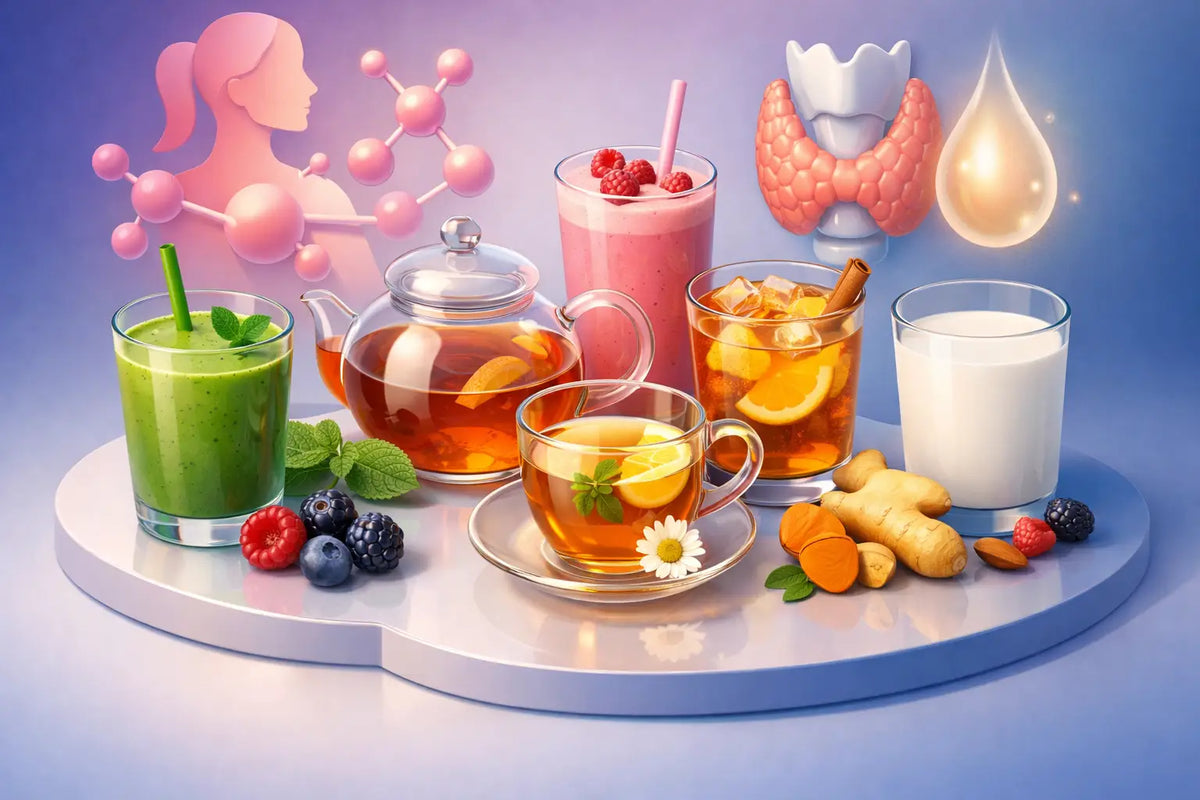
If your day starts with coffee, runs on something fizzy at 3 p.m., and ends with a glass of wine to finally exhale, your drink routine may be quietly shaping how your hormones feel. The best drinks for hormone support are not about finding one magical beverage. They are the sips that help you build steadier energy, calmer stress signals, better hydration, and fewer blood-sugar plot twists.
That matters because hormones do not live in a vacuum. Your cycle, cravings, sleep, mood, digestion, and energy are in constant conversation with your nervous system, liver, gut, and blood sugar. A daily drink ritual is a wonderfully low-lift place to offer your body some love.
What makes a drink supportive for hormones?
A hormone-supportive drink does at least one of a few helpful things: it hydrates you, supplies nutrients, helps you avoid a blood sugar crash, supports digestion, or creates a pause that tells your nervous system, “Babe, we are safe.” The right choice depends on what your body is asking for.
For example, someone dealing with afternoon anxiety and sleeplessness may need to rethink the timing and amount of caffeine. Someone with heavy periods may benefit from a nourishing smoothie built around protein and mineral-rich ingredients. And if you are in perimenopause, hydration and steady blood sugar can be especially supportive when hot flashes, sleep changes, or energy dips are in the mix.
The goal is not beverage perfection. It is choosing drinks that make you feel more grounded afterward, not more wired, shaky, bloated, or exhausted.
The best drinks for hormone support, in real life
1. Mineral water with citrus and a pinch of salt
Plain water is foundational, but many women are chronically underhydrated and then wonder why they feel headachy, constipated, fatigued, or ravenous by late afternoon. Water helps support circulation, digestion, regular elimination, and the body’s ability to manage day-to-day stress.
If plain water feels deeply uninspiring, add lemon or lime and a tiny pinch of sea salt. The citrus makes it more enjoyable, while the salt can add a little sodium for people who sweat heavily, exercise often, or tend to feel depleted. If you have been told to limit sodium because of a health condition, skip the salt and check with your clinician.
This is not a detox drink. Your liver and kidneys already have that job. Think of it as hydration with a little personality.
2. A protein-forward smoothie
Smoothies can be hormone-friendly or basically a milkshake wearing a wellness costume. The difference is balance. Fruit is lovely, but fruit juice, multiple bananas, sweetened yogurt, and honey all in one blender can send blood sugar soaring and then leave you looking for snacks an hour later.
Build yours with protein first, then fiber and fat. Try unsweetened Greek yogurt or a protein powder you tolerate well, berries, chia or ground flax, spinach, and unsweetened milk. A spoonful of nut butter can make it more satisfying, too. This combination supports a steadier glucose response, which can mean fewer energy crashes and less urgent sugar-hunting later in the day.
For women with sensitive digestion, keep it simple. A smaller smoothie with fewer ingredients often lands better than an overstuffed “everything but the kitchen sink” blend.
3. Ginger tea for digestion and cycle comfort
Ginger tea is one of those humble staples that earns its place in the cabinet. Warm, gently spicy, and comforting, it can be a beautiful option when your stomach feels unsettled, you are dealing with menstrual nausea, or cold drinks sound like the least appealing thing on earth.
From a Traditional Chinese Medicine perspective, warm beverages can be especially supportive for people who feel cold, crampy, sluggish, or bloated around their period. That does not mean iced drinks are forbidden. It simply means paying attention to how your body responds. If an iced latte on day one of your cycle leaves your belly in knots, that is useful information, not a personal failure.
Steep fresh ginger slices in hot water, or use a quality ginger tea bag. Add lemon if you like the brightness, but skip loading it with sugar.
4. Spearmint tea, with realistic expectations
Spearmint tea gets plenty of attention in hormone conversations, especially among women navigating unwanted facial hair or acne linked to androgen sensitivity. Some early research suggests it may be supportive in this area, but it is not a substitute for medical evaluation or treatment for conditions such as PCOS.
Still, a daily cup can be a lovely, caffeine-free ritual. The flavor is soft and fresh, and swapping one late-day coffee for spearmint tea may support sleep simply because you are reducing caffeine. That alone can make a meaningful difference for stress resilience, cravings, and cycle health.
If you are pregnant, breastfeeding, taking medications, or managing a hormone-related condition, ask your healthcare professional what makes sense for you.
5. Green tea or matcha, timed wisely
For many coffee lovers, “quit caffeine” is wellness advice that deserves a very dramatic eye roll. Please Lawd, do not take your coffee away. You may not need to.
Green tea and matcha offer caffeine alongside L-theanine, an amino acid associated with a calmer, more focused feeling for some people. They can be a gentler choice than a second or third coffee, particularly when paired with breakfast or an afternoon snack rather than consumed on an empty stomach.
Timing is everything. If caffeine worsens anxiety, breast tenderness, palpitations, reflux, or sleep, try having it earlier in the day, reducing the serving, or choosing decaf. Your body is not “bad at caffeine.” It may simply need a different dose, context, or cutoff time.
6. Your coffee, upgraded with nourishment
Coffee can absolutely be part of a hormone-supportive routine, especially when it is not replacing breakfast. The trouble usually starts when coffee is the first thing to hit an empty, stressed body, followed by a pastry, then a crash that feels like a personality change by noon.
Have coffee after food when possible, and make breakfast include protein, fiber, and fat. If you love a creamy coffee ritual, choose additions that bring more than sweetness alone. LALAS WELLNESS SuperCube was made for this exact kind of everyday ritual - an easy add-in for coffee, chai, matcha, or tea that brings Traditional Chinese Medicine-inspired functional support without asking you to abandon the drink you already love.
If coffee gives you the jitters despite eating first, consider half-caf, a smaller cup, or a switch to tea for a week. Data from your own body beats wellness dogma every time.
7. Tart cherry or berry-forward evening sips
An evening drink can be part of your wind-down cue, especially if nighttime snacking and scrolling have become the unofficial closing ceremony of your day. Unsweetened tart cherry juice, diluted with sparkling or still water, is a popular option because tart cherries contain naturally occurring compounds involved in sleep regulation. The research is promising but modest, so think of it as a supportive ritual, not a sleep prescription.
A caffeine-free berry tea is another beautiful choice. Berries provide polyphenols, plant compounds that support overall health and may benefit the gut microbiome. Keep added sugar low, since a very sweet nightcap can work against stable overnight blood sugar for some people.
Drinks that can make symptoms louder
No drink is morally good or bad, but patterns matter. Alcohol can disrupt sleep, worsen hot flashes for some women, affect mood, and make blood sugar more unpredictable. Energy drinks can stack high doses of caffeine with sugar or sweeteners, which is not exactly the calm-and-cared-for energy we are going for.
Juice cleanses are another common trap. They may feel virtuous, but they often provide very little protein or fiber and can leave you hungrier and more fatigued. If you enjoy juice, pair a small serving with a meal instead of using it as a meal replacement.
The most revealing question is simple: how do you feel 30 minutes after drinking it, and how do you feel three hours later? Your symptoms are not inconvenient. They are feedback.
Make your drink ritual work harder for you
Start with one swap, not a full beverage personality makeover. Add minerals to your morning water. Eat before your coffee. Trade your late-afternoon energy drink for matcha and a protein-rich snack. Make ginger tea your period-week comfort ritual.
Small choices become powerful when they are repeatable. Let your favorite mug, your sparkling water glass, or your morning latte be a daily reminder that supporting your hormones can feel delicious, feminine, and wonderfully doable. Your body does not need more pressure. It needs more moments that say, “I am listening.”