
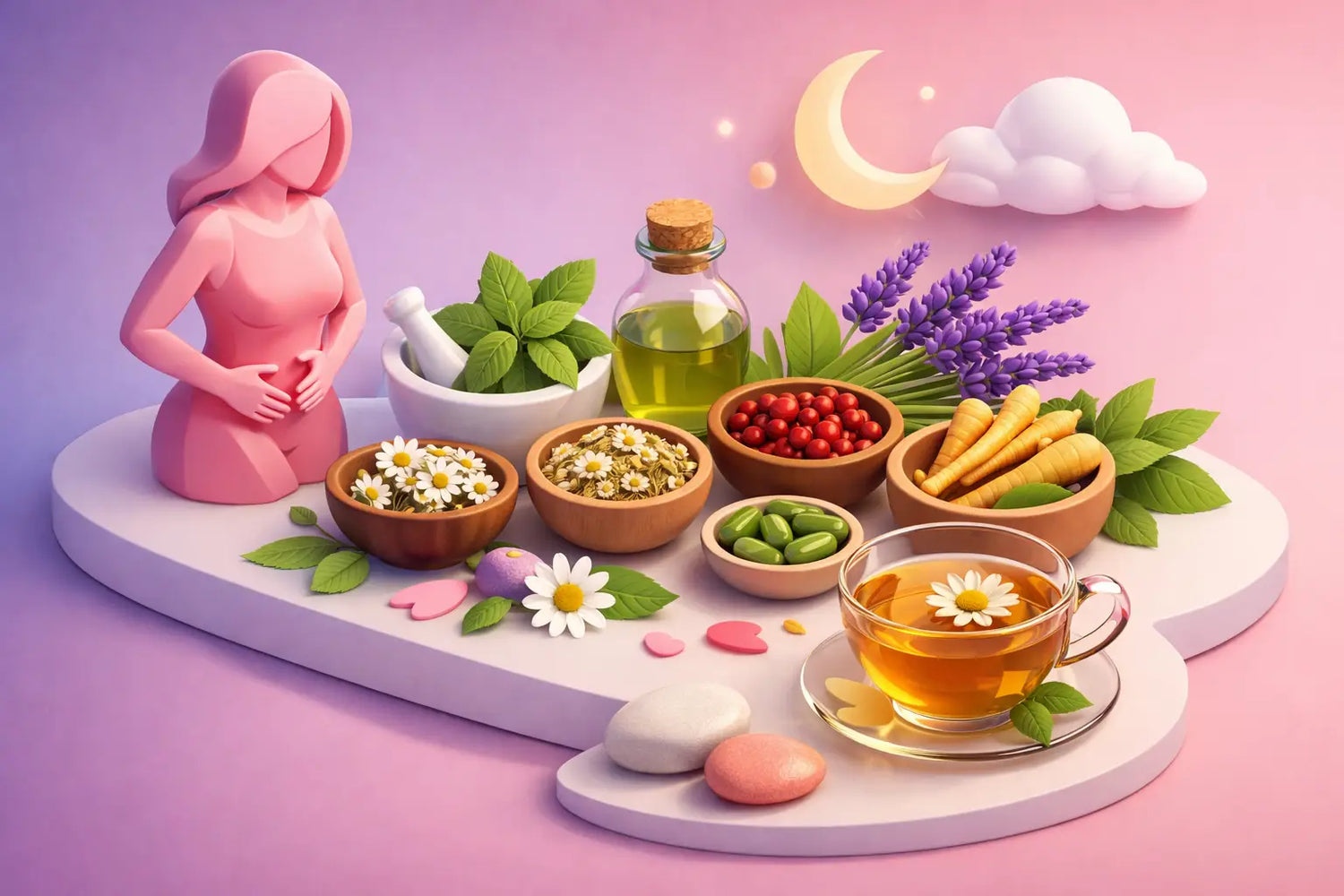
Your period may last a few days, but PMS can start stealing your sparkle long before it arrives. The cravings, tender breasts, short fuse, low mood, bloating, and cramps are not you being “too sensitive.” They are real signals from a body moving through a major hormonal shift. The best herbs for PMS relief can offer gentle support, especially when you choose them for your actual symptoms and work them into a ritual you will truly keep.
Herbs are not one-size-fits-all, and neither is PMS. A person whose biggest struggle is cramping needs something different from someone who feels weepy, wired, ravenous, and exhausted for seven days each month. Here is a practical, evidence-aware place to start.
The best herbs for PMS relief, by symptom
1. Ginger for cramps, nausea, and that heavy feeling
Ginger is the friend you want around when your uterus is doing the absolute most. Its active compounds have anti-inflammatory effects, and research suggests ginger may help reduce menstrual cramp intensity for some people. It can also be especially comforting if cramps come with nausea, sluggish digestion, or that puffy, heavy lower-belly feeling.
Fresh ginger tea is lovely, but consistency matters more than making a perfect potion. Try grating fresh ginger into hot water with lemon, adding ground ginger to a smoothie, or using it in your morning latte or tea ritual. If you use concentrated ginger supplements, check with a clinician first if you take blood thinners, have gallbladder disease, or are preparing for surgery.
2. Chasteberry for cyclical mood and breast tenderness
Chasteberry, also called vitex, is one of the most studied herbs for PMS. It is often used for breast tenderness, irritability, mood shifts, and the particular kind of pre-period emotional static that makes an ordinary Tuesday feel deeply personal. It works through signaling pathways connected to prolactin and the menstrual cycle, rather than acting like a simple hormone replacement.
This is usually a daily, longer-game herb, not something to pull out when your period starts. Some people notice changes after a few cycles. It is not a match for everyone, though. If you are pregnant, breastfeeding, using hormonal medication, managing a hormone-sensitive condition, or working with fertility treatment, ask your qualified healthcare provider before trying it.
3. Saffron for low mood, irritability, and cravings
Saffron is more than the expensive little thread that makes rice golden. Small studies suggest it may support PMS-related mood changes, including irritability and low mood, and some people find it helpful when emotional eating or intense sweet cravings arrive before their period.
This is a potent herb, so more is not better. Culinary saffron can make a beautiful part of your food ritual, while standardized supplements should be chosen carefully and used as directed. Speak with a clinician before using saffron supplements if you take antidepressants or other medications that affect serotonin, or if you are pregnant.
4. Chamomile for tension, poor sleep, and cramps
When PMS turns your nervous system into a group chat that will not stop buzzing, chamomile can be a soft landing place. Traditionally used to settle the body and support sleep, chamomile may also help with mild cramps and anxious tension. It is a beautiful option for the luteal phase, the one to two weeks before your period, when rest often feels harder to access.
Make it useful by attaching it to a real-life cue: after dinner, after the kids are down, or when you close your laptop. A warm cup tells your body that the day is changing gears. If you have a ragweed allergy, use caution, since chamomile can trigger reactions in some people.
5. Peppermint for bloating and digestive discomfort
Hormonal shifts can slow digestion, increase fluid retention, and leave you feeling like your jeans changed sizes overnight. Peppermint is traditionally used for gas, bloating, and digestive discomfort, and a cup of peppermint tea can be especially welcome after a heavier meal or during the first days of bleeding.
Think of peppermint as more of a digestive sidekick than a primary PMS herb. It may not touch severe cramps or mood symptoms on its own, but it can make the bloated, backed-up part of the cycle feel more manageable. Skip or limit it if peppermint tends to worsen your reflux.
6. Cramp bark for uterine tension
Cramp bark has a very direct name for a reason. Herbalists have traditionally used it for uterine and muscle tension, and many people reach for it when cramps feel gripping, sharp, or spasm-like. The modern research is more limited than it is for ginger or chasteberry, so it is best viewed as a traditional option with promising practical use, not a guaranteed answer.
Cramp bark is commonly taken as a tea, tincture, or capsule around the days when cramps tend to show up. If your pain is new, severe, worsening, or keeps you from work, school, sleep, or normal life, do not simply layer on more herbs. That is a reason to get evaluated for conditions such as endometriosis, fibroids, or adenomyosis.
7. Cinnamon for cramps and blood sugar swings
Cinnamon brings cozy flavor, yes, but it may also help with menstrual discomfort. Some research suggests it can support cramp intensity and menstrual symptoms, while its warming, naturally sweet profile makes it a smart ritual addition when pre-period sugar cravings are loud.
Sprinkle it into coffee, chai, oatmeal, yogurt, or tea. This is the lazy girl’s herb habit: make the support part of what you are already drinking or eating. Stick to culinary amounts unless your practitioner recommends otherwise. High-dose cinnamon supplements can be a poor choice for people with liver concerns, particularly when they contain higher levels of coumarin.
How to choose an herb without making your cabinet chaotic
Start with the symptom that disrupts your life most. For cramps, ginger and cinnamon are accessible first choices, with cramp bark as a more targeted traditional option. For breast tenderness, irritability, and recurring cyclical mood shifts, chasteberry may be worth discussing with a practitioner. For bloating, peppermint can be an easy add. For sleep and nervous-system tension, chamomile offers a gentler evening ritual.
Then choose one or two approaches for at least two cycles, unless you have a side effect. Throwing seven new supplements at your body at once makes it nearly impossible to know what is helping. It also turns self-care into another full-time job, and babe, you have enough on your plate.
A tiny symptom log can reveal more than you expect. In the week before your period, note your mood, sleep, bowel habits, breast tenderness, cramps, cravings, and energy on a scale of one to five. You may notice that your “random” anxiety appears after three nights of poor sleep, or that your cramps are worse when you skip meals and run on coffee alone. That information helps you choose support with more intention.
A PMS ritual that is easy enough to repeat
The most supportive herbal routine is usually the one already attached to your day. If your morning beverage is sacred, add ginger or cinnamon there. Please Lawd, do not take my coffee away - just give it a more nourishing supporting role. If evenings are where the mood spiral begins, make chamomile tea while you put your phone on charge in another room.
Herbs work best alongside the basics that stabilize the hormonal ride: regular meals with protein and fiber, adequate hydration, movement that feels good instead of punishing, and sleep that gets protected more fiercely in the premenstrual week. This is not glamorous, but blood sugar and stress regulation can change how loudly PMS shows up.
If PMS symptoms are severe, affect relationships or daily functioning, include hopelessness, or disappear and return with frightening intensity every month, reach out to a healthcare professional. PMDD, thyroid concerns, anemia, endometriosis, and other conditions deserve care that goes beyond a tea bag.
Your cycle is allowed to ask for more tenderness. Start with one herb, one small ritual, and one honest promise to listen when your body says it needs support.