
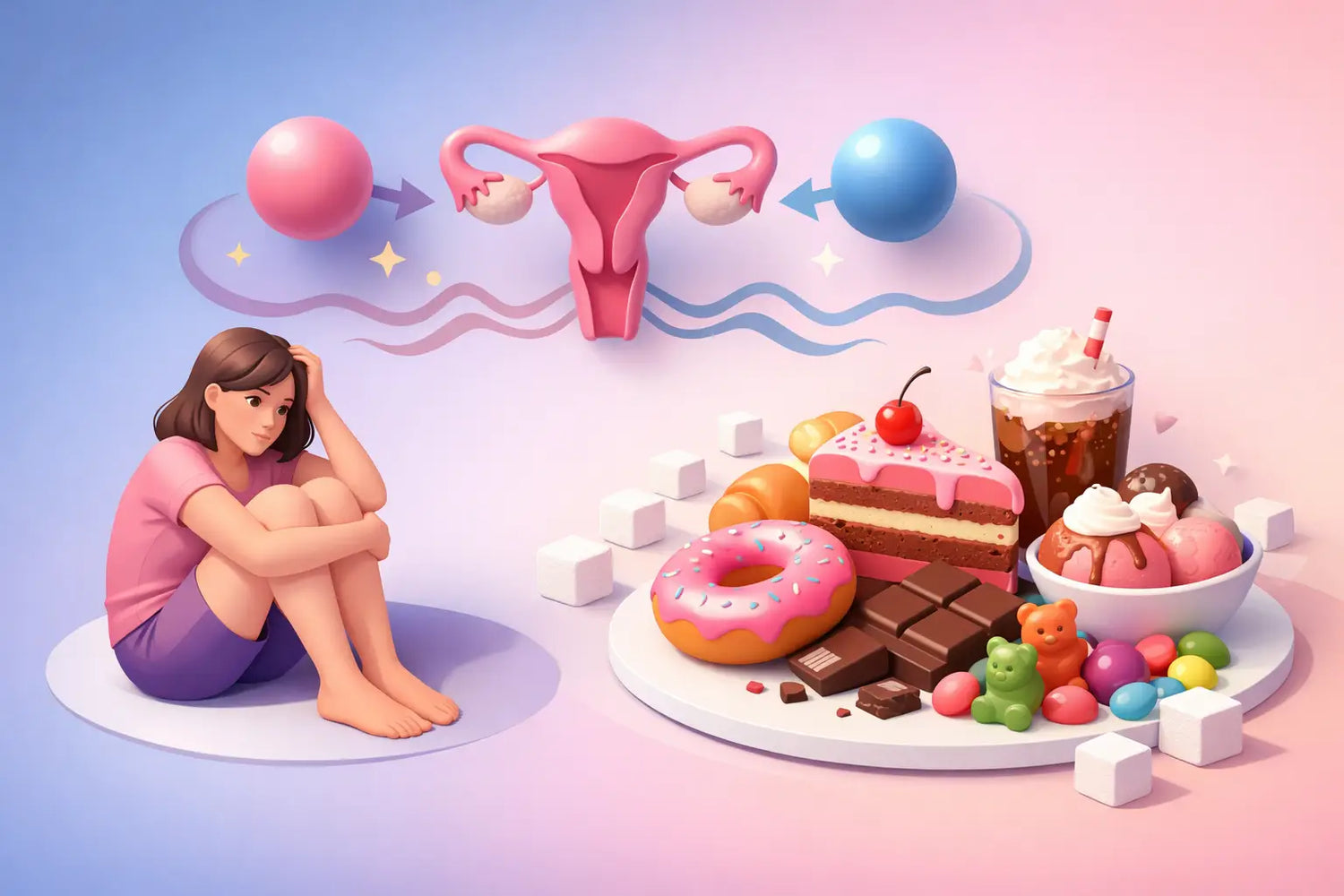
That sudden, deeply specific need for chocolate two days before your period is not a lack of discipline. If you’ve been asking, can PMS cause sugar cravings, the answer is yes. Your cycle can shift appetite, mood, energy, and the way your brain responds to sweet foods - often all at once.
The goal is not to white-knuckle your way through the luteal phase with a sad desk salad and a lecture about willpower. It’s to understand what your body may be asking for, then give it steadier support. Because a craving is information. It just is not always a direct instruction to eat an entire sleeve of cookies.
Can PMS Cause Sugar Cravings? The Hormone Connection
PMS happens during the luteal phase, the stretch between ovulation and your period. During this time, estrogen and progesterone rise and then fall. Those shifts can affect neurotransmitters involved in mood and appetite, including serotonin.
Serotonin helps regulate mood, sleep, and that grounded, emotionally okay feeling. When it dips, carbohydrate-rich foods may feel especially appealing because eating carbohydrates can temporarily support serotonin production. Add sugar to the mix, and you get fast energy plus a quick hit of pleasure. Hello, 3 p.m. bakery-cookie fantasy.
Research also suggests that many people burn slightly more energy in the luteal phase. The increase is not huge, and it varies from person to person, but it can mean you are genuinely hungrier before your period. Sometimes the craving is your body’s very reasonable request for more food. Sometimes it is more about energy instability, stress, or restriction earlier in the day. Often, it’s a little of everything.
Why the Cravings Can Feel So Loud
Hormones are part of the picture, but they do not operate in a vacuum. The intensity of premenstrual sugar cravings often depends on what else your body is carrying.
Blood sugar swings make sweet foods feel urgent
If breakfast was coffee only, lunch was rushed, and you are running on fumes by late afternoon, your body wants the fastest available fuel. Sugar does that job quickly. The trouble is that a sweet snack by itself can raise blood sugar fast and leave you wanting more once it drops again.
This is not a moral failure. It is physiology doing its best with the resources it has. A more balanced meal pattern can take the edge off the emergency feeling around sweets, especially in the week before your period.
Stress turns cravings into a coping tool
When your nervous system is maxed out, sugary foods can offer a brief sense of comfort and reward. Cortisol, your main stress hormone, may also influence appetite and cravings. This is why the craving can hit hardest after a frantic workday, a night of broken sleep, or one of those weeks where everyone needs something from you immediately.
There is nothing frivolous about wanting comfort when you are depleted. But it helps to have more than one form of comfort available. Food can be one pleasure in your toolkit, not the only nervous-system support you get.
Poor sleep changes appetite signals
A few short nights can make hunger feel sharper and make highly palatable foods more tempting. PMS can already disrupt sleep through cramps, temperature changes, anxiety, breast tenderness, or mood shifts. That creates a very rude little loop: PMS affects sleep, poor sleep heightens cravings, and then the sugar crash can make you feel even more tired.
Restriction can boomerang
Trying to be "perfect" around food can make a normal craving feel bigger and more charged. If you tell yourself sugar is forbidden, then have a brownie, it is easy to slip into the all-or-nothing spiral: “I already blew it, so I might as well keep going.”
Your body does better with consistency than punishment. You can have the chocolate and still care for your blood sugar, digestion, and hormones. Both can be true, babe.
How to Handle PMS Sugar Cravings Without Fighting Yourself
Start by feeding yourself before you are ravenous. For many women, that means eating regular meals with protein, fiber-rich carbohydrates, and fats that help the meal stick with you. Think eggs with toast and fruit, a grain bowl with chicken or tofu and avocado, or yogurt with berries, nuts, and granola. The best choice is the one you will realistically eat on a busy Tuesday.
Do not save all your carbohydrates for a “cheat” moment. Complex carbs like oats, potatoes, beans, rice, quinoa, and whole-grain bread can be deeply supportive during the luteal phase. They provide usable energy and may feel more satisfying than trying to survive on protein alone. Pair them with protein and fat, and you are more likely to feel steady afterward.
When you want something sweet, make it intentional instead of secretive. Have the dark chocolate after lunch, add peanut butter to your apple, or enjoy a dessert alongside a real meal. This is not about turning every craving into a wellness project. It is about avoiding the crash-and-crave cycle when you can.
It can also help to prepare for your personal craving window. If your sweet tooth reliably arrives three to five days before your period, keep satisfying options around before that week begins. A few squares of chocolate, dates with nut butter, frozen yogurt bark, trail mix, or a favorite bakery treat can all belong in a supportive routine. Pleasure counts too.
Small Rituals That Support a Steadier Luteal Phase
Your premenstrual week is not the time to demand peak productivity from a body asking for more rest. Lowering the pressure where you can may soften cravings that are really exhaustion in a cute disguise.
Try making your morning beverage work a little harder for you. Instead of starting with coffee on an empty stomach, have it after breakfast or pair it with something nourishing. If a daily coffee, chai, matcha, or tea ritual is already your non-negotiable, adding a functional formula like SuperCube can be an easy way to build a more supportive rhythm around it.
Gentle movement can help too, especially when it feels regulating rather than punishing. A walk after dinner, light strength training, stretching, or dancing around your kitchen can support mood and help you reconnect with what your body needs. You do not need to earn food with exercise. Movement is here to help you feel more at home in yourself.
Magnesium-rich foods may also be worth prioritizing. Pumpkin seeds, almonds, cashews, leafy greens, beans, and dark chocolate provide magnesium, a mineral involved in muscle function, sleep, and mood regulation. Some people use a magnesium supplement for PMS symptoms, but the right type and dose depend on your health history and medications. Check with a qualified clinician if you are considering one.
When Sugar Cravings Might Need a Closer Look
PMS cravings are common, but they should not make you feel out of control every month. If cravings come with intense mood changes, binge eating, severe fatigue, dizziness, irregular periods, new facial hair growth, acne changes, or unexplained weight changes, it is worth talking with a healthcare professional.
Conditions such as PMDD, insulin resistance, polycystic ovary syndrome, thyroid disorders, and some nutrient deficiencies can overlap with symptoms that get dismissed as “just PMS.” You deserve care that looks at the full pattern, not another brush-off.
Also pay attention to whether your cravings feel physical, emotional, or both. A physical craving may come with hunger and improve after a balanced meal. An emotional craving often appears after stress, loneliness, overwhelm, or restriction, and may need rest, connection, or a pause in addition to food. Neither experience is shameful. Naming the difference simply gives you more options.
The next time the chocolate call arrives before your period, meet it with curiosity. Eat enough. Add steadiness where you can. Let sweetness be pleasurable, not evidence that you have done something wrong. Your body is not being dramatic - it may be asking, in its very own hormonal language, for a little more care.