
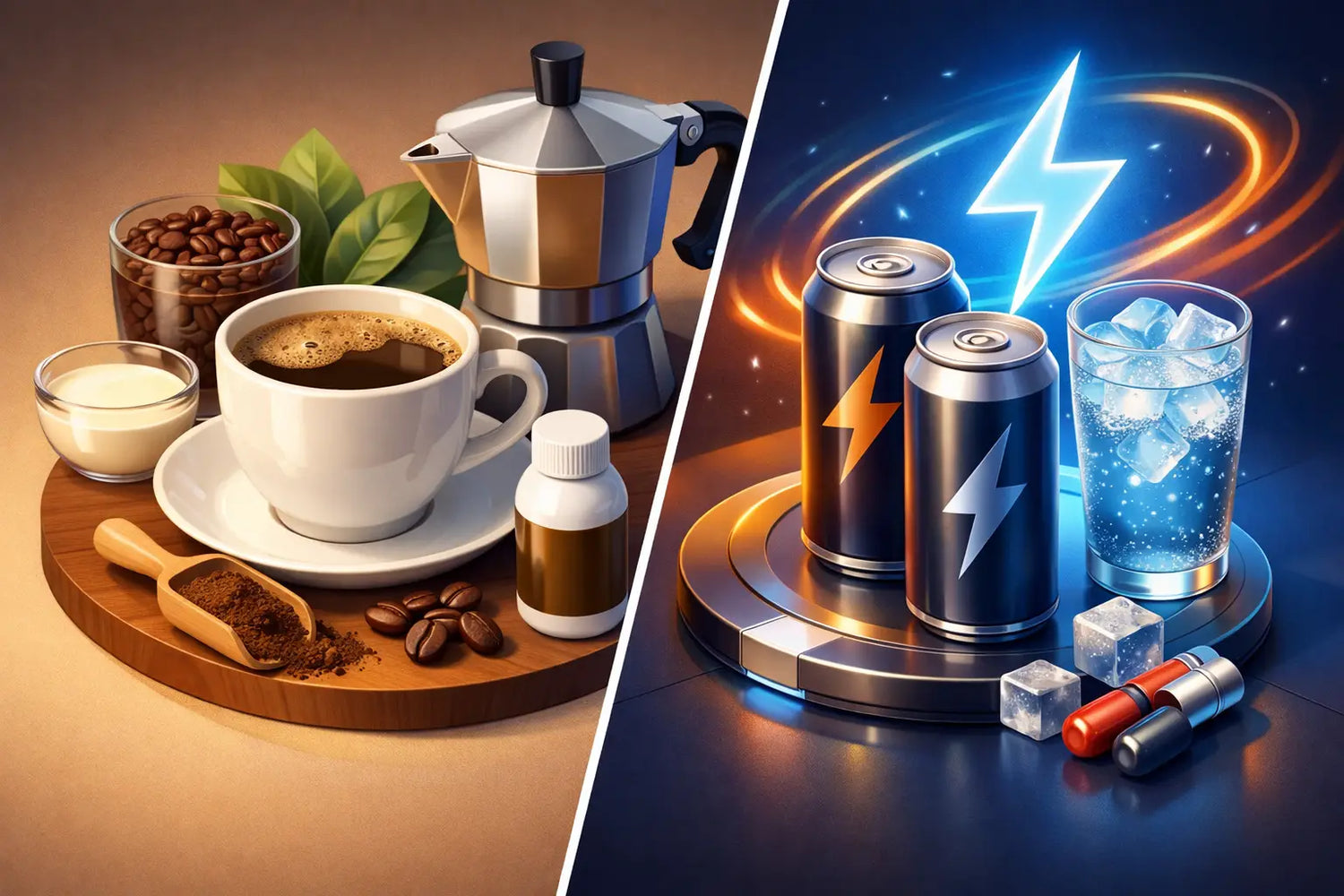
The coffee enhancer vs energy drink question usually hits at 2:47 p.m., when your to-do list is loud, your brain is fuzzy, and your body is asking for help in the least graceful way possible. You want energy, obviously. But if you are also navigating stress, cravings, cycle shifts, poor sleep, or that wired-but-weary feeling, the kind of energy you choose matters.
An energy drink can feel like the fastest route back to yourself. A coffee enhancer can support the ritual you already love while bringing more intention to what happens after the caffeine kicks in. Neither choice is morally superior. But they are designed for very different moments, and your body may have a strong opinion about which one feels better.
Coffee Enhancer vs Energy Drink: The Core Difference
An energy drink is typically built around stimulation. Most contain caffeine, often alongside ingredients such as B vitamins, amino acids, sweeteners, electrolytes, or botanical extracts. Their promise is immediate: open the can, drink it cold, feel more alert.
A coffee enhancer is made to be added to coffee, chai, matcha, or tea. It does not need to replace your beloved morning beverage. It works with the ritual already on your calendar, adding functional ingredients that can support a more grounded energy experience.
That distinction is bigger than packaging. One product is often used as an energy intervention when you are already running on empty. The other becomes part of a daily rhythm that can support you before the afternoon chaos arrives.
For women dealing with hormone-related energy swings, that rhythm can be especially meaningful. Your energy is not separate from your sleep, stress load, meals, menstrual cycle, and nervous system. It is a whole-body conversation, not a personality flaw because you cannot “just push through.”
What Energy Drinks Do Well
Let us give the fizzy little can its flowers. Energy drinks are convenient, portable, and usually very clear about their purpose. If you are driving home late, heading into an occasional early workout, or facing a rare deadline emergency, a measured dose of caffeine may be useful.
Many people also like the flavor and the cold, sparkling experience. For someone who does not drink coffee, an energy drink can be an accessible caffeine option.
The trade-off is that “more awake” is not always the same as “better supported.” Depending on the product, the caffeine dose may be high, and some drinks contain substantial added sugar or sugar substitutes that do not agree with everyone. Caffeine can also feel more intense when you have not eaten enough, are dehydrated, are stressed, or are in a more sensitive point of your cycle.
That is when the familiar sequence shows up: a burst of get-it-done energy, then jitters, irritability, a racing mind, hunger that feels urgent, or a late-day slump that sends you looking for another hit. Not every woman experiences this, and not every energy drink causes it. But it is worth noticing the pattern instead of blaming yourself for being “bad at caffeine.”
The caffeine question is personal
Caffeine tolerance varies wildly. One person can drink a strong cold brew at 4 p.m. and sleep beautifully. Another feels anxious after half a can of an energy drink at breakfast. Genetics, medications, sleep quality, stress, and hormonal shifts can all influence how caffeine lands.
Pay attention to dose as much as source. A drink with 200 milligrams of caffeine may be fine for one person and far too much for another, especially if coffee, tea, pre-workout, or chocolate are already in the mix. If you are pregnant, breastfeeding, managing a health condition, or taking medication, ask a qualified clinician what is appropriate for you.
Why a Coffee Enhancer Can Feel Different
Coffee is already a ritual for so many of us. Please Lawd, do not take the coffee away. The goal is not to make your morning joyless or turn your kitchen into a supplement laboratory.
A thoughtfully formulated coffee enhancer lets you build support into something you are genuinely likely to do every day. Rather than asking you to remember a separate capsule, powder, tincture, and complicated wellness checklist, it meets you at the mug.
The ingredients matter, of course. Functional formulas may include botanicals and nutrients chosen to support stress regulation, digestion, immunity, mood, or steady energy. In Traditional Chinese Medicine-inspired wellness, the conversation often goes beyond stimulation. The aim is to nourish the systems that help you feel resilient, rather than treating your body like it should operate at maximum volume all day.
For example, LALAS WELLNESS SuperCube is designed to blend into coffee, chai, matcha, or tea, making a functional ritual feel like a little act of care instead of another task. That matters because consistency often comes from pleasure and simplicity, not from having the most impressive shelf of wellness products.
It is not about canceling out caffeine
A coffee enhancer does not magically make an extra-large coffee irrelevant to your sleep, hydration, or nervous system. It also cannot outsmart skipped meals or five hours of rest. Real talk: no formula can carry the full weight of a life that is asking too much from you.
What it can do is help create a more supportive context for the caffeine you already enjoy. That may be particularly appealing if your current routine is coffee first, breakfast later, and then wondering why your mood has gone a bit feral by midmorning.
Pairing your beverage with a real meal, protein, fiber, water, and a few quiet minutes will likely do more for steady energy than chasing the strongest drink on the shelf. The enhancer belongs in that larger ritual, not above it.
Which Choice Fits Your Day?
Choose based on the job you need your energy source to do. An energy drink may make sense for occasional, on-the-go alertness. A coffee enhancer may fit better when you want daily support woven into a beverage you already make.
Ask yourself what happens after the initial lift. Do you feel focused, fed, and emotionally steady? Or do you feel buzzy, hungry, tense, and somehow still exhausted? Your answer is useful data.
A coffee enhancer may be a better match if you want to make your morning cup feel more intentional, if you are prone to caffeine crashes, or if you are building routines around cycle care, stress support, and more stable daily energy. It can also be a gentler fit for anyone who is over collecting random cans and powders that all promise a new personality by lunchtime.
An energy drink may be a better match if you do not drink coffee or tea, need occasional convenience, and tolerate its ingredients well. Look at the label, especially caffeine and sweetener content, rather than assuming that “zero sugar” or “natural” automatically means it will feel good in your body.
A Better Way to Build Everyday Energy
The most supportive energy plan is usually less dramatic than the internet makes it sound. Start by noticing your personal baseline: how you sleep, when you eat, how much water you drink, and whether your caffeine habit helps you feel capable or keeps your nervous system on a tiny trampoline.
Then make one easy adjustment. Try having your coffee after breakfast. Add a functional enhancer to your usual drink. Keep an energy drink for the genuinely occasional day rather than the daily rescue mission. Give the change enough time to observe how your body responds, especially across different points in your cycle.
Your body is not asking you to become a perfectly optimized wellness woman with a sunrise routine and color-coded supplements. It is asking for steadier care. Let your daily cup be one small place where you choose energy that feels supportive, delicious, and a little more like being on your own side.