
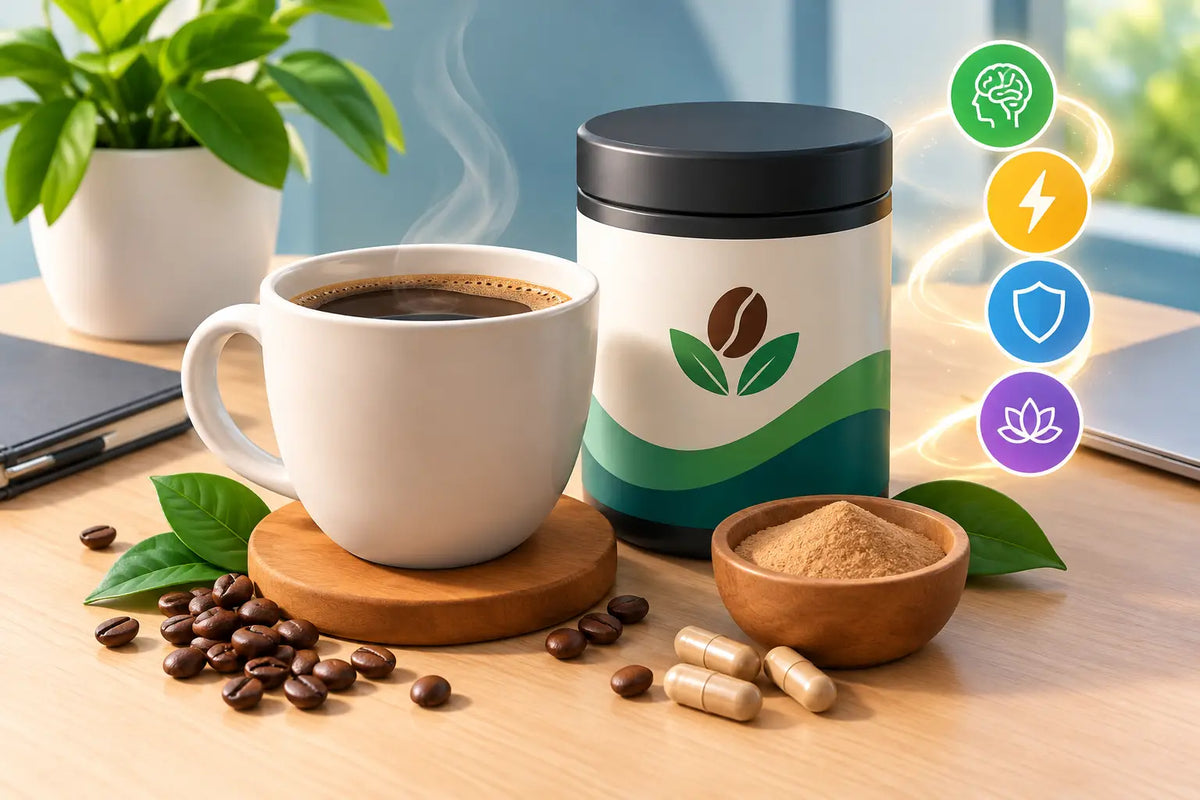
Your coffee may be the one boundary you refuse to negotiate. Fair. When you are balancing a packed calendar, a tender pre-period mood, and that 3 p.m. energy cliff, hearing “just quit caffeine” is not exactly helpful. This coffee wellness enhancer review is for the woman who wants her morning cup to feel more supportive, not more complicated.
The real question is not whether coffee is good or bad. It is whether your current coffee ritual works with your body. If you feel alert for an hour, shaky by midmorning, ravenous before lunch, and wired-but-tired by bedtime, your cup may need a little more nourishment around it.
What is a coffee wellness enhancer?
A coffee wellness enhancer is a functional formula made to stir into coffee, matcha, chai, or tea. Rather than asking you to adopt a completely separate wellness ritual, it meets you at the ritual you already keep. Please Lawd, do not take the coffee away.
These blends can include herbs, functional mushrooms, minerals, fats, protein, fiber, or botanicals selected for goals like sustained energy, stress support, digestion, immunity, or hormone health. The ingredient list matters far more than the trendy label. “Functional” is not a magic word. A formula should make sense for your body, your symptoms, and the rest of your routine.
For women navigating cycle shifts, perimenopause, chronic stress, or blood-sugar swings, the appeal is obvious: support can live inside a habit that already happens every morning. That consistency is not boring. It is where change gets a chance to build.
Coffee wellness enhancer review: what to look for
A good review starts with your actual needs, not a blanket promise that one product can solve every energy issue. Coffee can feel very different depending on whether you have eaten, slept well, are under pressure at work, or are in a more sensitive phase of your cycle.
Ingredients with a clear job
Start by asking what each ingredient is doing there. Traditional Chinese Medicine-inspired formulas often use herbs in combination, because the goal is not simply to “stimulate” the body. It is to support patterns that can show up as fatigue, low mood, cravings, digestive discomfort, feeling run down, or a cycle that leaves you flattened.
Look for transparent ingredient information and a clear explanation of the intended benefits. Be cautious with proprietary blends that do not disclose amounts, especially if you are sensitive to herbs or taking medication. More ingredients do not automatically mean more support. A thoughtfully designed formula should feel purposeful, not like a pantry dump in a pretty jar.
It also helps to separate energy support from more caffeine. If your coffee already makes you anxious, another stimulant-heavy blend may turn the volume up on the exact symptom you are trying to soften. Some women thrive with a livelier formula; others need a gentler, grounding approach. Your nervous system gets a vote.
A formula that respects blood sugar and stress
For many women, the coffee problem is not coffee alone. It is coffee on an empty stomach followed by a rushed morning, a skipped breakfast, and a blood sugar crash that gets mistaken for a personal failure at 4 p.m. You are not lacking discipline. Your body may be asking for steadier input.
An enhancer can be a beautiful addition, but it does not erase the need for food. Pair your drink with breakfast that includes protein, fiber, and satisfying fat when you can. That might be eggs and toast, yogurt with berries and seeds, or last night’s leftovers if you are in your practical-girl era. The best ritual is the one that leaves you feeling fed, not merely fueled.
Stress support deserves the same honesty. Herbs and functional formulas can be part of a nervous-system-friendly routine, but they are not permission to ignore every signal your body sends. If your heart races, sleep suffers, or anxiety climbs after coffee, try reducing the caffeine amount, drinking it later in the meal, or choosing tea on more sensitive days.
Taste and texture matter more than wellness culture admits
If a formula tastes medicinal in a way you dread, it will spend its life at the back of the cabinet next to the aspirational supplements. A coffee enhancer needs to blend well and complement the drink you genuinely want to make.
Think about your usual order. If you love a creamy latte, choose something that feels at home with milk or a dairy-free alternative. If you drink black coffee, a rich herbal blend may be more noticeable than you expect. Matcha and chai drinkers may prefer formulas with warming, earthy notes. There is no prize for forcing down a ritual that does not feel good.
Who may benefit most?
Coffee enhancements can be especially useful for women who already have a consistent morning beverage habit and want an easier entry point to more intentional wellness. They can fit beautifully for busy professionals who need steadier momentum, mothers whose mornings belong to everyone else first, and women in perimenopause who are learning that their old caffeine tolerance has changed.
They can also make sense if you are trying to replace the second or third cup with something that feels more nourishing. That said, an enhancer is not automatically right for everyone. If you are pregnant, breastfeeding, managing a medical condition, taking prescriptions, or have a history of hormone-sensitive conditions, check with a qualified clinician before adding concentrated herbs to your daily routine.
The same goes for persistent symptoms. Very heavy bleeding, severe pelvic pain, missed periods, unexplained fatigue, major mood changes, or ongoing digestive distress deserve individualized medical care. Wellness rituals are powerful companions, and your symptoms still deserve to be taken seriously.
How to use one without overthinking it
The lazy girl’s hack to health is choosing one reliable moment and making it count. Add your enhancer to the coffee, chai, matcha, or tea you already make, then give your body a little time to respond. Daily use is generally more informative than taking it only on the mornings when you feel desperate.
Keep a simple mental note for two to four weeks: How is your energy after breakfast? Are afternoon cravings changing? Do you feel calmer, more focused, or less depleted by the end of the day? How is your sleep? You are looking for patterns, not perfection.
It is also wise to introduce one new wellness product at a time. If you begin a new supplement, change your diet, start intense workouts, and switch to decaf all in the same week, you will have no clue what is helping or what is not agreeing with you. Let your body be your guide, not a before-and-after fantasy.
The honest verdict
A coffee wellness enhancer is worth considering when it adds meaningful support to a habit you already enjoy, uses ingredients you understand, and fits your specific needs. It is less compelling when it relies on vague claims, makes you feel more overstimulated, or becomes a substitute for meals, sleep, or proper care.
LALAS WELLNESS SuperCube is designed for this ritual-first approach, bringing Traditional Chinese Medicine-inspired support to coffee, chai, matcha, or tea for women who want their daily cup to do a little more for them.
Your morning drink does not have to carry your whole life. But it can become a small, loving signal to your body: I am listening, I am supporting you, and I am allowed to make feeling better feel delicious.