
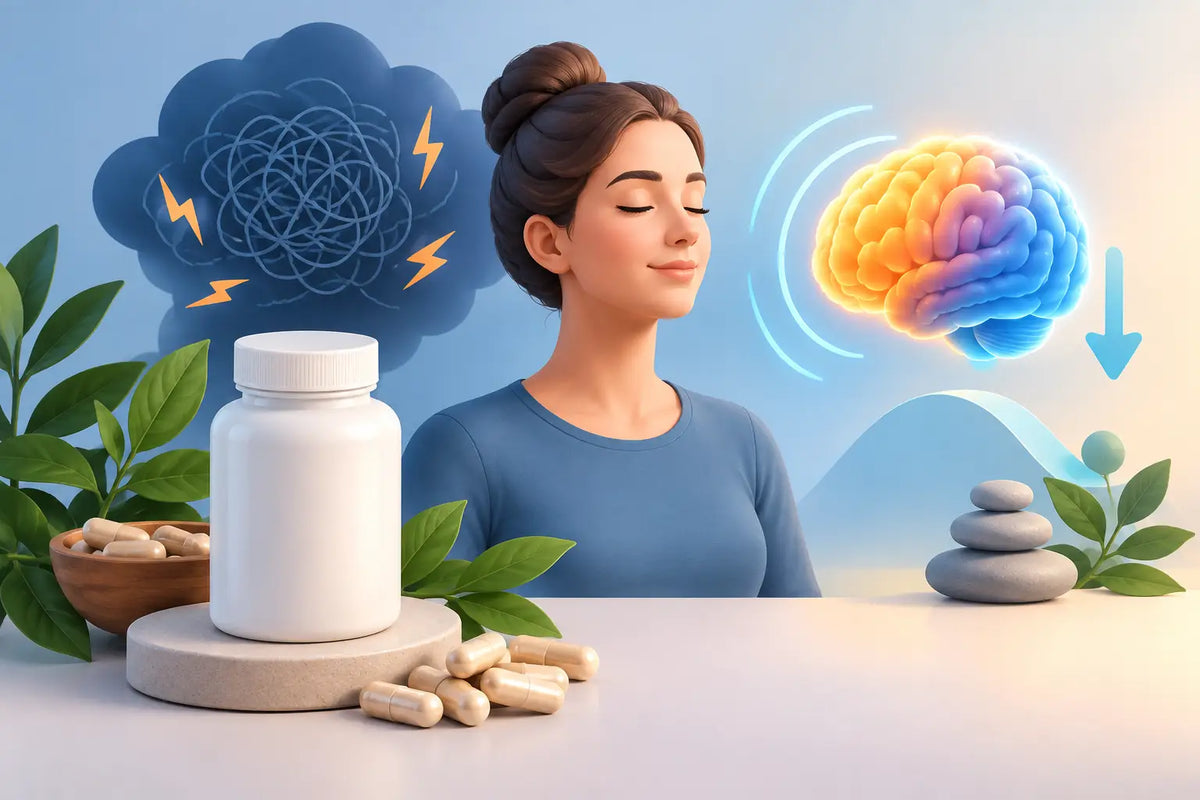
That wired-but-worn-out feeling is real. Maybe you wake up tired, hit a sharp 3 p.m. crash, feel extra snacky after a stressful meeting, then find yourself wide awake when your head finally hits the pillow. Cortisol supplements are often marketed as the answer, but your stress response deserves more than a trendy label and a random capsule.
Cortisol is not the villain of your hormonal story. It helps you wake up, respond to pressure, regulate blood sugar, and access energy when you need it. The goal is not to “get rid of cortisol.” The goal is to support a stress response that rises and settles at the right times, instead of keeping your body in a constant state of go, go, go.
What Cortisol Supplements Can and Can’t Do
“Cortisol supplements” is a catch-all phrase, not one specific category of product. Most formulas sold under this label contain nutrients or herbs intended to support calm, sleep, energy, or the body’s response to stress. Some may be useful when they match your symptoms and your life. Others are simply a very expensive way to avoid looking at the basics.
A supplement cannot out-herb a schedule that runs on skipped meals, four coffees, scrolling in bed, and a nervous system that never gets a cue that it is safe to downshift. That is not a lecture, babe. It is permission to stop expecting one thing to carry the whole load.
It also depends on what is actually behind your symptoms. Fatigue, changes in mood, disrupted sleep, irregular periods, weight changes, and anxiety can overlap with thyroid conditions, iron deficiency, perimenopause, depression, medication effects, and more. If symptoms are new, intense, or changing your daily life, bring them to a qualified clinician rather than self-diagnosing “high cortisol” from social media.
Start With Your Stress Pattern, Not the Trend
Before choosing a formula, notice when your body feels most dysregulated. Do you feel tired in the morning but more alert at night? Are you hungry every few hours, shaky between meals, or reaching for sugar when work gets chaotic? Does stress show up as a short fuse, a clenched jaw, painful periods, or getting sick whenever life gets busy?
These details matter because stress support should feel personal. The woman who cannot fall asleep may need a different approach than the woman who sleeps eight hours but wakes exhausted. Someone navigating perimenopause may be dealing with temperature changes and sleep disruption alongside stress. A new mom’s depletion may look different from a high-achieving professional’s afternoon crash, even if both are searching for cortisol support.
Your cycle belongs in this conversation, too. Cortisol and reproductive hormones communicate constantly. Ongoing stress can affect ovulation, cravings, mood, sleep, and the way your period feels in your body. That does not mean every difficult cycle is caused by stress. It means your nervous system is part of hormone care, not a separate side quest.
Ingredients Often Found in Cortisol Supplements
The best ingredient is not always the buzziest one. A good formula considers dose, quality, your health history, and whether the ingredient fits the symptom you are trying to support.
- Ashwagandha is an adaptogenic herb often used for stress and sleep support. Some research suggests it may help certain people feel less stressed, but it is not for everyone. It may be unsuitable for people with thyroid conditions, autoimmune disease, pregnancy, or certain medication regimens without professional guidance.
- L-theanine is an amino acid found naturally in tea. It is commonly used to encourage a calmer, more focused feeling, especially for people whose stress comes with mental buzzing. It can be a gentle fit for daytime, though responses vary.
- Magnesium supports many functions involved in sleep, muscle relaxation, and nervous system regulation. Low intake is common, but the form matters. Some forms are more likely to cause loose stools, and high doses can interact with medications.
- Phosphatidylserine is sometimes used in formulas aimed at evening stress and exercise recovery. The evidence is still evolving, and it is not a universal answer for sleep or fatigue.
- Traditional herbs and mushrooms may be used in practitioner-led formulas to support resilience, energy, digestion, and immune health. In Traditional Chinese Medicine, herbs are rarely chosen in isolation. The pattern matters: Are you depleted, overheated, restless, damp, stagnant, or running on fumes? That individualized lens is why more is not always better.
The Most Underrated Cortisol Support Is a Steady Meal
If your mornings begin with coffee and nothing else until noon, your body may be getting a louder stress signal than you realize. Caffeine is not forbidden. Please Lawd, nobody is taking your coffee away. But coffee lands differently when your body has had protein, fiber, fat, and hydration.
Try pairing your morning drink with a real breakfast, or at minimum adding something substantial alongside it. Think eggs and toast, Greek yogurt with berries and seeds, leftovers from dinner, or a smoothie with protein and a source of fat. The goal is steadier energy, fewer blood sugar swings, and less of that frantic hunger that makes the afternoon feel emotionally personal.
Then make your daily beverage work harder for you. A coffee, chai, matcha, or tea ritual can become a grounding cue when you add a functional formula and take five unhurried minutes to drink it. That tiny pause may sound almost too simple, but repetition teaches your body something powerful: we are fed, we are supported, and we do not have to sprint through every moment.
Build a Routine Your Nervous System Recognizes
Stress regulation becomes more believable to the body when it happens consistently. You do not need a two-hour morning routine or a perfectly silent home. You need a few reliable signals that tell your system when to rise, refuel, move, and soften.
Get outdoor light early when you can, especially within the first part of your day. Eat at reasonably regular intervals. Move in a way that leaves you feeling more alive instead of punished. For some women, intense workouts are energizing. For others, especially during a season of poor sleep or burnout-like fatigue, a walk, strength session, gentle yoga, or dance break may be the more supportive choice.
At night, protect the transition. Dim lights, put your phone down before you are fully fried, and choose one repeatable wind-down cue: a shower, a cup of tea, legs up the wall, a few pages of a novel, or a brain dump on paper. Your nervous system loves a familiar off-ramp.
How to Choose a Formula Without the Hype
Look for a clear purpose rather than a dramatic promise. Are you seeking help with bedtime restlessness, daytime tension, uneven energy, or a stress-heavy season? Read the full label, including the amount of each ingredient, and introduce one new supplement at a time when possible. That makes it easier to notice how you actually feel.
Give your routine enough time to become a routine. Track a few simple markers for two to four weeks: morning energy, afternoon cravings, sleep onset, mood before your period, and how resilient you feel after a hard day. You are looking for patterns, not perfection.
And if your fatigue feels crushing, your periods become unusually heavy or irregular, you are waking with panic, or you have symptoms like fainting, chest pain, or unexplained weight change, seek medical care. Loving your body also means getting the right support when it asks for more.
The sweetest kind of stress support is the kind that fits inside your real life: nourishment before depletion, a little less pressure, and a daily ritual that reminds your body it does not have to earn rest.