
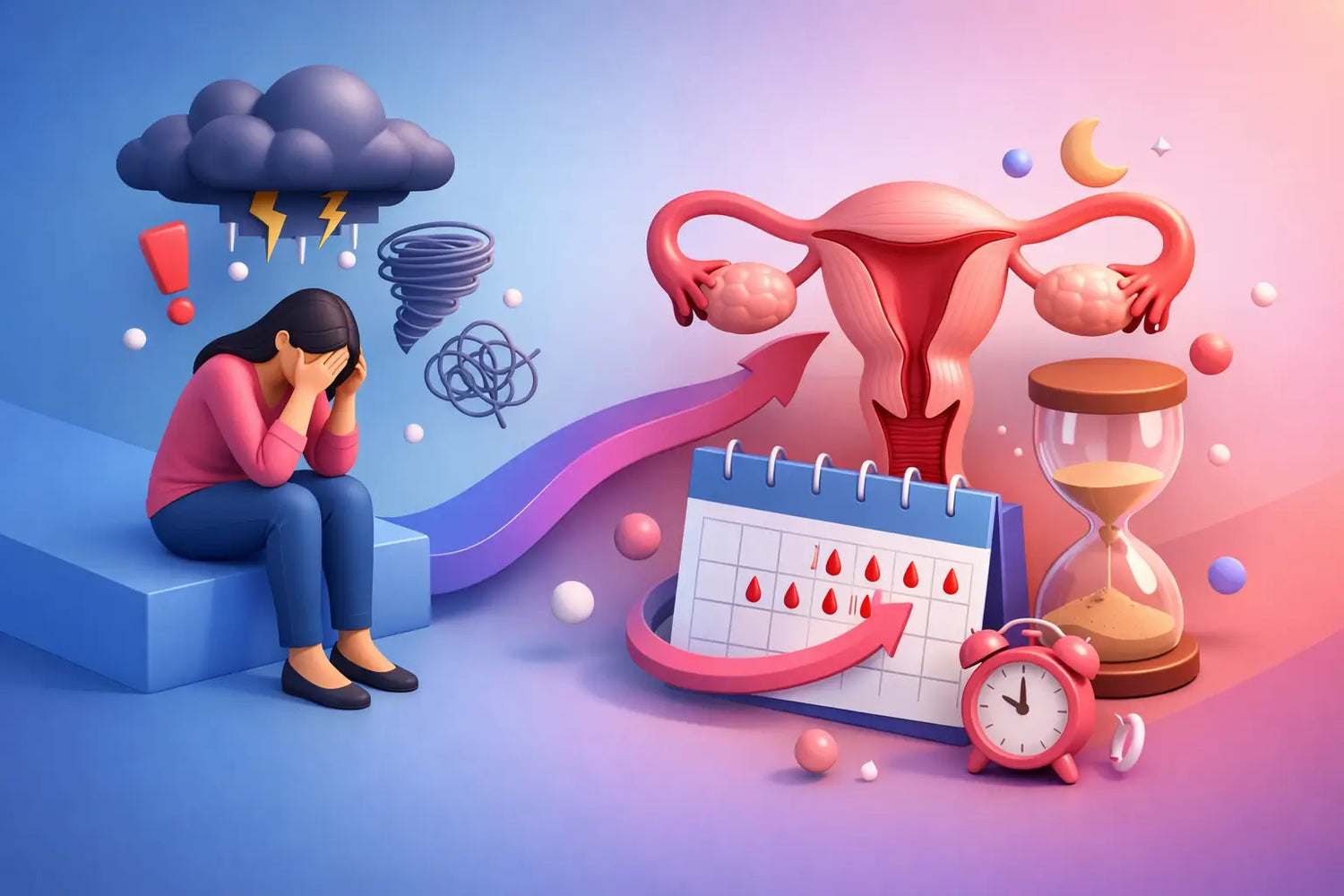
Your period was due three days ago, and suddenly you are analyzing every cramp, craving, and calendar notification. So, does stress affect menstrual cycle timing, flow, or PMS symptoms? Absolutely, it can. Your body is not being dramatic or failing you. It is responding intelligently to the signals it is receiving, including the very real signal that life feels like a lot right now.
Stress is not only the big, obvious stuff, like grief, a job loss, or a major move. It can also look like running on too little sleep, skipping lunch to make a meeting, pushing through intense workouts, caring for everyone else, worrying about money, or feeling emotionally stretched thin for weeks. Your hormones feel that pressure.
How stress affects your menstrual cycle
Your menstrual cycle is guided by a conversation between your brain, ovaries, and uterus. The hypothalamus, a small region in the brain, helps coordinate the hormones that tell your ovaries when to ovulate. It is also sensitive to stress.
When stress is high, your body releases cortisol and adrenaline to help you cope. That response is useful when you need to meet a deadline or get out of danger. But when your system rarely gets a chance to come down, cortisol can interfere with the hormone signaling involved in ovulation.
If ovulation happens later than usual, your period may arrive later too. If ovulation does not happen in a given cycle, bleeding may be unusually light, heavy, spotty, or absent. This is why a stressful month can sometimes turn a dependable 28-day rhythm into a 35-day mystery.
It is not always a straight line, though. One stressful Tuesday will not necessarily delay your period. Cycle changes are more likely when stress is intense, ongoing, or layered with under-eating, illness, travel, poor sleep, major exercise changes, or other physical demands.
Stress can change PMS, too
For many women, the more noticeable issue is not a late period. It is that the week before it feels louder. You may feel more irritable, anxious, tender, exhausted, snacky, bloated, or prone to headaches than usual.
That does not mean PMS is "all in your head." Stress can affect sleep, blood sugar stability, digestion, inflammation, and the nervous system. Each of those can make the normal hormone shifts of the luteal phase feel more intense. When your capacity is already maxed out, even a small dip in mood or energy can land with extra force.
Signs stress may be showing up in your cycle
A cycle will naturally vary a little from month to month. Still, it is worth noticing patterns, especially when your body is giving you repeat feedback.
Stress may be part of the picture if you notice that your period comes earlier or later during demanding seasons, your flow changes after poor sleep, or your PMS spikes when meals become irregular. You might also see more spotting, skipped periods, changes in cervical mucus, or a shorter or longer cycle than is typical for you.
The key word is pattern. A single off cycle is common. Several changed cycles in a row deserves more attention, and so does any symptom that feels severe, unfamiliar, or disruptive to your life.
What to do when stress is shifting your period
You do not need a flawless morning routine or an hour of meditation to support your hormones. In fact, adding a complicated wellness project to an already overloaded life can become its own stressor. The goal is to send your body small, consistent cues of safety, nourishment, and recovery.
Start with steady fuel
Blood sugar swings can make stress feel sharper. A coffee-only morning, followed by an afternoon crash and a frantic grab for something sweet, puts extra strain on a system that is already trying to keep up.
Aim to eat regularly and include protein, fiber-rich carbohydrates, colorful plants, and satisfying fats. This is not about eating perfectly. It is about giving your body enough predictable energy that it does not have to treat the day like an emergency. If your beverage ritual is sacred, keep it. Add something nourishing alongside it, rather than making your coffee the entire breakfast situation. Please Lawd, no one is taking your coffee away.
Protect your sleep like it is hormone support
Sleep is one of the clearest ways to help regulate stress signaling. You may not be able to control every nighttime wake-up, especially if you are parenting, caregiving, or working shifts. But you can make the landing softer.
Try a consistent wind-down cue: dim lights, a shower, a few pages of a book, gentle stretching, or putting your phone across the room for the last 20 minutes of the night. Even a modest improvement in sleep regularity can help your body feel less on guard.
Choose movement that meets you where you are
Movement can lower stress, but more is not always better. If you are depleted, dizzy, under-fueled, or waking up exhausted, relentless high-intensity training may not be the loving answer your body needs.
A walk outside, lower-impact strength work, yoga, dancing in your kitchen, or a shorter workout can still support circulation and mood without asking your system to white-knuckle another demand. Some weeks are for pushing. Some are for restoring. Both count.
Create one tiny daily downshift
Nervous system care does not have to look like a candlelit retreat. It can be three slow breaths before opening your laptop, sitting in the car for two quiet minutes after school pickup, or drinking your afternoon tea without multitasking.
Consistency matters more than grandeur. A familiar ritual tells your brain, "We are allowed to pause now." For women who want an easy add-in to an existing coffee, chai, matcha, or tea ritual, LALAS WELLNESS SuperCube was designed around that very idea: daily support that fits into real life, not another item on a never-ending to-do list.
Do not assume stress is the only answer
Stress is a common contributor to menstrual changes, but it is not the only possibility. Pregnancy, perimenopause, thyroid conditions, polycystic ovary syndrome, endometriosis, uterine fibroids, medication changes, significant weight changes, and illness can all affect bleeding and cycle timing.
Check in with a qualified healthcare professional if you miss periods for three months and are not pregnant, your cycles are consistently less than 21 days or more than 35 days apart, or your period has become noticeably different for several cycles. Seek prompt medical care for very heavy bleeding, such as soaking through a pad or tampon every hour for more than two hours, severe pelvic pain, fainting, chest pain, or a positive pregnancy test with bleeding or pain.
If you are in perimenopause, changing cycles may be part of the transition, but you still deserve support and clarity. Heavy bleeding, bleeding between periods, or symptoms that leave you sidelined should never be dismissed as something you simply have to tolerate.
Track the clues, not just the date
Your period tracker can be more than a countdown to bleeding. For two or three cycles, make a few simple notes about sleep, stress level, meals, exercise, mood, ovulation signs if you track them, and PMS. You are not collecting evidence to judge yourself. You are learning your body's language.
Maybe you will notice that your longest cycles follow work travel. Maybe the anxiety spike arrives after three nights of late scrolling. Maybe your cramps are worse when you have not eaten enough during the day. Those clues create a much more useful next step than trying to force your body into a perfectly timed schedule.
Your cycle is not a productivity report card. It is living feedback from a body that deserves food, rest, softness, medical support when needed, and a little more grace during the seasons that ask a lot of you.