
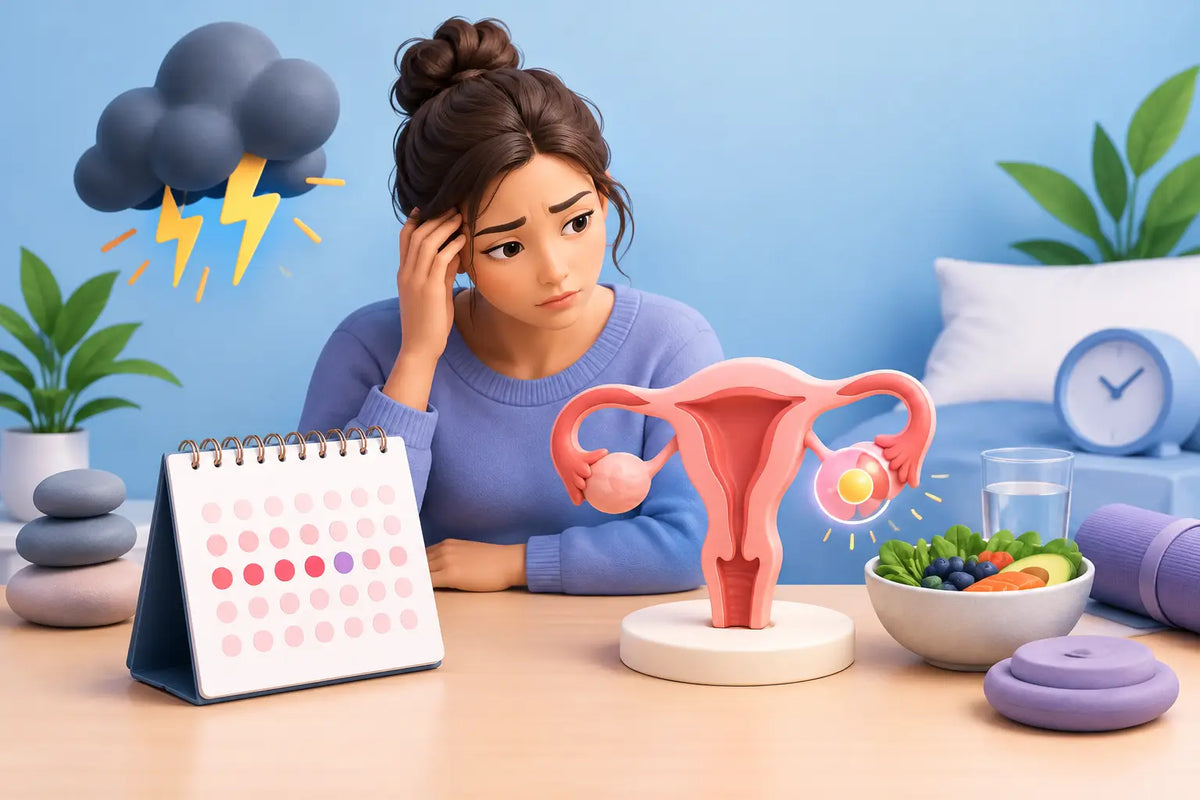
Your period is late, your usual ovulation signs are nowhere to be found, and naturally your brain is doing a full detective-board spiral. So, does stress delay ovulation? It absolutely can. Your body does not separate a packed calendar, poor sleep, skipped meals, a tough season at work, and emotional overwhelm from other forms of strain. It reads the overall message: resources may be limited, and now may not feel like the ideal time to release an egg.
That is not your body being dramatic or broken. It is your nervous system doing its very old, very protective job. The goal is not to stress about stress. It is to understand what may be happening, give your system some loving support, and know when a delayed cycle deserves a conversation with your clinician.
Does Stress Delay Ovulation? Yes, Sometimes
Ovulation is a brain-ovary conversation. Your hypothalamus and pituitary gland send hormone signals that help a follicle mature and trigger the release of an egg. Stress can influence that conversation through cortisol and other stress-response signals.
When stress is intense, prolonged, or layered on top of not eating enough, overtraining, illness, major travel, or disrupted sleep, the brain may delay the hormonal signal that leads to ovulation. If ovulation happens later, your period usually arrives later too. The second half of the cycle, after ovulation, tends to be more consistent for many people. It is the timing of ovulation that often shifts.
For some women, stress means ovulation is a few days later than usual. For others, a particularly demanding month can mean no ovulation at all. An anovulatory cycle can still involve bleeding, but that bleed may look or feel different from your usual period.
One late cycle does not automatically mean stress is the reason. Pregnancy, thyroid changes, polycystic ovary syndrome (PCOS), perimenopause, significant weight changes, certain medications, and other health conditions can also affect ovulation. Bodies are nuanced, babe.
Why Your Nervous System Has a Say in Your Cycle
Your reproductive hormones do not operate in a separate little department. They are influenced by sleep, metabolism, inflammation, emotional wellbeing, and how safe or stretched your nervous system feels.
Think about the kind of stress you have been carrying lately. It may be obvious, like caregiving, grief, a new job, a breakup, or financial pressure. It can also be sneakier: running on coffee until noon, never fully resting, pushing through workouts when exhausted, scrolling late into the night, or being the person everyone relies on while no one asks how you are doing.
From a Traditional Chinese Medicine perspective, stress can contribute to what practitioners call Liver qi stagnation. In everyday language, that can look like feeling wired but tired, tense shoulders, irritability, breast tenderness, digestive changes, headaches around your period, or a cycle that suddenly loses its usual rhythm. This is a pattern to explore, not a diagnosis to pin on yourself. But it is a helpful reminder that emotional pressure and physical symptoms are deeply connected.
Stress does not have to be extreme to matter
A single hard meeting will not usually stop ovulation. Your body is adaptable. The bigger issue is cumulative load - the weeks or months when recovery never quite catches up with demand.
That is why cycle support cannot be only about adding another supplement or tracking app. Those can be useful tools, but your system also needs regular inputs of safety: enough fuel, enough sleep, gentler pacing, pleasure, connection, and moments when you are not performing wellness perfectly.
Clues Ovulation May Be Running Late
If you track your cycle, you might notice fertile cervical mucus later than usual, a delayed positive ovulation predictor kit, or a later rise in basal body temperature. You may also simply notice that your period has not shown up on its expected day.
Symptoms alone cannot confirm whether you ovulated. Mid-cycle cramps, libido shifts, discharge, and breast tenderness can offer clues, but they are not definitive. Ovulation predictor kits detect a rise in luteinizing hormone, which often happens before ovulation, but a positive test does not guarantee an egg was released. Basal body temperature tracking can help confirm that ovulation likely happened after the fact.
If you have sex that could result in pregnancy, take a home pregnancy test when your period is late, even if stress feels like the obvious explanation. It is the simplest first step and can save you from days of guessing.
How to Support a Stressed Cycle Without Making It Another Job
Your body does not need a color-coded, 17-step hormone protocol. It needs consistency more than intensity. Start by looking at the foundations with real compassion for your actual life.
Eat regularly enough that you are not white-knuckling your way through the afternoon. A breakfast or first meal with protein, fiber-rich carbohydrates, and healthy fat can help create steadier energy than coffee alone. Please Lawd, do not take the coffee away - just give it some nourishment to work with.
Protect your sleep window as best you can. You do not need perfection, especially if you are parenting, traveling, or in a demanding season. But a repeatable wind-down cue, dimmer lights, and fewer work messages in bed can tell your nervous system that the day is ending.
Move in ways that leave you feeling more grounded, not more depleted. Sometimes a hard workout is joyful and supportive. Sometimes it is another stressor on an already overloaded system. Your cycle may appreciate walking, strength training with adequate recovery, stretching, dancing in your kitchen, or a lower-intensity week when your energy is flat.
Build tiny pauses into your day before you hit empty. Five minutes outside, a slower breath before your next meeting, a hot shower, music while you cook, or a cup of tea without your phone all count. Regulation is often less glamorous than a big reset, but it is powerful because you can actually repeat it.
Be careful with cycle “fixes” that promise too much
Herbs and functional wellness routines can be beautiful additions to a daily ritual, especially when they help you slow down and care for yourself consistently. But they are not a substitute for medical care, and more is not always better. If you are trying to conceive, pregnant, breastfeeding, taking medication, or managing a hormone-related condition, talk with a qualified healthcare professional before adding new herbal products.
It can also help to track a few simple patterns for two or three cycles: first day of bleeding, cycle length, ovulation test results if you use them, sleep quality, illness, travel, and major stressors. This is not about becoming hypervigilant. It gives you useful information and makes a clinical conversation much clearer if you need one.
When a Late Ovulation Pattern Needs Medical Support
A delayed ovulation once in a while can happen. Repeatedly irregular cycles are worth checking out, especially if they are suddenly different for you. Reach out to an OB-GYN, primary care clinician, or reproductive endocrinologist if your cycles are consistently shorter than 21 days or longer than 35 days, you go three months without a period and are not pregnant, or you are seeing a recurring pattern of skipped periods.
Also seek care sooner if you have very heavy bleeding, severe pelvic pain, new facial hair growth or acne alongside irregular periods, nipple discharge unrelated to breastfeeding, symptoms of thyroid changes, or a history of eating disorder, intense exercise, or significant weight loss. These experiences deserve care, not a brush-off.
If you are trying to conceive, timing matters too. Many clinicians recommend an evaluation after 12 months of trying if you are under 35, after six months if you are 35 to 39, and sooner if you are 40 or older or already know your cycles are irregular. You do not have to earn help by struggling alone.
Let Your Cycle Be Information, Not a Grade
A late ovulation day is not proof that you failed at self-care or that your body is betraying you. It may be a small signal that your system has been carrying a lot. Meet that signal with curiosity: feed yourself, soften the pace where you can, get the facts you need, and let support be part of the plan. Your body is always communicating. You are allowed to listen without turning every cycle into a crisis.