
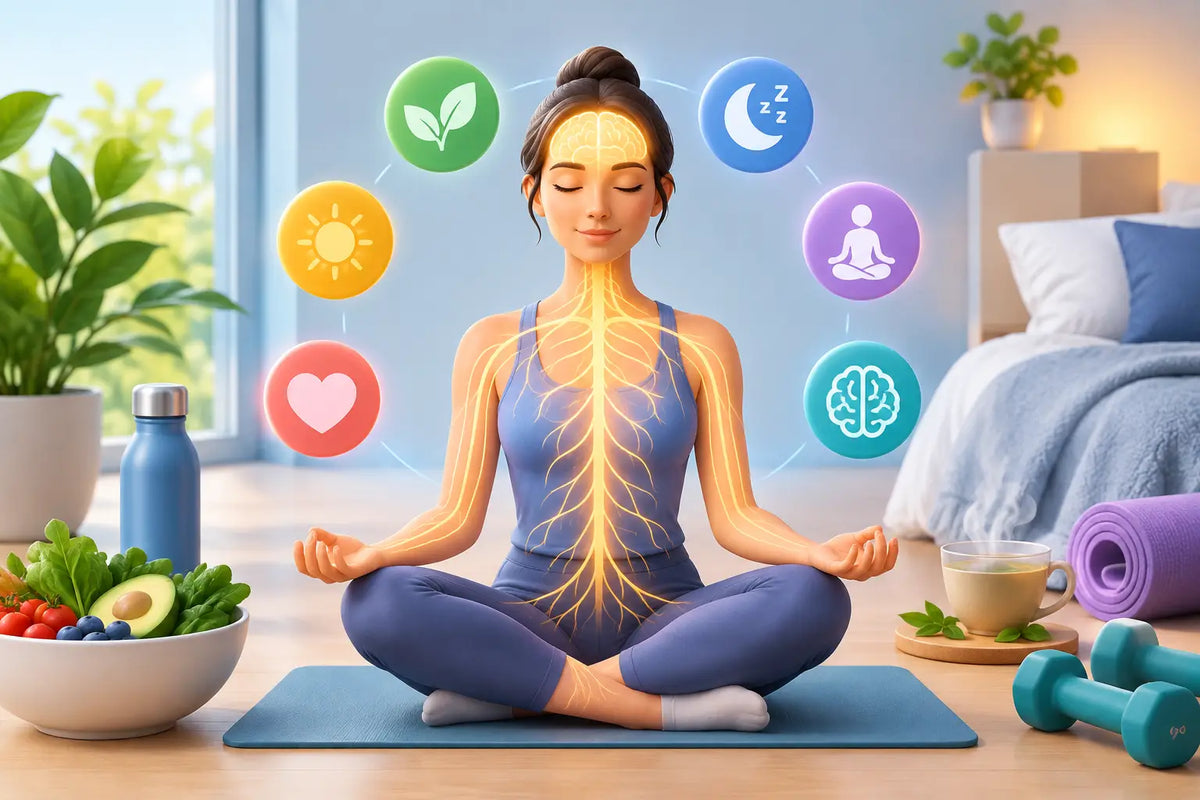
Your nervous system is not being dramatic when a packed inbox, skipped lunch, third coffee, and a tense conversation leave you wired at 10 p.m. It is responding exactly as it was designed to: by scanning for what feels demanding, uncertain, or unsafe. This guide to daily nervous system support is about giving your body more frequent signals that it can soften - without turning self-care into another item on your already overflowing list.
For many women, stress does not show up as a single feeling called stress. It can look like a short fuse before your period, a racing mind after bedtime, cravings that hit hard at 3 p.m., feeling exhausted but unable to rest, or energy that seems to disappear the second you sit down. Your hormones, blood sugar, sleep, digestion, and nervous system are in constant conversation. Supporting one often supports the others.
What Daily Nervous System Support Actually Means
Your autonomic nervous system manages the background operations of being alive: heart rate, breathing, digestion, temperature regulation, alertness, and recovery. When life asks a lot of you, your system can spend more time in a mobilized state. That is useful when you need to meet a deadline, handle an emergency, or power through a tough morning. The trouble starts when your body rarely gets the memo that the urgency has passed.
Daily support is not about feeling zen every minute. A healthy nervous system needs range. You want to be able to rise to meet the moment, then come back down afterward. Think less "never stressed" and more "I can return to myself."
From a Traditional Chinese Medicine perspective, chronic depletion and constant pressure can show up as a sense of being run down, irritable, ungrounded, or stuck. The goal is to protect your reserves while encouraging steadier movement in the body and mind. The most effective practices are usually beautifully unglamorous: regular meals, light exposure, rest, warmth, movement, and rituals you will actually repeat.
Start With the Signals Your Body Receives First
Your body responds to inputs before it responds to intentions. You can tell yourself to calm down all day, but if you have not eaten, have been crouched over a laptop for six hours, and are rushing from one obligation to the next, your physiology may have other plans.
Give your mornings a softer landing
Before you reach for your phone, open the curtains or step outside for a few minutes. Morning light helps set your circadian rhythm, which shapes sleep, energy, appetite, and mood later on. You do not need a perfect sunrise routine. Stand on the porch with your coffee. Let the dog out and look at the sky. A little light is still a message to your body: the day has begun.
Then, meet caffeine with care. Please Lawd, nobody is taking your coffee away. But coffee on an empty stomach can feel very different from coffee after food, especially if you are prone to shakiness, anxious energy, nausea, or an afternoon crash. Pair your beverage with breakfast or at least a satisfying snack that includes protein, fiber, and fat. This is not about food rules. It is about making your morning energy feel less like a roller coaster.
If a warm drink is already sacred in your day, let it do more than wake you up. Stirring a TCM-inspired formula such as SuperCube into coffee, chai, matcha, or tea can turn an existing habit into a moment of intentional nourishment. The ritual matters: pause, make it warm, sit down if you can, and let your first few sips belong to you.
Eat before you are desperate
Blood sugar swings can make nervous system stress feel louder. When you go too long without eating, your body may interpret the dip in available fuel as a reason to release stress hormones. Suddenly you are snappy, foggy, craving sugar, or convinced everyone in your family is talking too loudly.
Aim for meals that have staying power rather than chasing perfection. Protein, colorful plants or fiber-rich carbohydrates, and nourishing fats create a steadier foundation than a pastry grabbed between meetings. On chaotic days, a realistic lunch is better than an aspirational one you never get around to making. Leftovers, a loaded sandwich, yogurt with fruit and nuts, or a simple grain bowl all count.
Use movement to complete the stress cycle
When your system is activated, stillness is not always the first doorway to relief. Sometimes the body needs to move before it can settle. A ten-minute walk after lunch, a few songs in the kitchen, gentle strength work, shaking out your arms, or stretching your hips can help discharge some of that pent-up activation.
The right movement depends on your season. An intense workout may feel empowering on one day and leave you more depleted on another, particularly during a poor sleep stretch, a demanding cycle phase, illness, or perimenopause symptoms. Let your energy level have a vote. Consistency does not have to mean intensity.
Create Small Regulation Rituals Between Real Life
The nervous system loves predictability, but life is not always predictable. Tiny transition rituals can bridge the gap between what happened and what is happening now. They are especially useful for women who carry several roles at once - professional, partner, mother, caretaker, friend, human being with a brain that deserves a break.
Try a 60-second reset when you move from one part of the day to another. Before entering the house after work, sit in the parked car and take five slower breaths. Before replying to a charged text, unclench your jaw and put both feet on the floor. After closing your laptop, wash your hands with warm water and change clothes. These actions may look small, but repetition teaches your body that it does not need to drag the whole day into the next room.
Breathing can help too, especially when it is comfortable and unforced. Let your exhale run a little longer than your inhale for a few rounds. You might inhale gently for four counts and exhale for six, or simply sigh out slowly. If focused breathing makes you feel more anxious or lightheaded, skip it. Look around the room, name a few objects you see, feel a textured blanket, or take a short walk instead. Regulation is personal, and your body gets to be the expert on what helps.
Make Evenings Feel Like a Descent, Not a Crash
A nervous system that has been running on urgency all day may not power down on command. Build a little runway into the evening. Lower lights when possible, put tomorrow's essentials in one visible place, and choose one closing ritual that tells your brain the day is ending.
That could be a shower, a cup of tea, a face massage with your favorite balm, a few pages of a novel, or five minutes of legs-up-the-wall. Keep it deliciously doable. The goal is not to curate a picture-perfect bedtime. It is to offer a repeated cue of safety and completion.
Sleep support also starts earlier than bedtime. Late-day caffeine, alcohol close to sleep, scrolling through upsetting content, and working right up until your head hits the pillow can all make settling harder for some people. You do not need to change everything at once. Choose the one factor that feels most realistic to adjust this week.
When Your Symptoms Need More Than Lifestyle Support
Daily rituals are powerful, but they are not a substitute for care when something feels persistently off. If anxiety, low mood, insomnia, panic, severe fatigue, painful or unusually heavy periods, palpitations, or digestive symptoms are interfering with your life, speak with a qualified health professional. Those symptoms deserve curiosity and support, not dismissal.
It can also help to track patterns for a month or two: sleep, cycle day, meals, caffeine, mood, bowel habits, and energy. Not so you can obsess over every sensation, babe. So you can spot the conditions under which you feel more like yourself. That information is useful whether you are adjusting your routine or talking with your provider.
The most supportive routine is often the one that meets you in the middle. Eat something nourishing before the day runs away from you. Let sunlight touch your face. Move your body in a way that feels kind. Make your daily drink a ritual. Then let those small, loving signals add up to a body that feels a little more held.