News

How to Support Luteal Phase Mood Naturally
Learn how to support luteal phase mood with simple daily habits for steadier energy, fewer crashes, and gentler cycle shifts.
Three days before your period, the patience is gone, your cravings are loud, and even a normal text can feel weirdly personal. If that sounds familiar, you are not dramatic, needy, or failing at wellness. Learning how to support luteal phase mood starts with understanding that this phase asks more from your nervous system, your blood sugar, and your emotional reserves.
The luteal phase begins after ovulation and lasts until your period starts. This is the stretch when progesterone rises, estrogen shifts, and your body puts in a lot of behind-the-scenes work. For some women, that looks like a little more tenderness and a stronger need for rest. For others, it can feel like mood swings, irritability, anxiety, low motivation, cravings, poor sleep, and the deeply annoying sense that your usual routine suddenly stops working.

How to Ease PMS Naturally and Feel Better
Learn how to ease PMS naturally with food, movement, sleep, stress support, and simple cycle-friendly habits that help you feel more like yourself.
The week before your period can make you feel like a different person in your own body. Your jeans feel tighter, your patience is thinner, your cravings are louder, and suddenly every email sounds personal. If you have been wondering how to ease PMS naturally, the real answer is not one magic supplement or one perfect habit. It is a handful of supportive shifts that help your hormones, nervous system, blood sugar, and inflammation work with you instead of against you.
PMS is not just in your head, and it is not a sign that your body is failing you. It is often a sign that your body needs more support during the luteal phase, the stretch of time after ovulation and before your period starts. This phase asks a lot from you. Progesterone rises, your metabolism changes, your body temperature ticks up, and you may become more sensitive to stress, poor sleep, blood sugar swings, and inflammatory foods. That is why a routine that feels fine during one part of your cycle can suddenly feel awful during another.

Perimenopause Symptom Support Guide
A perimenopause symptom support guide for mood, sleep, energy, and cycle shifts with simple, holistic habits that fit real daily life.
Some days it is the 3 a.m. wake-up. Some days it is the sudden rage over a dishwasher left half-loaded. Some days it is a period that arrives early, late, or with a level of drama you did not sign up for. This perimenopause symptom support guide is here to say what many women need to hear: you are not imagining it, and your body is not betraying you. It is changing, and it deserves support that feels steady, practical, and kind.
Perimenopause is the transition leading up to menopause, and it can start years before your periods stop completely. For some women it begins in their late 30s, though it is more common in the 40s. Hormones do not simply decline in a neat little line. They fluctuate. That is why symptoms can feel unpredictable - heavy periods one month, insomnia the next, then breast tenderness, anxiety, headaches, or a weird sense that your usual routine suddenly does not work anymore.

Perimenopause Mood Swings Support That Helps
Perimenopause mood swings support starts with daily habits that steady hormones, blood sugar, sleep, and stress so you feel more like yourself.
One minute you are fine, and the next you are irritated by the sound of someone chewing. Or crying in the car for reasons you cannot quite name. If you are looking for perimenopause mood swings support, you are not being dramatic, and you are not failing at coping. You are living through a real hormonal transition that can change the way your brain, nervous system, sleep, and energy work together.
Perimenopause can feel especially rude because the emotional shifts are often unpredictable. You may still get a period, just not on a schedule you can trust. You may feel more anxious before bleeding, more wired at night, more fragile after a bad night of sleep, or suddenly less able to tolerate the stress load you used to push through. That is not random. It is your body asking for a different kind of support.

You Can’t Self-Care Your Way Into Self-Love
Self-love isn’t a Sunday activity—it’s a daily devotion. Here’s how I turned my rituals into real love: one breath, one sip, one hand-on-heart at a time.
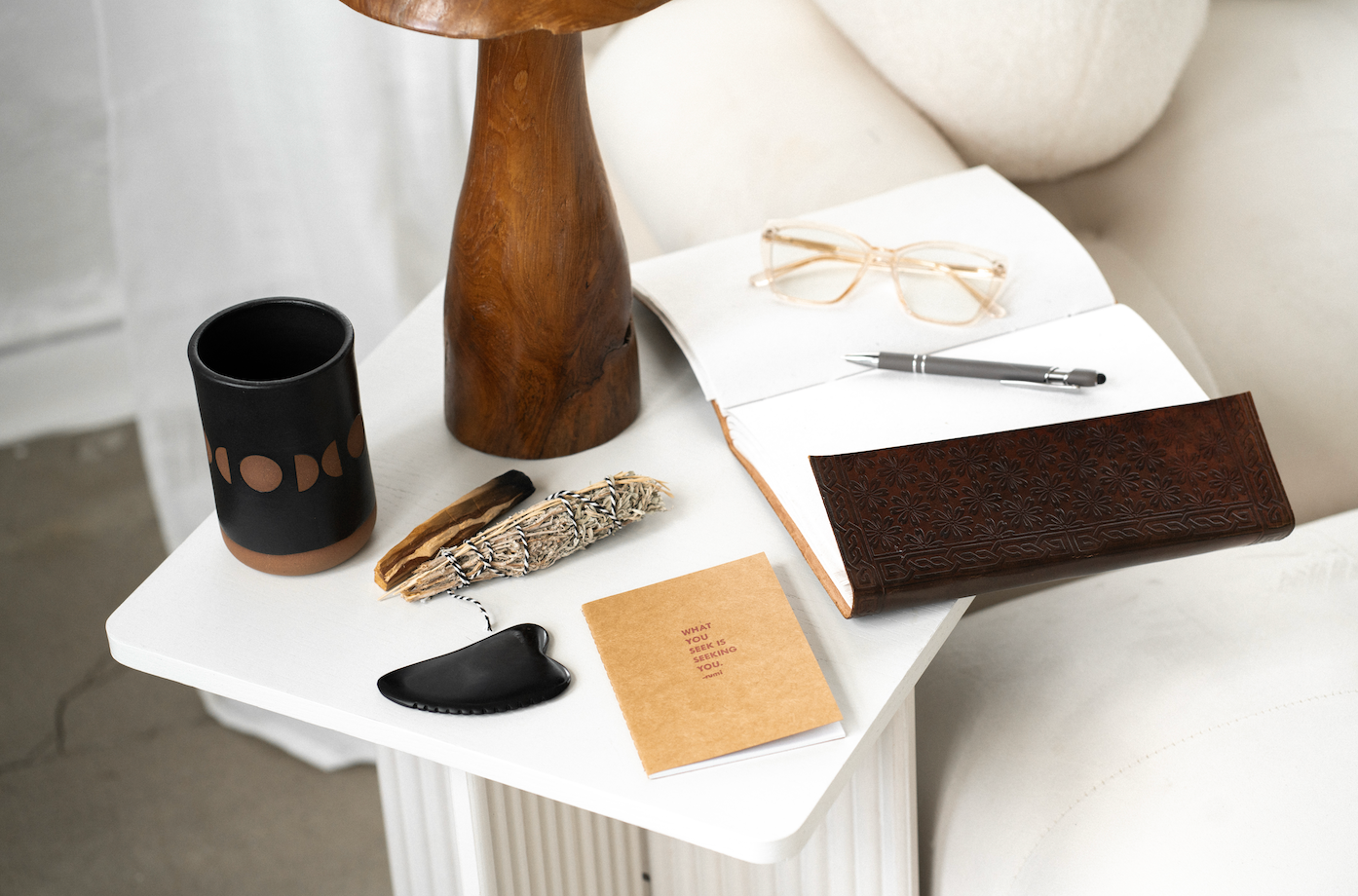
Somewhere along the way, self-love got rebranded as scented candles and $45 serums. Don’t get me wrong, there’s magic in magnesium flakes and quiet baths. But there’s a difference between soothing yourself and showing up for yourself.
I’ve tried to self-care my way into self-love before. I’ve made the lists, lit the candles, poured the tea. But the truth is, you can’t schedule your way into belonging inside your own body. Self-love isn’t something you do when you have time; it’s how you decide to live with yourself in real time.

🌿 Eat Your Greens, Be the Light: Why Leafy Greens Are the Unsung Heroes of Gut Health, Hormones, and Mood
Leafy greens do more than fill a salad bowl—they nourish your gut, support hormones, and feed your inner light. Learn which greens support detox, digestion, and mood (plus how to prep them like a pro). Bonus: free herbal salad-building guide inside!
If you’ve ever felt foggy, bloated, hormonally hijacked, or just straight-up “off”—this one’s for you.