
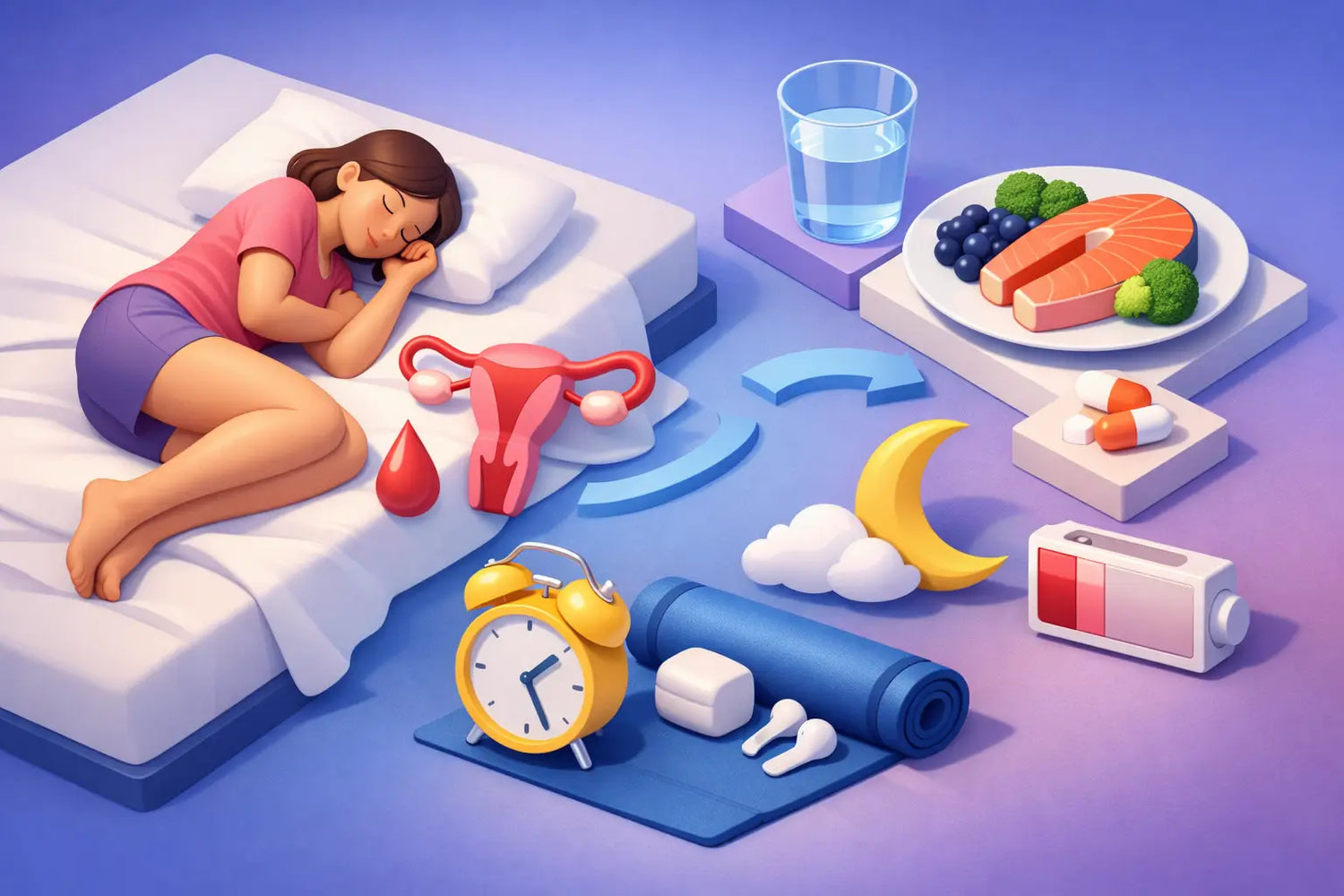
Your period arrives, and suddenly getting dressed feels like a project. Your coffee is not coffee-ing. Your usual to-do list feels personally offensive. If you have ever wondered, why do periods cause fatigue?, the short answer is that your body is doing real, energy-demanding work while your hormones, blood volume, sleep, and stress response may all be shifting at once.
That tiredness is not a character flaw, a lack of discipline, or proof that you need to push harder. It is information. And while some period-related fatigue is common, feeling flattened every month deserves care, curiosity, and a little more support than "just power through."
Why Do Periods Cause Fatigue in the First Place?
Menstrual fatigue is rarely caused by one single thing. Think of it as a pile-up: hormone changes can affect mood and sleep, bleeding can influence iron stores, cramps can disrupt rest, and life does not politely pause because your uterus is having a busy week.
Your cycle is also not separate from the rest of you. Blood sugar, stress, digestion, hydration, and the quality of your sleep all shape how intensely you feel those lower-energy days. This is why two people can have similar periods but very different experiences of fatigue.
Hormone shifts can change your energy and mood
In the days before and during your period, estrogen and progesterone drop. These hormones do far more than influence your cycle. They interact with brain chemicals, body temperature, fluid balance, appetite, and sleep patterns.
For some women, the dip can feel like lower motivation, brain fog, irritability, or a heavy need to retreat. Progesterone in particular has a calming effect for many people, so when it falls, your nervous system may feel less buffered against stress. A packed workday that felt manageable last week can suddenly feel like too much noise, too many notifications, too many asks.
This is not an excuse to write yourself off for the week. It is a reason to plan with more compassion and less self-criticism.
Blood loss can affect iron levels
Each period involves blood loss, and blood contains iron. Iron helps your red blood cells carry oxygen throughout the body. When iron stores are low, you may feel tired, weak, short of breath with exertion, dizzy, headachy, or mentally fuzzy.
A heavier period does not automatically mean you are iron deficient, and fatigue does not automatically mean you need an iron supplement. But if you soak through pads or tampons very quickly, pass large clots, bleed longer than about seven days, or feel exhausted month after month, it is worth asking a clinician about a blood count and ferritin test.
This matters because low iron is common, especially for menstruating women, and it can be missed when we normalize feeling depleted. Your body deserves more than a shrug and another iced coffee.
Cramping and poor sleep take a bigger toll than you think
Pain is exhausting. Even when cramps do not wake you fully, they can keep your body from settling into deep, restorative sleep. Add bloating, headaches, temperature changes, or the classic middle-of-the-night pad check, and it makes sense that you might wake up feeling like you barely rested.
Sleep can also get more fragile in the late luteal phase, the stretch before your period begins. If you are already carrying stress, caregiving, travel, irregular meals, or a very full calendar, your cycle may be the moment that exposes just how little recovery your system has had.
Inflammation and the stress response can add to the slump
Prostaglandins are natural compounds involved in uterine contractions. They help the uterus shed its lining, but higher levels can contribute to stronger cramps, nausea, loose stools, headaches, and that whole-body achy feeling. When your body is managing discomfort, energy often gets redirected away from your usual sparkle.
From a Traditional Chinese Medicine perspective, periods are also a time of movement and release. When you are chronically stressed, undernourished, over-caffeinated, or running on too little rest, that movement can feel harder on the body. You might notice fatigue alongside cramps, cravings, tension, mood shifts, or feeling unusually cold.
That lens does not replace medical care. It simply reminds us to look at the whole picture instead of treating a tired period body like a productivity problem.
What Helps Period Fatigue Feel More Manageable?
The goal is not to become a perfect cycle-tracking goddess with a color-coded meal plan. The goal is to give your body steady inputs so your energy has less reason to crash.
Build steadier meals, especially before your period
Skipping meals and relying on caffeine can make cycle fatigue feel louder. A coffee on an empty stomach may give you a temporary lift, but a blood sugar dip later can look a lot like worsening PMS: shaky, anxious, ravenous, tired, and suddenly convinced everyone is annoying.
Try pairing carbohydrates with protein, fat, and fiber throughout the day. Think eggs and toast with fruit, yogurt with berries and nuts, a rice bowl with chicken or tofu and vegetables, or a snack that has more staying power than a handful of pretzels. If your appetite changes before your period, eating regularly still matters. Your body is asking for fuel, not a wellness lecture.
Iron-rich foods can be especially helpful if you bleed heavily or tend to run low. Meat, seafood, lentils, beans, tofu, leafy greens, pumpkin seeds, and fortified grains all contribute. Pair plant-based iron sources with vitamin C-rich foods, such as citrus, peppers, berries, or tomatoes, to help absorption.
Keep your caffeine ritual, but support it better
Please Lawd, do not take the coffee away. For many of us, that morning ritual is sacred. The more useful question is whether your coffee is supporting your day or becoming the only thing holding it together.
Have it after food when you can, drink water alongside it, and pay attention to how you feel after the second or third cup. If caffeine ramps up anxiety, worsens breast tenderness, disrupts sleep, or leaves you more depleted by afternoon, dialing it back around your period may help. You do not have to abandon your ritual to make it work harder for you.
A functional addition such as LALAS WELLNESS SuperCube can fit naturally into a coffee, chai, matcha, or tea routine for women who want a more intentional daily ritual around energy, stress support, and cycle care. Think of rituals as supportive anchors, not a substitute for adequate food, sleep, or medical attention when symptoms are significant.
Choose gentler movement when your body asks for it
Movement can ease cramps, support circulation, and lift mood, but there is a real difference between a walk that helps you feel more in your body and a punishing workout that leaves you wiped out. It depends on your symptoms, your baseline fitness, and where you are in your cycle.
On lower-energy days, a short walk, easy strength session, gentle mobility, or a few songs of living-room dancing may be plenty. Rest is also a valid choice. The feminine wellness flex is learning to respond to your body instead of treating rest like a reward you have to earn.
Protect sleep like it is part of your period care plan
You may not control every interruption, but small changes can make your nights more restorative. Keep your bedroom cool, create a wind-down cue that is actually realistic, and aim to eat enough during the day so you are not going to bed wired, hungry, and scrolling.
If cramps interfere with sleep, heat can be wonderfully simple. A heating pad, warm bath, or hot water bottle can help relax muscles and signal safety to an overstimulated nervous system. If pain is regularly severe enough to keep you from sleeping, working, or functioning normally, that is a conversation for your healthcare provider.
When Period Fatigue Is a Sign to Get Checked
You know your normal better than anyone. If the exhaustion suddenly changes, becomes intense, or affects your ability to live your life, it is worth investigating. Heavy periods, iron-deficiency anemia, thyroid conditions, depression, anxiety, pregnancy, medication effects, sleep disorders, and conditions such as endometriosis can all contribute to fatigue.
Make an appointment with a qualified clinician if you have very heavy bleeding, fainting, chest pain, shortness of breath, severe pelvic pain, fatigue that persists beyond your period, or a cycle pattern that has changed dramatically. Bring notes on your bleeding, pain, sleep, mood, and energy for two or three cycles if possible. Details help you advocate for yourself.
And if someone dismisses symptoms that are disrupting your life, you are allowed to ask more questions. You are allowed to seek a second opinion. "Normal" should not mean silently suffering.
Your period may be a monthly reminder that your body has rhythms, needs, and limits. Listen to the version of you who wants a slower morning, a substantial lunch, a warmer drink, an earlier bedtime, or a lighter workout. That is not being high-maintenance. That is body literacy, babe.