
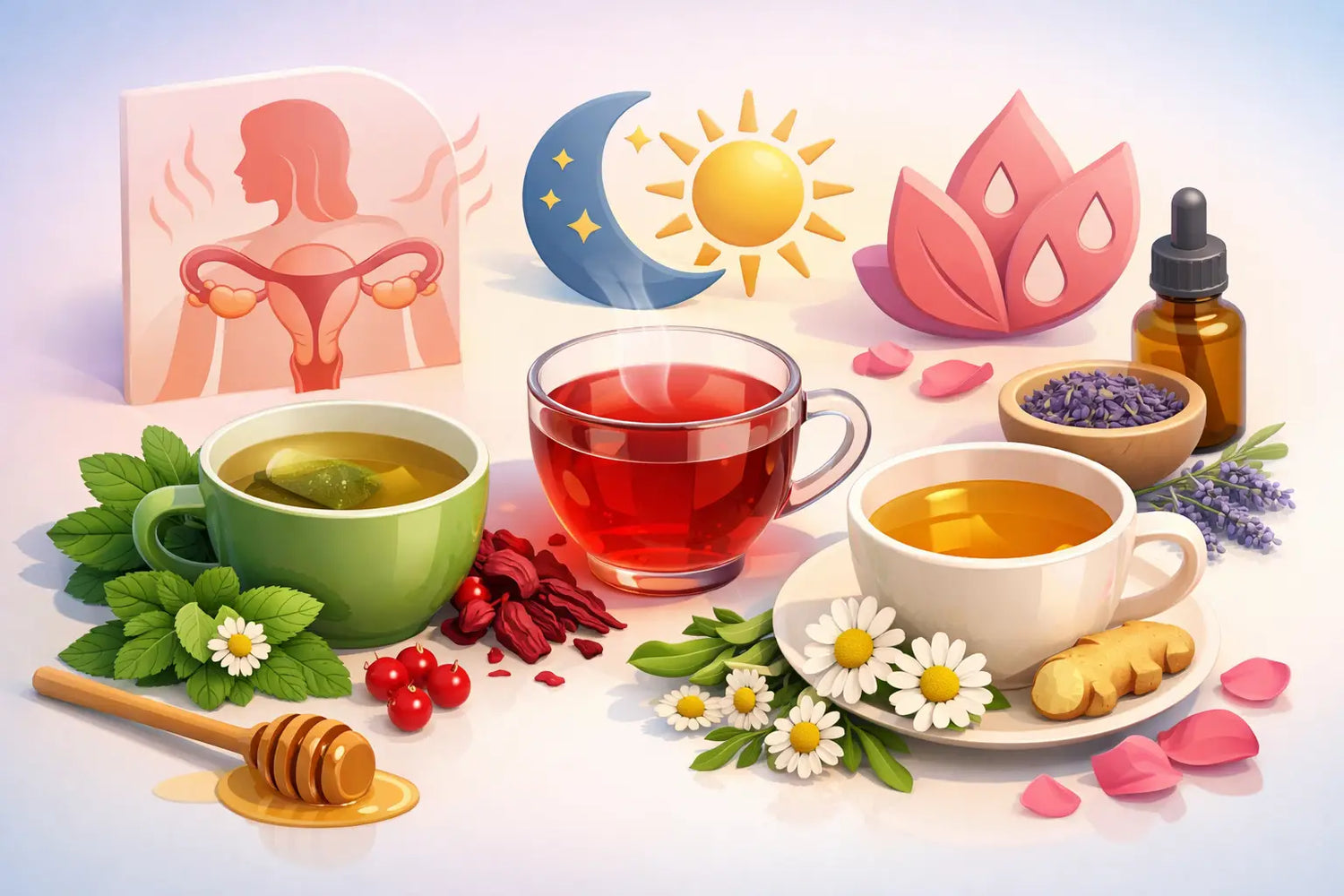
Some days perimenopause feels like your body changed the group chat settings without asking you first. One minute you're fine, the next you're hot, wired, bloated, teary, and staring at the ceiling at 3 a.m. If you're looking for the best teas for perimenopause, the right cup can do more than feel cozy - it can support the very symptoms making this season feel so loud.
Tea will not erase hormone shifts, and it should not be asked to do everything. But as a daily ritual, it can absolutely help nudge the nervous system, digestion, temperature regulation, and sleep in a better direction. That matters, especially when your body is asking for steadiness instead of more extremes.
What makes the best teas for perimenopause actually helpful?
The best teas for perimenopause usually work in one of a few ways. Some calm the nervous system when anxiety, irritability, and sleep disruption start running the show. Others support digestion and fluid balance when bloating and sluggishness creep in. A few herbs are traditionally used for cooling and comfort during hot flashes or night sweats.
This is where nuance matters. Perimenopause is not one symptom. It's a hormonal transition that can look different from woman to woman and even week to week. A tea that feels amazing during a PMS-heavy, crampy week may not be the same one you want when you're waking up sweaty and overstimulated.
That's why the best approach is symptom-led, not trend-led. You do not need the internet's favorite "hormone tea." You need the tea that matches what your body is asking for today.
1. Chamomile for sleep, irritability, and that wired-tired feeling
Chamomile is a classic for a reason. It's one of the gentlest, most reliable herbs for helping the body downshift, especially when perimenopause has you exhausted but somehow still unable to settle.
If evenings are when your symptoms flare, chamomile can be a beautiful ritual. It may help ease tension, soften digestive discomfort, and create a bridge into better sleep. It's not a sedative hammer. Think of it more as a soft exhale for your nervous system.
The trade-off is that chamomile is subtle. If your stress is sky-high or your sleep is severely disrupted, it may work best as part of a fuller evening routine rather than a solo hero.
2. Peppermint for bloating, nausea, and overheating
Peppermint tea is the friend you want when your stomach feels puffy and your body feels warm. It has a cooling quality that can feel especially good during hot flashes or those random moments when you suddenly want to peel your skin off.
It's also one of the easiest teas to love because it tastes clean, bright, and refreshing. If perimenopause is showing up as bloating, indigestion, or appetite weirdness, peppermint can be a smart place to start.
That said, peppermint is not ideal for everyone. If you deal with reflux, it can sometimes make symptoms worse. Cooling herbs can also feel less supportive if you tend to run cold, drained, or depleted.
3. Lemon balm for stress, mood swings, and mental static
Lemon balm is deeply underrated for perimenopause. It has a light citrusy flavor and a calming effect that can be especially helpful when your mood feels unpredictable or your mind won't stop spinning.
This is the tea for the woman who says, "I'm not even sure why I'm anxious. I just am." It can help take the edge off stress without making you feel flat. Some women also find it helpful for sleep when racing thoughts are the real issue.
Lemon balm tends to play well with other herbs too, so it's often lovely in blends with chamomile or mint. If you want calm without the heaviness, this is a strong candidate.
4. Ginger for sluggish digestion and cold, crampy days
Not every perimenopausal body is running hot all the time. Some women feel puffy, crampy, nauseated, or chilled, especially around irregular periods. Ginger tea shines here.
It supports digestion, circulation, and warmth. If your symptoms include heavy meals sitting like bricks, low-grade nausea, or a cold, stagnant feeling in the body, ginger can feel incredible. It's also a great tea after meals when hormones are messing with digestion.
The catch is obvious - ginger is warming. If you're in the middle of frequent hot flashes or night sweats, it may feel like too much. This is a tea to use strategically, not automatically.
5. Sage for hot flashes and night sweats
Sage has a long traditional history of being used for excessive sweating and heat symptoms, which is exactly why so many women reach for it during perimenopause. If your biggest complaint is waking up damp, flushed, and annoyed, sage tea is worth knowing.
Its flavor is more savory and earthy than floral teas, so it's not always love at first sip. But functionally, it can be one of the more targeted options for temperature-related symptoms.
You also do not need to drink it nonstop. For some women, sage works best during phases when heat is the main issue. If your symptoms shift, your tea can shift too. Your body is allowed to be dynamic.
6. Rooibos for a caffeine-free daily ritual
If coffee suddenly makes you shaky, anxious, or extra sweaty, rooibos can be a graceful backup plan. It's naturally caffeine-free, rich, mellow, and easy to drink daily without feeling like punishment.
Rooibos is not the most targeted herb on this list, but it deserves a spot because consistency matters in perimenopause. Sometimes the best tea is the one you actually want to drink every day. A steady, nourishing ritual can support stress regulation in ways that are not flashy but are very real.
For women trying to reduce caffeine without triggering a full personality crisis, rooibos gives you warmth and comfort without more nervous system drama.
7. Green tea when energy and brain fog need support
Green tea can be one of the best teas for perimenopause if you're dealing with sluggish mornings, brain fog, or that flat, depleted feeling that makes everything harder. It offers a gentler lift than coffee and contains compounds that many women find steadier on the system.
But this one depends on your symptom pattern. If you're highly sensitive to caffeine, prone to anxiety, or struggling with sleep, green tea may not love you back. Earlier in the day is usually the smarter move.
This is also where ritual gets fun. If you still want your morning cup, but your hormones are basically saying "Please Lawd don't take my coffee away," layering supportive ingredients into that existing routine can be a whole lot easier than trying to become a totally different person overnight.
8. Red raspberry leaf for cycle support during irregular transitions
Red raspberry leaf is often associated with reproductive wellness, and during perimenopause it can be helpful for women dealing with cycle irregularity, heaviness, or that dragging pelvic feeling that sometimes tags along.
It's mineral-rich, earthy, and more toning than calming. This is less of a hot flash tea and more of a cycle support tea. If your perimenopause still includes periods that show up chaotic, heavy, or crampy, it may be a supportive addition.
It is not a universal fit, though. If your symptoms are mostly heat, insomnia, and overstimulation, other herbs may feel more immediately helpful.
How to choose the right tea for your version of perimenopause
Start with your loudest symptom. If sleep is falling apart, begin with chamomile or lemon balm. If bloating and digestive weirdness are stealing your joy, try peppermint or ginger depending on whether you run hot or cold. If hot flashes are the headline, sage or peppermint may make more sense. If caffeine is suddenly betraying you, rooibos is a soft landing.
You also do not need a cabinet full of twenty options. Two or three teas that match your real patterns is plenty. One for daytime, one for evenings, and one for those particularly spicy symptom days is often enough.
Make it easy on yourself. Keep the tea where you'll see it. Pair it with something you already do, like your afternoon reset or bedtime wind-down. Ritual is not fluff here. Repetition is what helps the body feel safe.
A quick word on blends, quality, and expectations
Single-herb teas can be useful when you're trying to learn what your body responds to. Blends can be beautiful when you want a more layered effect, especially for stress plus sleep or bloating plus mood support. Neither is inherently better. It depends on whether you want clarity or convenience.
Quality matters too. Fresh-smelling herbs and well-made blends tend to work better than dusty tea bags that have been sitting around since your last life chapter. And if symptoms are intense, persistent, or affecting your quality of life in a major way, tea can be part of your support system, not the whole plan.
Perimenopause asks for more listening and less forcing. Sometimes the best cup of tea is not the trendiest one. It's the one that helps you feel a little more held, a little less inflamed, and a little more like yourself again.