
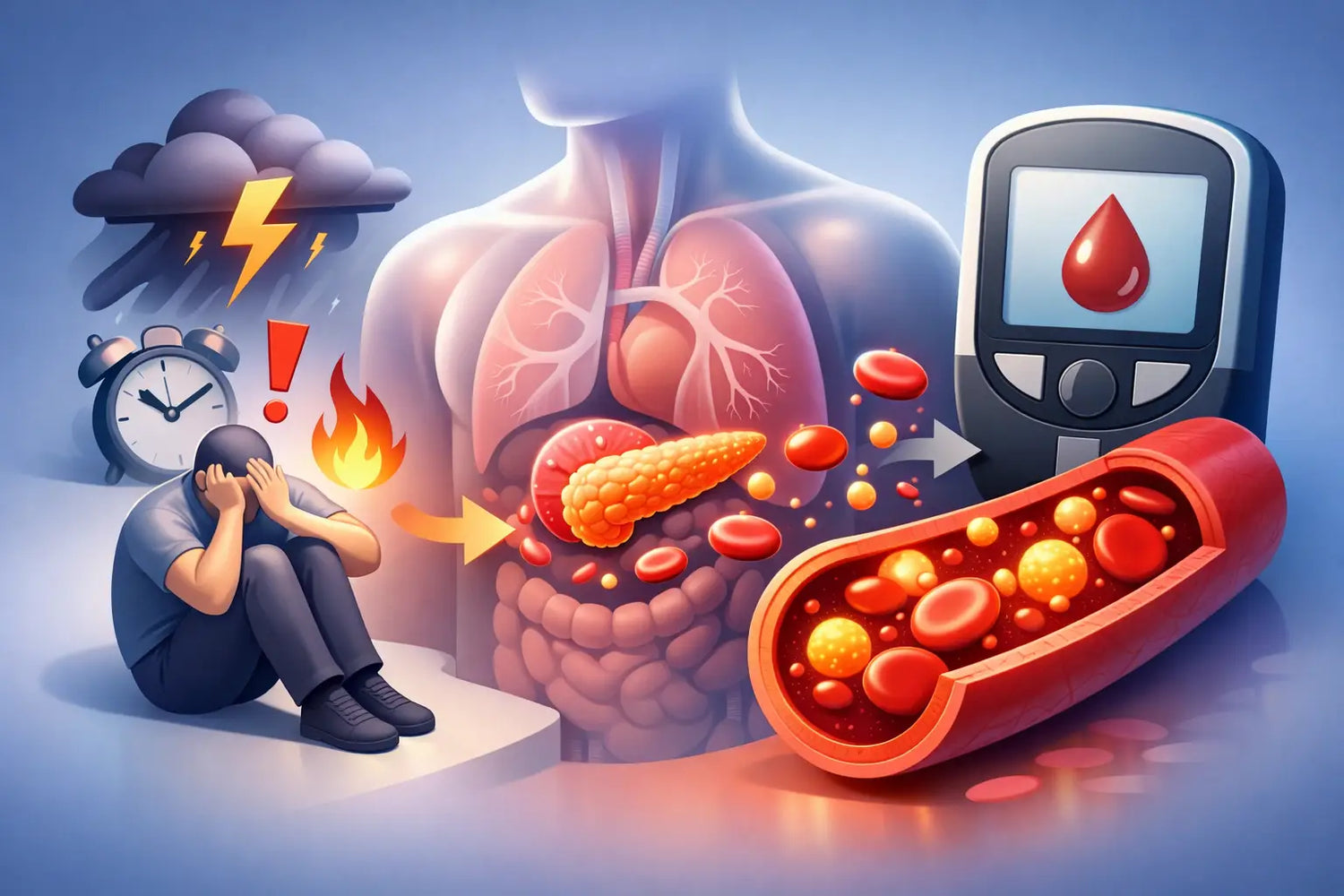
That shaky, snack-hunting, suddenly-irritable feeling after a hard day is not you being “bad” at wellness. Can stress raise blood sugar? Absolutely. Your body is designed to release fuel when it senses a threat, whether that threat is a real emergency or a packed inbox, a toddler meltdown, a painful period, and three nights of lousy sleep.
The frustrating part is that modern stress rarely ends with a sprint, a fight, or a long nap. The stress response can stay switched on while you keep answering emails, skipping lunch, and wondering why your cravings have become the loudest voice in the room. Understanding this connection can help you respond with more care and a lot less blame.
Can Stress Raise Blood Sugar? Here’s the Short Answer
When you are stressed, your brain signals the adrenal glands to release hormones including cortisol and adrenaline. These hormones tell the liver to release stored glucose into the bloodstream. It is your body’s built-in “we need energy now” system.
In a true emergency, that extra glucose is useful. You need quick energy to move, think, and react. But when the stressor is chronic - caregiving, financial pressure, relationship tension, overtraining, under-eating, or simply never getting a quiet moment - that repeated glucose release can contribute to higher blood sugar and more noticeable swings.
For people with diabetes or insulin resistance, stress can make glucose management especially tricky. Cortisol may also make cells less responsive to insulin for a time, meaning glucose can remain in the bloodstream longer. But even if you have never been diagnosed with a blood sugar condition, stress-related shifts can still show up as afternoon crashes, intense carb cravings, headaches, restless sleep, or that wired-but-tired feeling.
Why Stress Can Feel Like a Craving Spiral
Blood sugar is not just about dessert. It is also about timing, sleep, movement, hormones, medication, illness, and what is happening in your nervous system.
Picture a common weekday: coffee before breakfast, a stressful meeting, lunch eaten at your laptop, and an energy slump at 3 p.m. Stress hormones may be pushing glucose upward while missed or light meals leave you without steady nourishment. Then, when your body wants fast energy, the office cookie or drive-thru snack starts looking less like a choice and more like a personal calling.
After a high-sugar or highly refined-carb snack, glucose can rise quickly and then fall quickly, especially when it is eaten alone. That drop may leave you hungrier, foggier, or more anxious. The cycle is not a character flaw. It is physiology meeting a very demanding schedule.
Women can feel this more intensely at certain points in the menstrual cycle and during perimenopause. Estrogen and progesterone influence insulin sensitivity, appetite, sleep, and mood. Add a stressful week to premenstrual symptoms or hot-flash-disrupted sleep, and your usual routine may suddenly feel like it has stopped working. Your body is not betraying you. It may be asking for a different level of support.
Signs Stress May Be Affecting Your Glucose
No single symptom can diagnose a blood sugar issue. Still, patterns are worth paying attention to, especially if they repeat. You may notice:
- Feeling shaky, sweaty, anxious, or ravenous when meals are delayed
- Crashing in energy after lunch or reaching for sweets late in the day
- Waking around 2 or 3 a.m. and struggling to fall back asleep
- Feeling more reactive, foggy, or headachy during stressful stretches
- Seeing higher readings than usual if you monitor glucose
The Stress-Blood Sugar Loop Is Not One-Way
Here is the sneaky bit: blood sugar swings can make stress feel worse, too.
When glucose drops quickly, your body may release adrenaline and cortisol to bring it back up. Those hormones can create sensations that look a lot like anxiety: a racing heart, trembling, irritability, and a sudden sense that everything is too much. If you are already carrying a full mental load, that physical alarm can feel extra loud.
This does not mean every anxious feeling is “just blood sugar,” and it does not mean every craving needs to be managed perfectly. It means your meals and nervous system deserve to be on the same team. A steady plate can make it easier to meet a stressful moment with a little more capacity.
How to Support Blood Sugar When Life Is Loud
You do not need a flawless meal plan or a new 14-step morning routine. Start with the moves that create the most stability for your real life.
Eat before you are desperate
Try not to let coffee become breakfast and then wonder why your nervous system is doing gymnastics by noon. Build meals around protein, fiber-rich carbohydrates, healthy fats, and color from plants. Think eggs with avocado and toast, Greek yogurt with berries and nuts, a chicken-and-rice bowl with vegetables, or beans with roasted sweet potato and greens.
Carbohydrates are not the villain here. Your brain and muscles use glucose. The goal is to pair carbs with protein, fat, and fiber so energy arrives more gradually and lasts longer.
Make your daily drink work harder for you
Please Lawd, do not take your coffee away. Instead, have it with food when you can, especially if caffeine on an empty stomach makes you jittery, nauseated, or prone to an afternoon crash. You can also turn that beverage ritual into a moment that says, “We are not rushing through ourselves today.”
Whether it is coffee, tea, chai, or matcha, sit down for the first few sips. Take three slower breaths. This is small, but it is not silly. The body responds to repeated signals of safety, not only grand wellness gestures.
Use movement to spend stress energy
A punishing workout is not required. A 10-minute walk after a meal can support glucose use by the muscles, and gentle movement can help discharge some of the tension that has been parked in your shoulders all day. A walk, a dance break in the kitchen, a few flights of stairs, or stretching while dinner cooks all count.
If you are depleted, in a high-stress season, or noticing cycle-related fatigue, choose movement that leaves you feeling more grounded rather than more wrung out. More intensity is not always more supportive.
Protect sleep like it is part of your care plan
One short night can increase hunger, cravings, and stress sensitivity the next day. Several short nights can make the whole system feel spicy. A realistic wind-down might mean dimming lights, eating enough at dinner, putting your phone across the room, and choosing a bedtime that your actual schedule can sustain.
If you wake hungry or shaky overnight, consider whether you are under-eating during the day or having a very light dinner. It is also worth discussing frequent nighttime waking with a clinician, particularly during perimenopause or if you snore, gasp, or feel exhausted despite enough time in bed.
Give your nervous system a clear off-ramp
Stress management is not about becoming endlessly calm while life asks too much of you. It is about giving your body regular proof that the emergency is not happening right this second. A few minutes of breathing, journaling, prayer, time outside, a voice note to a friend, or saying no to one nonessential thing can change the tone of a day.
Traditional Chinese Medicine has long emphasized that the body functions as an interconnected system. In practical terms, digestion, mood, sleep, cycles, and energy often influence one another. You do not have to solve each symptom in isolation. Supporting the foundations can create a meaningful ripple effect.
When to Get Medical Support
If you have diabetes, prediabetes, gestational diabetes, or take medication that affects glucose, follow the plan you have made with your care team. Stress can affect your readings, but medication changes should never be made based on an article or a tough week alone.
Contact a clinician if you have frequent symptoms of low or high blood sugar, unexplained thirst, frequent urination, blurred vision, unexplained weight changes, or fatigue that is not improving. Seek urgent care for confusion, fainting, severe weakness, vomiting, trouble breathing, or very high or low glucose readings based on the guidance from your medical team.
You are allowed to take your symptoms seriously before they become dramatic. A protein-forward breakfast, a real lunch, a short walk, and five quiet minutes may sound almost too simple. Yet these are not tiny things to a stressed body. They are steady little reminders that you are cared for, even on the days when life is asking a lot.