
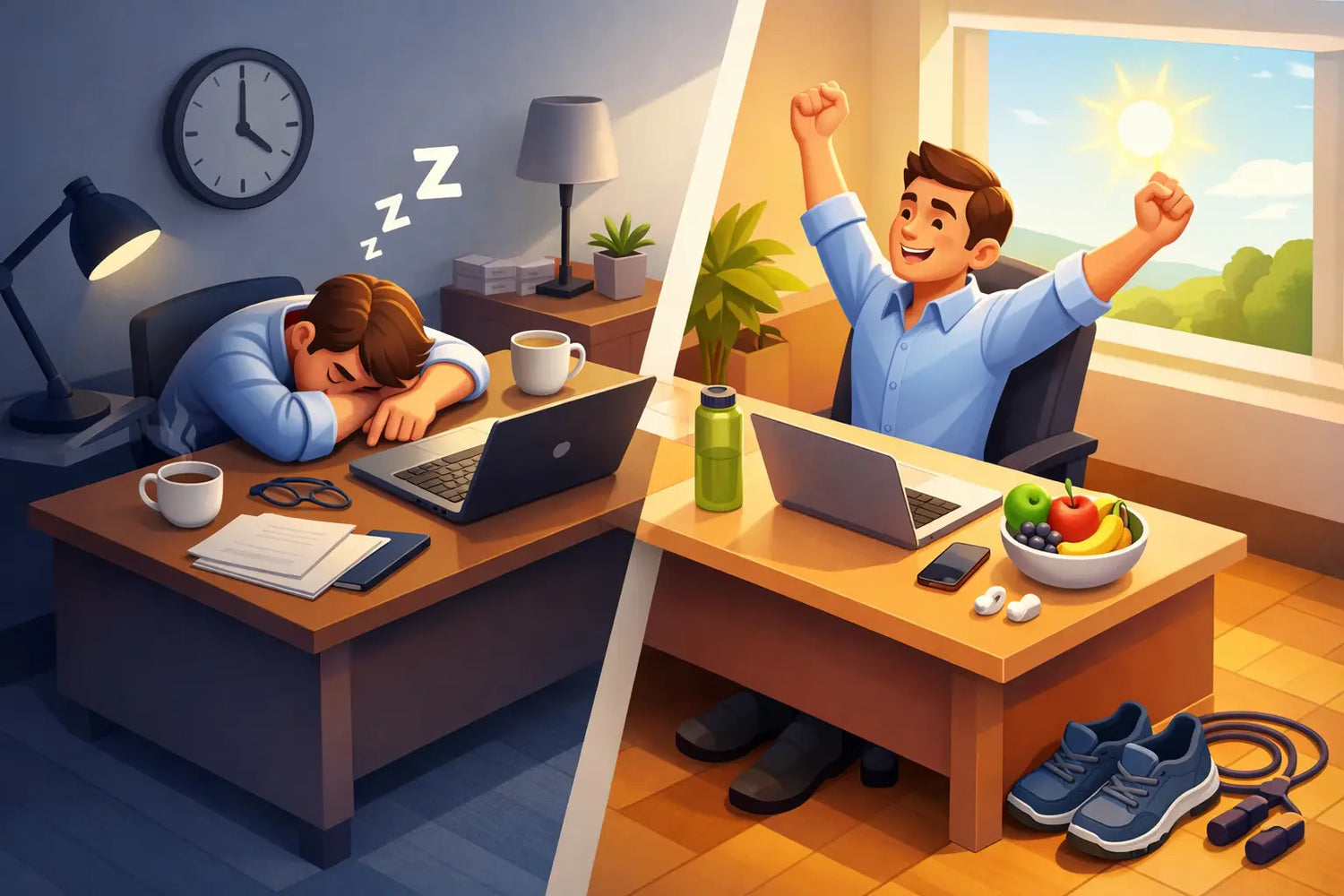
At 2:47 p.m., your brain has left the group chat. The snack drawer is suddenly calling your name, your third coffee feels non-negotiable, and even a simple email looks like a personal attack. If you’re wondering how to recover from afternoon energy slump, start here: your body is not being lazy or failing you. It is giving you useful information about what it needs.
That midafternoon crash is rarely about one bad night of sleep. For many women, it is a blend of blood sugar swings, a stress-loaded nervous system, caffeine timing, under-fueling, dehydration, cycle shifts, and the very real demands of carrying work, family, and life all at once. The goal is not to push harder. It is to create steadier energy that does not require white-knuckling your way to dinner.
How to Recover From Afternoon Energy Slump Without Another Coffee
A second or third coffee can feel like the obvious answer, especially when you have a deadline and Please Lawd, don’t take my coffee away. But caffeine can borrow energy from later in the day. If it disrupts your sleep or leaves you wired and snacking by 5 p.m., tomorrow’s slump may arrive right on schedule.
Before reaching for a refill, give yourself a 10-minute reset. Drink water, ideally alongside a mineral-rich snack or meal. Step outside or walk around the building. Take a few slow breaths with a longer exhale than inhale. These are small moves, but they tell your nervous system that it does not need to run on stress hormones alone.
Then ask a more helpful question: when did I last eat something substantial? Coffee and a rushed breakfast can carry you farther than expected, until they absolutely cannot. A slump that shows up between 2 and 4 p.m. is often connected to what happened at breakfast and lunch, not just what is happening at your desk.
The Most Common Reasons Your Energy Drops
Your lunch was too light, too sweet, or too rushed
A salad can be gorgeous and still not be enough food. If lunch is mostly greens, crackers, fruit, or a sweetened drink, your blood sugar may rise quickly and then fall hard. That fall can feel like fatigue, brain fog, irritability, shakiness, intense cravings, or the strange urge to lie face-down on the floor for five minutes.
Build lunch around protein, fiber-rich carbohydrates, color, and satisfying fats. Think chicken or tofu with rice and vegetables; salmon with potatoes and greens; lentils with avocado and roasted vegetables; or a hearty soup with bread and a protein source. The right meal is the one that leaves you comfortably full and mentally functional, not virtuous and starving an hour later.
Your nervous system has been sprinting since morning
Many women start the day in reaction mode: wake up, check messages, get everyone out the door, answer requests, skip a proper pause, repeat. Stress hormones can make you feel temporarily alert, even when your actual reserves are low. When that momentum fades, the body collects its bill.
In Traditional Chinese Medicine, this pattern is often viewed through the lens of depleted or strained energy, especially when digestion, mood, sleep, and cycles are also feeling off. You do not need to diagnose yourself from a single sleepy afternoon. But recurring crashes can be a loving invitation to pay attention to the whole picture, not just your productivity level.
You are dehydrated or under-mineralized
Mild dehydration can show up as fatigue, headaches, difficulty concentrating, and cravings that look suspiciously like a need for sugar. Plain water helps, but if you are sweating, drinking lots of coffee, exercising, or moving through a stressful season, a little more support may feel better.
Try water with a balanced electrolyte option, a pinch of mineral salt in a meal, or hydrating foods like citrus, cucumber, soups, and fruit. You do not need to turn hydration into a science project. Keep a glass or bottle where you can see it, and actually drink from it.
Your cycle or life stage is changing the equation
Energy is not identical every day of the month. In the days before your period, it is common to need more rest, more substantial meals, and more patience with your capacity. Perimenopause can bring its own version of disrupted sleep, mood changes, and unpredictable energy. Postpartum, caregiving stress, and heavy periods can also make an ordinary afternoon feel extra steep.
Track the pattern for two or three cycles if you can. Notice when the crash hits, what you ate, how you slept, where you are in your cycle, and whether you feel anxious, ravenous, or simply sleepy. Body literacy is not about controlling every variable. It is about spotting the patterns that let you care for yourself with less guesswork.
Build a 3 P.M. Ritual That Actually Fits Your Life
Your afternoon reset should be easy enough to repeat on a busy Tuesday. No 45-minute wellness performance required. Choose a few supports that make you feel more grounded, then make them visible and convenient.
A balanced snack is often the fastest place to start. Pair a carbohydrate with protein or fat so the energy lasts longer: apple slices with nut butter, Greek yogurt with berries, cheese and whole-grain crackers, hummus with pita, or a boiled egg with fruit. If you are genuinely hungry, eat a real snack. Your body deserves more than a handful of desk almonds and a pep talk.
Next, add a little movement. A 5- to 15-minute walk after lunch can support digestion, mood, and steadier blood sugar. If leaving your desk is impossible, stand up, stretch your hips and chest, take the stairs, or put on one song and move like you are shaking off the day. Because you are.
Finally, protect your evening self. If caffeine after lunch regularly keeps you awake, experiment with switching your afternoon ritual to herbal tea, decaf, or a nourishing beverage that still feels comforting. LALAS WELLNESS SuperCube can be stirred into the coffee, chai, matcha, or tea ritual you already love, making it easier to bring intentional support to a habit that is already part of your day.
When a Nap Helps and When It Backfires
A short nap can be wonderful when you are truly sleep-deprived. Keep it around 10 to 20 minutes and take it earlier in the afternoon when possible. Longer or later naps may leave some people groggy or make bedtime harder, especially if sleep is already fragile.
If napping is not an option, try a quiet reset instead. Close your eyes for five minutes, place both feet on the floor, and breathe slowly. This is not silly, and it is not doing nothing. A brief downshift can help move you out of stress mode so your energy is not entirely dependent on adrenaline.
Look Beyond the Slump If It Keeps Happening
An occasional sleepy afternoon is human. But if fatigue is persistent, worsening, or affecting your ability to work and enjoy life, it is worth discussing with a qualified healthcare professional. Heavy periods, iron deficiency, thyroid concerns, sleep apnea, depression, medication side effects, blood sugar issues, and other conditions can all contribute to low energy.
Seek care sooner if fatigue comes with fainting, chest pain, shortness of breath, unexplained weight changes, severe weakness, or unusually heavy bleeding. Supportive rituals are powerful, but you deserve a full picture when your body is asking for more attention.
The kindest way through an afternoon slump is not to shame yourself into being more productive. Feed yourself before you are desperate, make your caffeine work for you, move a little, and let your daily rituals carry some of the care. Your energy does not need to be perfect to be supported.