
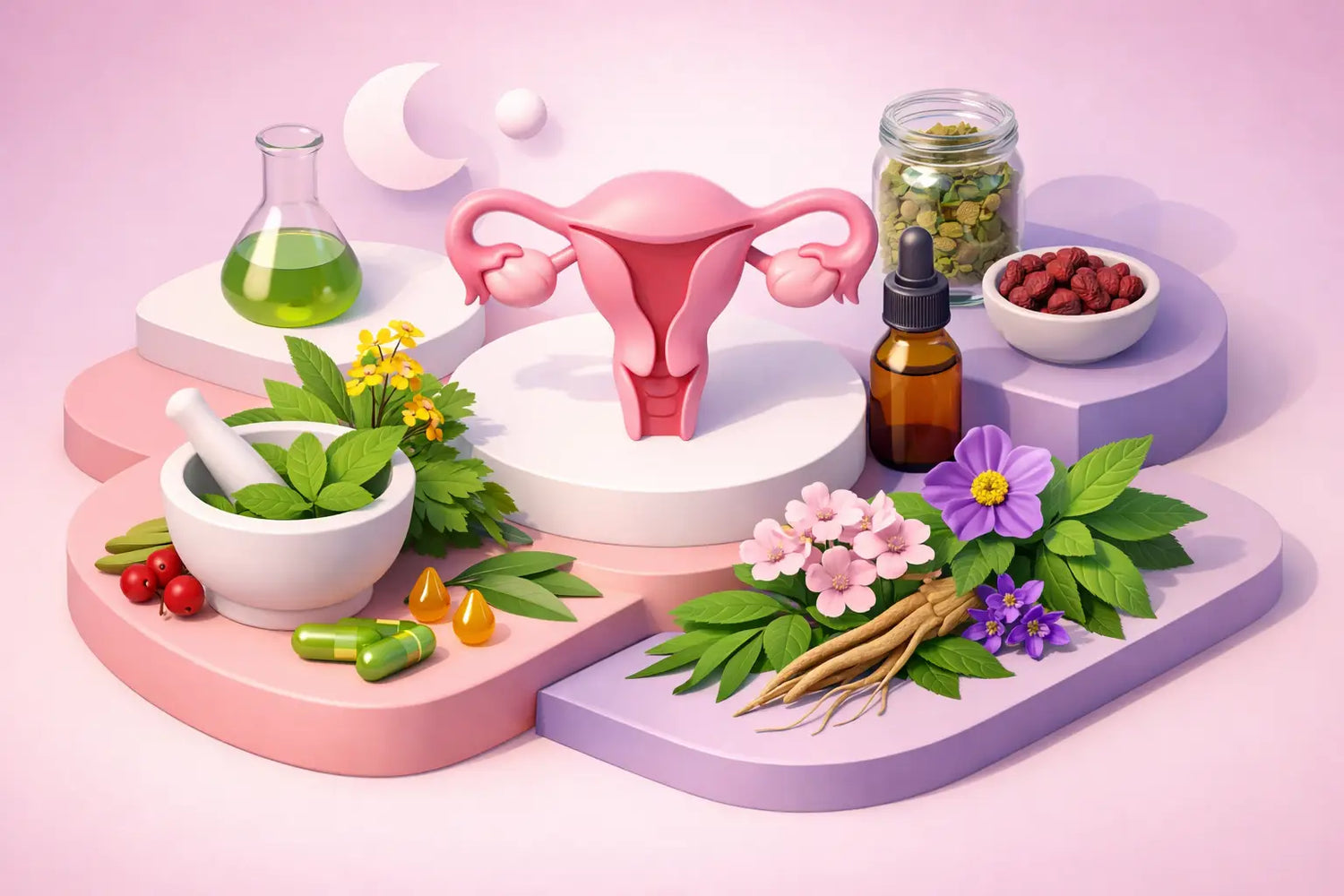
Some months your cycle feels manageable. Other months it barges in like it owns the place - cramps, cravings, bloating, mood swings, weird fatigue, and that low-key feeling that your body is asking for support in a language no one taught you to speak. If you’ve been searching for the best herbs for cycle support, the real answer is less about one magic plant and more about choosing herbs that match what your body is actually asking for.
That’s the part that gets missed in a lot of period advice. “Cycle support” can mean easing cramps, regulating stress, supporting healthy blood flow, helping with PMS irritability, or reducing the wiped-out feeling before and during your bleed. Different herbs do different jobs, and the best fit depends on your pattern, not just your symptoms on a random Tuesday.
What makes the best herbs for cycle support?
From a holistic perspective, herbs for menstrual health tend to work in a few lanes. Some help move stagnation, which can matter when your period comes with cramping, clots, irritability, or that stuck, swollen feeling. Others nourish and rebuild, which can be more helpful if your cycle leaves you depleted, pale, dizzy, or exhausted. Then there are herbs that calm the nervous system, because stress can absolutely make your cycle feel louder.
This is where nuance matters. If you’re dealing with heavy bleeding, an herb that encourages movement may not be your best first pick. If your cycle is light and scanty, only focusing on calming herbs may not get to the root of why you feel so run-down. Herbs are powerful, but they work best when they match the terrain.
7 best herbs for cycle support
Ginger
Ginger is one of the most approachable herbs for period support, and she earns that reputation. It’s warming, moving, and especially loved for cramps, cold-type pain, and nausea. If your period tends to arrive with a clenched lower belly and the urge to curl around a heating pad, ginger is often a beautiful place to start.
There’s also a practical reason women keep coming back to it - ginger is easy to use. Tea, powders, tinctures, capsules, or blended into a daily drink ritual can all work. The trade-off is that if you run very hot or tend toward heavy bleeding, too much warming support may not feel ideal, especially at the peak of your flow.
Cinnamon
Cinnamon has a cozy reputation, but it does more than make things taste like fall. Traditionally, it’s used to warm the body, encourage circulation, and support blood sugar balance. That matters because many women don’t just experience cramps during their cycle - they also get energy crashes, irritability, and intense cravings.
For women whose PMS comes with that shaky, snacky, emotionally frayed feeling, cinnamon can be especially helpful as part of a broader routine. It is less about dramatic overnight relief and more about smoothing the edges when blood sugar swings are part of the monthly chaos.
Peony
Peony is a classic women’s health herb in East Asian herbal traditions, and for good reason. It is often used when the cycle comes with cramping, tension, irritability, and a sense that the body is gripping too hard. Peony has a softer, more regulating personality than strongly moving herbs, which makes it useful when pain and mood symptoms travel together.
This is one of those herbs that tends to shine in formulas rather than acting like a solo star. In practice, it’s often paired with other herbs to help the body relax, regulate, and move more smoothly. If your cycle symptoms feel stress-amplified, peony can be a very smart ally.
Dong quai
Dong quai gets talked about a lot in menstrual wellness circles, and sometimes a little too casually. Traditionally, it’s valued for supporting blood, circulation, and menstrual rhythm, especially when cycles are accompanied by dryness, fatigue, or post-period depletion. For women who feel empty rather than inflamed, dong quai can be deeply supportive.
But this is also where “natural” does not mean “for everyone.” Dong quai may not be the right move for women with very heavy bleeding, certain medication interactions, or specific health conditions. It’s a wonderful herb when the pattern fits, and a poor match when it doesn’t. That’s not a flaw - it’s herbalism doing what herbalism does.
Red raspberry leaf
Red raspberry leaf is often treated like the sweet, harmless tea everyone should drink all month long. It is gentle, yes, but it also has a purpose. Traditionally used as a uterine tonic, it can be helpful for women who want more foundational support around their cycle rather than a single-symptom fix.
Think of it as a steady friend, not a dramatic rescue remedy. It may be especially useful if your body responds well to consistent nourishment over time. If your cramps are intense and immediate, raspberry leaf alone may not be enough, but it can be a lovely part of a bigger rhythm.
Chamomile
Chamomile does not always make the “best herbs for cycle support” list, but honestly, she deserves a seat at the table. When your cycle symptoms are tangled up with nervous system overload, poor sleep, digestive upset, and moodiness, chamomile can help take the volume down.
Sometimes period pain is not just about the uterus. It’s also about a stressed body that can’t soften. Chamomile supports that softening. It’s especially useful in the days before your period if you notice your fuse gets shorter, your sleep gets lighter, and your whole system feels one inconvenience away from tears.
Turmeric
Turmeric is best known for inflammatory support, which is exactly why it can matter during your cycle. For women dealing with period pain, puffiness, body aches, and that inflamed, heavy feeling, turmeric may help support a calmer response.
It’s not a perfect match for everyone. Some women do beautifully with turmeric in food or formulas, while others find it too drying or notice digestive sensitivity depending on the preparation. Still, when inflammation is part of the picture, turmeric deserves attention.
How to choose the best herbs for cycle support for your body
Start with the pattern, not the trend. If your biggest issue is cramping and feeling cold, warming herbs like ginger and cinnamon may make more sense than a generic hormone tea. If your PMS is more about mood swings, tension, and stress spirals, peony and chamomile may feel more relevant. If your cycle leaves you drained, pale, or like your battery never quite recharges, blood-nourishing support may matter more.
This is also why convenience matters. Herbs only help if you actually take them. The women who get the most from herbal support are not usually the ones brewing six different teas a day with perfect moon-cycle discipline. They’re the ones who fold support into something they already do, like a morning coffee, afternoon matcha, or evening tea ritual. That’s part of what makes a daily wellness rhythm sustainable - it works with your life instead of asking you to become a full-time apothecary.
A few safety notes worth respecting
Herbs are not interchangeable with zero downside, and cycle support is not one-size-fits-all. If you’re pregnant, breastfeeding, trying to conceive, taking blood thinners, managing endometriosis, fibroids, PCOS, or have unusually heavy, painful, or irregular bleeding, it’s smart to check in with a qualified practitioner before starting new herbs.
And if your period is consistently knocking you flat, please don’t write that off as normal just because it’s common. Severe pain, flooding, or major cycle shifts deserve proper care. Herbs can be incredibly supportive, but they should not be used to quietly tolerate something your body is clearly asking you to investigate.
The smartest way to use herbs for menstrual support
The most effective approach is usually consistent, layered support rather than panic-mode support once cramps hit. That might look like blood sugar support through the month, nervous system support in the luteal phase, and warming or soothing herbs as your period approaches. It depends on your cycle story.
This is where TCM-inspired formulas can be especially helpful because they’re designed around patterns, not just isolated symptoms. Instead of asking one herb to do everything, a thoughtful blend can support circulation, stress resilience, energy, and monthly rhythm at the same time. For busy women who want support without turning wellness into a second job, that kind of ritual-friendly approach makes a lot of sense.
Your cycle is not random, dramatic, or inconvenient just because it needs attention. It is feedback. And when you start choosing herbs that match your actual pattern, support can feel less like guesswork and more like finally speaking your body’s language.