
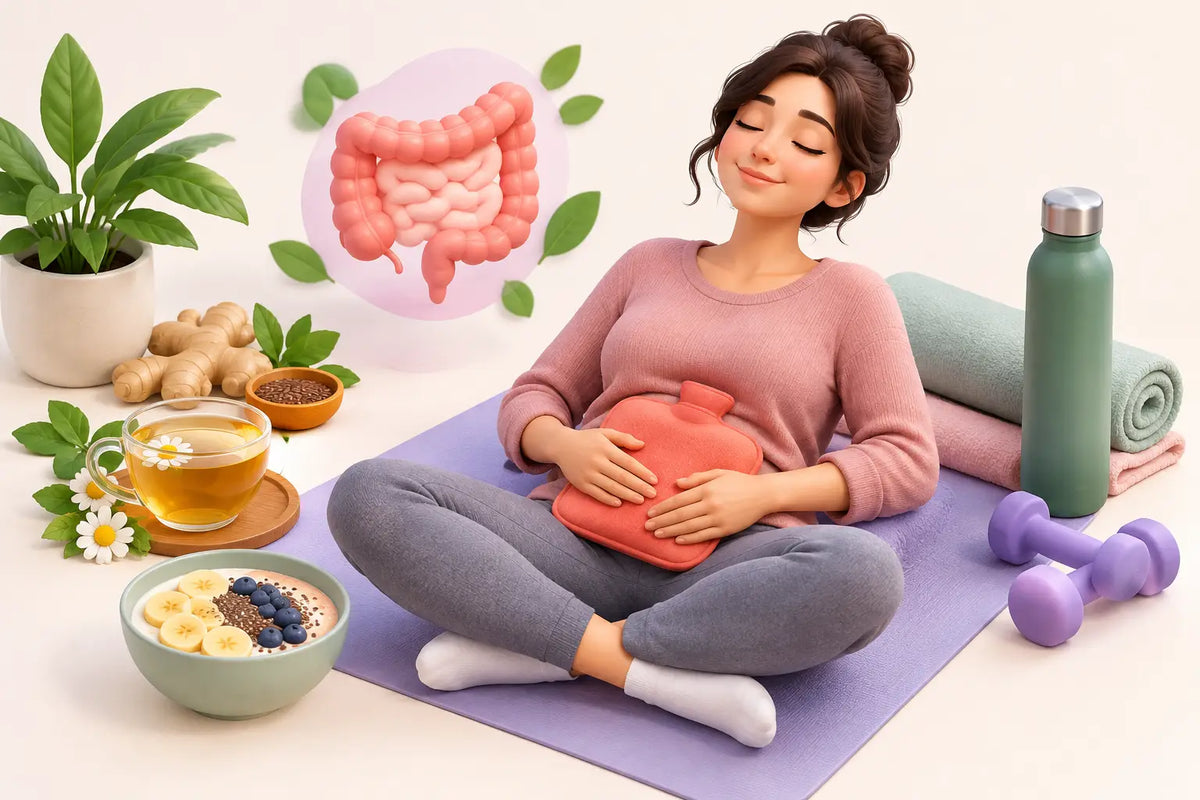
That suddenly-tight waistband before your period is not a personal failure, babe. It is often your body responding to shifting estrogen and progesterone, changes in digestion, fluid retention, stress, and the very real fact that your routine may be running on coffee and crumbs. Learning how to reduce period bloating naturally starts with supporting those systems instead of trying to punish your body into being smaller.
Period bloating can show up in the week before bleeding starts, during your period, or both. Your belly may feel swollen, your rings may fit differently, and you may feel extra full after meals that normally sit just fine. The goal is not to force your body to look a certain way. It is to feel more comfortable, regular, and at home in your body through every phase of your cycle.
Why period bloating happens in the first place
In the days leading up to your period, hormone shifts can affect how your body holds onto water and how quickly your digestive system moves. Progesterone may slow gut motility for some women, which can mean constipation, trapped gas, and that heavy, balloon-like feeling. Estrogen shifts can also influence fluid balance.
Then there is real life: less sleep, more stress, salty takeout, skipped meals, alcohol, low water intake, or an extra-strong craving for something crunchy and carby. None of these make you “bad.” They simply create conditions that can make bloating feel louder.
From a Traditional Chinese Medicine perspective, bloating is also often viewed through the lens of digestion and flow. When you are depleted, overextended, eating irregularly, or moving through a high-stress season, the body can feel stuck rather than supported. That is why the most helpful approach usually includes food, nervous system care, and gentle movement - not one dramatic trick.
How to reduce period bloating naturally with food
Start by making meals more regular, especially during the five to seven days before your period. Going too long without eating can lead to blood sugar swings, which may leave you ravenous later and more likely to eat quickly, overeat, or reach for highly salty convenience foods. Your body does not need perfection. It needs steadiness.
Build meals around protein, fiber, and satisfying fats. Think eggs with sautéed greens and toast, Greek yogurt with berries and chia, a grain bowl with salmon or tofu, or a cozy soup with beans and chicken. Fiber supports regular bowel movements, but if you are already constipated or very gassy, dramatically increasing raw vegetables or bran overnight can backfire. Choose cooked vegetables, oats, berries, chia, lentils, and beans in portions your digestion tolerates well.
Potassium-rich foods can be particularly supportive when you are retaining water. Bananas, avocado, potatoes, leafy greens, yogurt, beans, and citrus all fit beautifully into a cycle-supportive plate. Magnesium-rich foods such as pumpkin seeds, dark chocolate, cashews, edamame, and spinach may also support muscle relaxation and help with the tension that often travels with PMS.
You do not need to ban salt. Sodium is essential, and salty foods can absolutely belong in your life. The issue is often a sharp jump in sodium from packaged foods, restaurant meals, and snacky grazing, especially when water intake is low. Pair salty meals with water, produce, and a potassium-rich food rather than spiraling over a single dinner.
Make your morning drink work harder
If coffee is part of your morning ritual, please Lawd, no one is taking it away. But notice how it lands in your body. Coffee on an empty stomach can feel edgy for some women and may aggravate reflux, loose stools, or anxiety that makes digestive discomfort worse. Try having it after breakfast or alongside a protein-rich snack.
A warm drink can be a lovely cue for your system to slow down and digest. Ginger or peppermint tea may feel soothing for occasional gas and fullness, while warm water can support hydration without asking much of you. If you already use SuperCube in coffee, chai, matcha, or tea, keeping that ritual consistent can be a simple way to build in daily nourishment and a little moment of care.
Hydrate in a way that actually helps
It sounds backward, but drinking too little can encourage your body to retain more water. Sip consistently throughout the day instead of trying to chug a giant bottle at 8 p.m. Water is enough for most days, but adding electrolytes can make sense after a sweaty workout, in hot weather, or if you have had diarrhea.
Carbonated drinks are not inherently bad, but the bubbles can make an already bloated belly feel more distended. If sparkling water is your favorite little treat, keep it. If you are feeling especially puffy, swap one or two servings for still water or warm tea and see whether your body notices a difference.
Move for circulation, not punishment
The workout that supports period bloating is often much gentler than the one your inner critic suggests. A 10- to 20-minute walk after a meal can help stimulate digestion, ease gas, and support circulation. Light strength training, yoga, stretching, or dancing in your kitchen count too.
During the premenstrual window, hard workouts may still feel amazing for some women. For others, they pile onto an already-stressed nervous system. It depends on your sleep, energy, cycle symptoms, and training background. Let your body lead. The best movement is the one that leaves you feeling more settled afterward, not flattened.
Try a few slow twists, child’s pose, knees-to-chest, or a gentle walk when your lower belly feels tight. Even five minutes can shift the sensation. This is the lazy girl’s hack to health: make the supportive choice easy enough to repeat.
Support your nervous system and digestion
Stress does not cause every symptom, and no one needs the added pressure of “relaxing correctly.” Still, chronic stress can affect digestion, appetite, sleep, and how intensely you experience discomfort. Your gut and nervous system are always in conversation.
Create a tiny downshift around meals. Sit down when you can. Take three slower breaths before eating. Put your phone aside for the first few bites. Chew a little more than usual. These small habits can help your body move from rushing mode toward digesting mode.
Sleep matters here too. A short night can amplify cravings, inflammation, and stress sensitivity the next day. During the week before your period, protect your bedtime where possible. A warm shower, lower lights, a few pages of a book, or putting tomorrow’s to-do list on paper can be enough to tell your brain that it is safe to stand down.
Common habits that can make bloating worse
There is no universal “period bloat diet,” but tracking your symptoms can reveal your own patterns. For some women, large amounts of alcohol, carbonated beverages, sugar alcohols, or highly processed foods reliably make bloating worse. For others, dairy, certain legumes, or cruciferous vegetables are the bigger trigger. The answer is not to cut everything out forever.
Use curiosity instead. Notice what happens in the week before your period, how often you are having bowel movements, whether you are eating enough during the day, and whether specific foods cause pain versus simple fullness. A cycle-aware note in your phone can teach you more than a rigid wellness rule ever could.
When period bloating deserves medical support
Typical menstrual bloating should improve as your period arrives or shortly afterward. If bloating is severe, new, persistent through the month, or paired with significant pelvic pain, vomiting, fever, blood in your stool, unexplained weight changes, or a major change in bowel habits, check in with a clinician. You also deserve support if your periods are so painful or disruptive that you are missing work, school, sleep, or life.
Conditions such as endometriosis, fibroids, ovarian cysts, irritable bowel syndrome, and food intolerances can overlap with menstrual symptoms. You are not being dramatic for asking questions. Body literacy includes knowing when a symptom needs more than peppermint tea and a heating pad.
Your period is a monthly report from your body, not a referendum on your discipline. Offer yourself warm meals, steady hydration, a little movement, and more softness in the days when your body asks for it. The most powerful ritual is the one that helps you feel supported enough to keep listening.