
The Question I Started Asking in My Late Forties
I was not an anxious person in my twenties or thirties. Then my late forties arrived, and I found myself wondering out loud whether I needed an SSRI, because worry had taken hold of me. Toward the end of my forties, I was diagnosed with generalized anxiety disorder, and the diagnosis was useful, because it opened the door to therapy and gave me a frame for understanding what was happening in my own body.
Here is where it gets complicated for women our age. The clinical definition of generalized anxiety includes excessive worry on more days than not for at least six months, worry that is hard to stop once it starts, and at least three of these six: restlessness or feeling keyed up, getting tired easily, trouble concentrating, irritability, muscle tension, and disturbed sleep. Now read that list again as a woman in her mid-forties. Irritability, fatigue, poor concentration, muscle tension, and broken sleep are also the calling cards of declining progesterone, so teasing out which one you are dealing with takes real discernment, and that discernment changes what will actually help you.
Anxiety Shows Up in the Body and in the Brain
When I work with patients, I like to separate anxiety into how it lives in the body and how it lives in the brain, because in Chinese medicine those point toward different treatments. In the body, the chest gets tight and the heart races. You might feel that heart-dropping, stomach-flipping, panicky sensation, along with sweating, shaky hands, headaches, ringing in the ears, dizziness, or sugar cravings. Muscle tension deserves its own mention, because you clench your jaw or grip the steering wheel without ever noticing, and then you lie down at night and discover the spot where your head meets your neck has climbed so high that your occiput is practically becoming the earrings to your shoulders.
In the brain, anxiety sounds like thought loops you cannot exit. Molly described it on the episode as feeling "like you're a prisoner in your mind," and I have yet to hear a patient say it better. You over-plan every possible scenario, you lie awake replaying the day, including the things you wish you had said differently, and the self-talk gets louder. Sometimes you chase a quick dopamine hit to break the loop, which is how you end up scrolling, shopping, or reaching for something sugary at 9pm. The body sensations and the thought loops feed each other, because one thought flips the heart, and then you are on that train again.
What Progesterone Decline Changes First
Progesterone is usually the first hormone to show its decline, and for many women that starts in the mid-forties, years before periods change in any obvious way. Looking back, I can see that mine started around 44 to 46. The irritability got bigger and more cyclical, and at the same time it was random, which is the maddening part. Your tolerance drops for things that would never have bothered you before, you run a little warmer than usual, and you fall asleep fine only to struggle to drift back down at 3am.
The part that convinced me something hormonal was happening was the loss of pattern. I knew my triggers, I was exercising regularly, I was eating well, and I would still watch one ordinary thought turn into a full visceral and mental episode of anxiety with no warning. If you are a type A person, you may notice yourself gripping the reins harder, because some intuitive part of you is saying, as I put it to Molly on the episode, "all I need to do is create a way to be able to feel freaking calm." Molly sees that prepare-for-every-scenario pattern constantly, and she calls it a hallmark trait of the menopausal women she works with on gut issues, which brings us to the mechanism underneath all of it.
The GABA and Progesterone Dance
GABA is the neurotransmitter responsible for that background sense of inner calm, the kind you do not have to reach for, work toward, or earn. Progesterone breaks down into a metabolite called allopregnanolone, which interacts with GABA receptors and turns that calm up. On the episode, I described it this way: "It's like someone doing a little dance in front of you, and they're like, hey, let's go, dance with me. And GABA's like, you got it, lets dance! Allopregnanolone is se delighted because we're gonna hang out together." When progesterone is abundant, that dance happens on its own, and the calm is simply there in the background of your day.
You can feel this across a cycle if you know where to look. Coming out of your bleed, around day seven or eight, many women feel like they are back in the game. Around days 17 to 23, as progesterone wobbles through the luteal phase, you may notice you need to put more care toward yourself to find the same calm. In perimenopause, the wobble widens, and the episodes stop keeping a schedule. The same chemistry helps explain why the postpartum window and PMDD can hit so hard, because both involve steep progesterone shifts, and researchers are actively studying allopregnanolone-related medications for exactly those situations.
One caution before you order a GABA supplement: the evidence that oral GABA crosses the blood-brain barrier and keeps levels stable is thin, short-term, and largely from animal studies. There are smarter ways to support this system, and most of them run through your gut.
Your Gut Is in the Middle of This Conversation
Progesterone and your digestive tract are in constant conversation. Progesterone acts on smooth muscle, and the research, mostly in animal studies so far, suggests that steady physiologic levels support motility while high levels slow it down, which is one reason constipation shows up during high-progesterone phases. In pregnancy, progesterone has been shown to strengthen the gut lining by increasing occludin, the tight junction protein that holds your intestinal cells together, and occludin is the very protein that zonulin breaks down when the gut becomes more permeable.
The traffic runs in both directions. A healthy microbial community helps degrade and recycle hormones, and menopause is associated with reduced gut microbes, partly because declining estrogen slows motility. Meanwhile, specific bacteria, especially lactobacillus and bifidobacteria, can produce GABA right in the gut, which may be one of the threads connecting midlife anxiety to midlife digestion. Even the food side loops in, because when you eat glutamate-containing foods, the enzyme that processes glutamate nourishes GABA production upstream.
This is also why Molly pumps the brakes on single amino acid supplements like high-dose L-glutamine for gut lining repair, and her image is worth keeping because it explains the problem better than any biochemistry lecture. Picture every essential amino acid as a kid out at recess, and when the bell rings, all of them have to come back inside through the same door. A single amino acid supplement is the one family with octuplets shoving every other kid out of the doorway, so you absorb plenty of one amino acid and crowd out the rest that your brain, muscles, and gut were counting on. For the gut lining she reaches instead for variety in the diet plus targeted support like zinc carnosine, butyrate, bone broth with its full spectrum of amino acids and collagen, and the mucilaginous plants like marshmallow root, slippery elm, okra, and aloe. Someday somebody will make marshmallows with actual marshmallow root in them, and we will all heal our guts at the campfire together.
A Chinese Medicine Way to Tell Them Apart
In my clinic, the question of anxiety versus perimenopause gets sorted by pattern, and two patterns show up more than any others. The first is a disharmony between the heart and the kidney. The kidney holds your jing, your deepest reserves, and it governs how you respond to stress, so this pattern feels like restlessness without an anchor. The fatigue here is the kind where you tell someone you are just bone tired. Your low back or knees ache when you did nothing to earn it, your ears might ring, and the very tip of the tongue often turns bright red with no coating, which tells me the heart is involved and running hot.
The second is a disharmony between the heart and the spleen, and this one lives closer to digestion. You will see bloating, a heavy and sluggish feeling in the flesh, a puffy tongue, and worry as the dominant flavor of thought rather than restlessness. Both patterns produce anxiousness, because the heart dominates the mind in Chinese medicine, and they call for different herbal formulas and different support. Progesterone itself is a deeply yin substance, and you can roughly equate yin with your parasympathetic state, so as yin declines in perimenopause, heat tends to surface, which is why the running warm, the night waking, and the anxiety so often arrive as a package. If you recognized yourself in either pattern, this is exactly the sorting I do in a Self'ish Health hormone consult, and I am happy to write a formula for the pattern you are actually living in.
What Actually Helps, Starting Today
One thing before the practical list. If your anxiety ever tips into crisis, you can call or text 988 in the US, and if you ever feel in danger of harming yourself or someone else, please go to the emergency room. A primary care doctor, therapist, or psychiatrist belongs on your team if this is weighing on you, and asking for that help is a strong move, because we are so good at shoving ourselves aside and you deserve a big space held for this.
Now we can get to the unglamorous, effective part. Meal timing comes first, because insulin is a hormone and blood sugar swings pour fuel on anxiety. Molly's rule is a meal or a snack containing carbohydrate every four hours within your eating window, paired with protein, fat, or fiber so you are not riding the spike-and-crash wave all day. A giant sweet coffee on an empty stomach, followed by the crash an hour later, works on your body like an anxiety delivery system. If nausea is part of your picture, and it was the biggest perimenopause symptom I personally had, start with whatever your stomach can receive, like miso soup or a small handful of nuts. In Chinese medicine terms your stomach chi is rebelling, and your job is to say, it's okay, little rebel, and offer something gentle before you ask it to take a full meal.
It also helps to feed the brain proacdtively. Vitamin D, colorful produce, fatty fish, and plant fats like avocado, olive oil, seeds, and nuts all support the organ doing the worrying, because your brain is made of fat and it wants to be fed accordingly. B12 and iron matter enormously for energy and mood, animal proteins are the richest sources, and every woman should know her ferritin, total iron, and total iron binding capacity, which you usually have to ask for by name. Molly told a story on the episode about a wonderfully matter-of-fact client who asked whether a handful of sprouts would make her anxiety disappear, and the honest answer is no. The real point is that you are pouring back into yourself, and having a plan for your meals genuinely helps you feel safe, which does lower anxiety.
Tmy biggest take away is to look at how your energy is distributed across the day. If you hurry out of bed, pour coffee, drive in traffic, and answer urgent emails until dinner, you have spent the entire day in yang expression, output stacked on output, with nothing ever telling your parasympathetic system it is safe to engage. The repair work, the digestion, and the sleep all live on the yin side, and they need an invitation. That invitation can be a one-minute pause to breathe, beautiful music in the car while you let your shoulders drop away from your ears, or five minutes on the couch actually listening to your kid while you eat a handful of nuts, which nourishes your parasympathetic and, speaking from experience, makes you feel like a good mom at the same time.
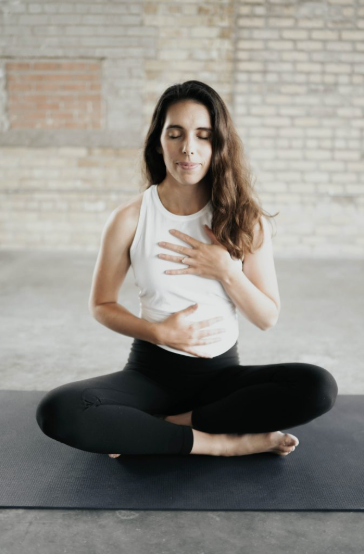
Molly and I both love the practice Katie Sutherland taught us, one hand on your heart and one hand on your belly, with a deep breath in and a deep breath out. Your right hand lands over your heart, your left hand rests near your womb and kidneys, and you can let those organs know you love them. When the loop has you, small physical pattern breaks work too, so name five things you can see, get up and do the dishes, or open a window. How you distribute your energy today shapes how you sleep tonight, and how you sleep tonight shapes what you have to work with tomorrow, so the effect compounds in your favor once you start.
Hear the Whole Conversation
Molly Ostrander, Gut Health Dietitian and my co-host, and I take this whole golden thread apart on the podcast, from the clinical definition of anxiety to the GABA dance to what each of us actually does at 3am. Listen to She's Got Guts wherever you get your podcasts.
Supporting the System While You Do the Work
MagicMist earns its place here because stress burns through magnesium faster than almost anything else, and most women are running low before perimenopause even starts. MagicMist is a transdermal magnesium spray, absorbed through the skin so it bypasses a digestive tract that may already be touchy, where it supports muscle relaxation, sleep quality, and a calmer nervous system. Mine lives on my nightstand, and a few sprays on my feet and neck before bed is the ritual I actually keep. Shop MagicMist
BestTea is the blend I formulated over five years for my clinical patients with gut complaints, combining Chinese herbs and functional mushrooms to support the gut lining and the microbiome. That is the same territory where your bacteria produce GABA and help recycle your hormones, so tending it supports the calm infrastructure this whole post has been about. Shop BestTea
MagicMist and BestTea are mineral and food support, and neither one treats generalized anxiety disorder, perimenopause, PMDD, postpartum depression or anxiety, or any other condition discussed in this post. They belong inside a broader plan that includes appropriate medical care, sleep, nutrition, movement, and a provider who knows you. Please talk with your own provider about what is right for you.
Lara Dilkes, L.Ac. MSAOM FNLP is the founder of Lala's Wellness and co-host of the She's Got Guts podcast with Gut Health Dietitian Molly Ostrander. This post draws on clinical experience and the She's Got Guts episode on anxiety, perimenopause, GABA, progesterone, and the gut.