
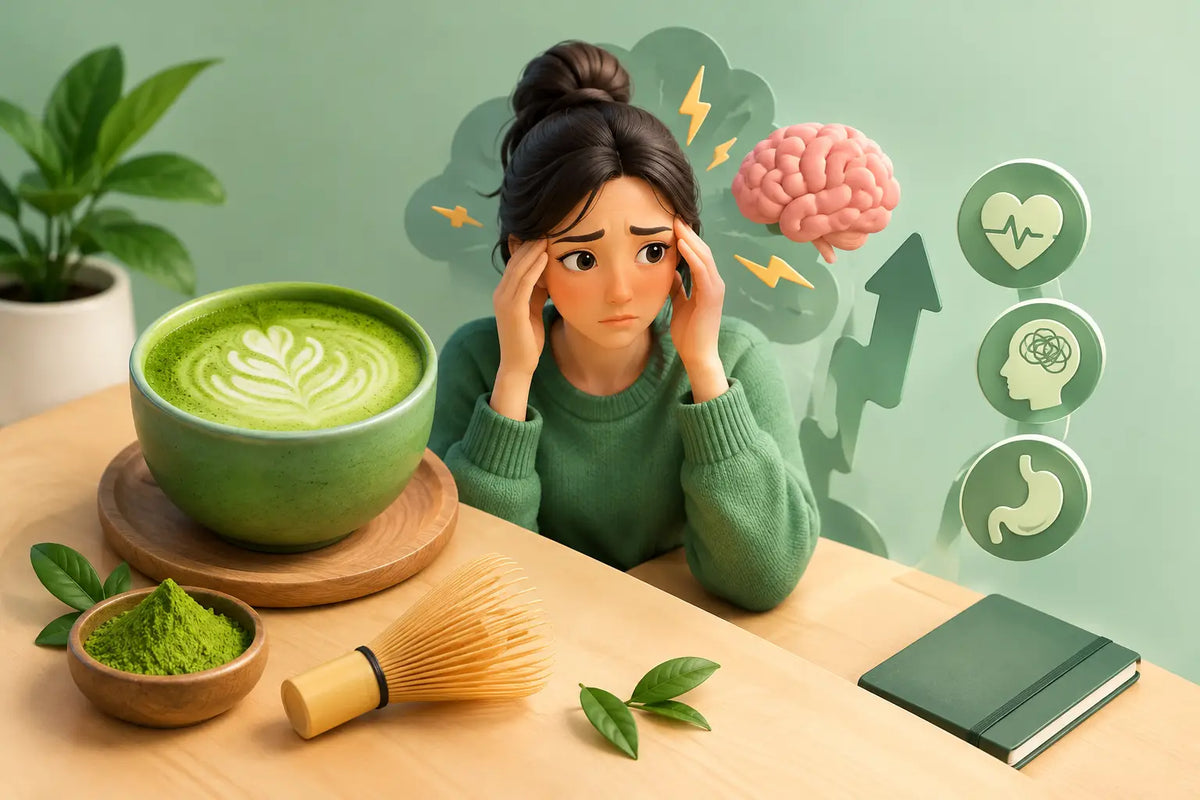
That beautiful green matcha latte can go from grounding little ritual to full-body nope surprisingly fast. If you have ever felt shaky, wired, nauseous, emotionally edgy, or strangely panicky after your morning cup, matcha anxiety symptoms may be the missing piece. You are not being dramatic, and you do not necessarily need to break up with matcha forever.
For many women, the issue is not matcha itself. It is the context: an empty stomach, a hectic morning, poor sleep, a stressed nervous system, a cycle phase that has you feeling extra sensitive, or a cup that is stronger than your body wants that day. Your body is always giving feedback. The goal is to hear it without turning your wellness routine into another thing to overthink.
What matcha anxiety symptoms can feel like
Matcha contains caffeine, so its side effects can overlap with the familiar symptoms of having too much coffee. The experience is not always obvious, though. Rather than feeling simply “caffeinated,” you might feel unsettled in your own skin.
Common matcha anxiety symptoms include a racing or pounding heart, trembling hands, restlessness, sweating, nausea, lightheadedness, tightness in the chest, irritability, trouble concentrating, and a sense of dread that seems to arrive out of nowhere. Some women notice looping thoughts or feel more reactive to a normal work email, a noisy house, or a small inconvenience. Others get a late-morning crash that leaves them tired but still tense.
These symptoms can look a lot like anxiety because caffeine stimulates the central nervous system. It can also increase the release of stress hormones, especially when your body already feels under-resourced. That does not mean matcha causes an anxiety disorder. It does mean caffeine can amplify anxiety sensations or make a vulnerable nervous system feel more on edge.
If you have severe chest pain, fainting, shortness of breath, an irregular heartbeat, or symptoms that feel new or intense, seek prompt medical care. And if anxiety is frequent, disruptive, or showing up outside of caffeine use, a qualified healthcare professional can help you sort through the bigger picture.
Why matcha feels calming for some people and awful for others
Matcha has a reputation for smooth, focused energy, partly because it naturally contains L-theanine. This amino acid may support a calmer-feeling form of alertness for some people. But L-theanine does not cancel out caffeine. A matcha serving can still contain a meaningful amount, and the actual dose varies based on the powder, how much you use, and how concentrated you make it.
Your individual caffeine tolerance matters just as much as the drink itself. A person who can sip matcha after lunch and feel lovely may have had a full breakfast, slept eight hours, and have a relatively settled stress response. Meanwhile, someone rushing out the door on day two of her period, running on toast crumbs and four hours of sleep, may feel totally different from the exact same cup.
From a body-literacy perspective, that difference makes sense. When stress is already high, your nervous system has less room for additional stimulation. In Traditional Chinese Medicine, we also pay attention to whether the body is depleted, depleted and dry, or carrying a lot of internal tension. A stimulating drink may feel fine when your reserves are supported and distinctly aggravating when they are not.
The empty-stomach matcha problem
This is a big one. Matcha before food can feel rough because caffeine may hit faster, while low blood sugar can create its own shaky, sweaty, anxious-feeling symptoms. Together, they can make your body feel like it is sounding an alarm.
If your breakfast is usually matcha and vibes, consider that your gentle nudge to add nourishment. Try having it after a meal or alongside protein, fat, and fiber - think eggs and toast, Greek yogurt with berries, or a savory breakfast you genuinely enjoy. You do not need a perfect wellness plate. You need enough food to tell your body it is safe and resourced.
Hormones can change your caffeine tolerance
Your usual matcha order may suddenly feel too intense in the days before your period, during perimenopause, after a stretch of poor sleep, or during a high-stress season. Estrogen fluctuations, changing sleep quality, and blood sugar shifts can all influence how steady you feel.
Some women also find that caffeine worsens PMS-related irritability, breast tenderness, insomnia, or period cramps. Others do just fine. This is where rigid rules are not helpful. Track your own pattern for two or three cycles: the amount of matcha, timing, food, sleep, cycle day, and how you felt afterward. Patterns get clearer when we stop treating every symptom as random.
Your matcha may simply be too strong
More powder, a larger serving, multiple cups, or pairing matcha with other caffeine sources can quietly push you past your personal threshold. Even if matcha feels gentler than coffee, it is still caffeine.
Consider whether your matcha is a single modest serving or part of a bigger stimulant stack that includes coffee, pre-workout, energy drinks, black tea, chocolate, or certain medications. You do not need to police every bite of dark chocolate, babe. You just want an honest view of the total picture.
How to keep your matcha ritual without feeling wired
The most useful adjustment is often less dramatic than quitting. Start by moving your matcha later in the morning and drinking it after breakfast. If you usually make it strong, use less powder or choose a smaller drink. Give yourself a few days with one change before deciding whether it worked.
Pay attention to timing, too. Caffeine can linger longer than people expect, and an afternoon matcha may interfere with sleep even if you fall asleep easily. Then the next morning, you reach for more caffeine because you are exhausted. Hello, anxious little feedback loop. For many people, keeping caffeine earlier in the day creates a noticeable difference in both sleep and mood.
It can also help to make the ritual more stabilizing. Blend matcha into milk or a protein-forward smoothie rather than drinking it plain. Sip it slowly instead of chugging it between meetings. Sit down for five minutes if you can. Your nervous system does not need every beverage to become a ceremony, but a little softness changes the experience.
If your mornings are already intense, build support around the drink rather than asking caffeine to carry your entire energy load. Hydration, breakfast, regular meals, and a formula designed to support stress regulation can be a more sustainable foundation. LALAS WELLNESS SuperCube was made to slip into an existing coffee, chai, matcha, or tea ritual, making it easier to add daily herbal support without creating another complicated step.
When it makes sense to skip matcha for now
Sometimes the kindest move is a pause. Consider taking a break or choosing decaf options if matcha consistently triggers panic-like feelings, worsens insomnia, causes heart palpitations, or leaves you nauseated even when you have eaten. It may also be wise to check with your clinician if you are pregnant, breastfeeding, managing a heart condition, taking stimulant medications, or using medications that interact with caffeine.
A pause is not a wellness failure. It is information. You can come back to matcha later with a smaller serving, more food, better sleep, or a different season of life in your body.
Your morning ritual should make you feel more like yourself, not less. Let matcha be a pleasure, not a test of endurance. Feed yourself first, notice what your cycle and stress levels are saying, and give your nervous system the kind of steady support it has been asking for.