
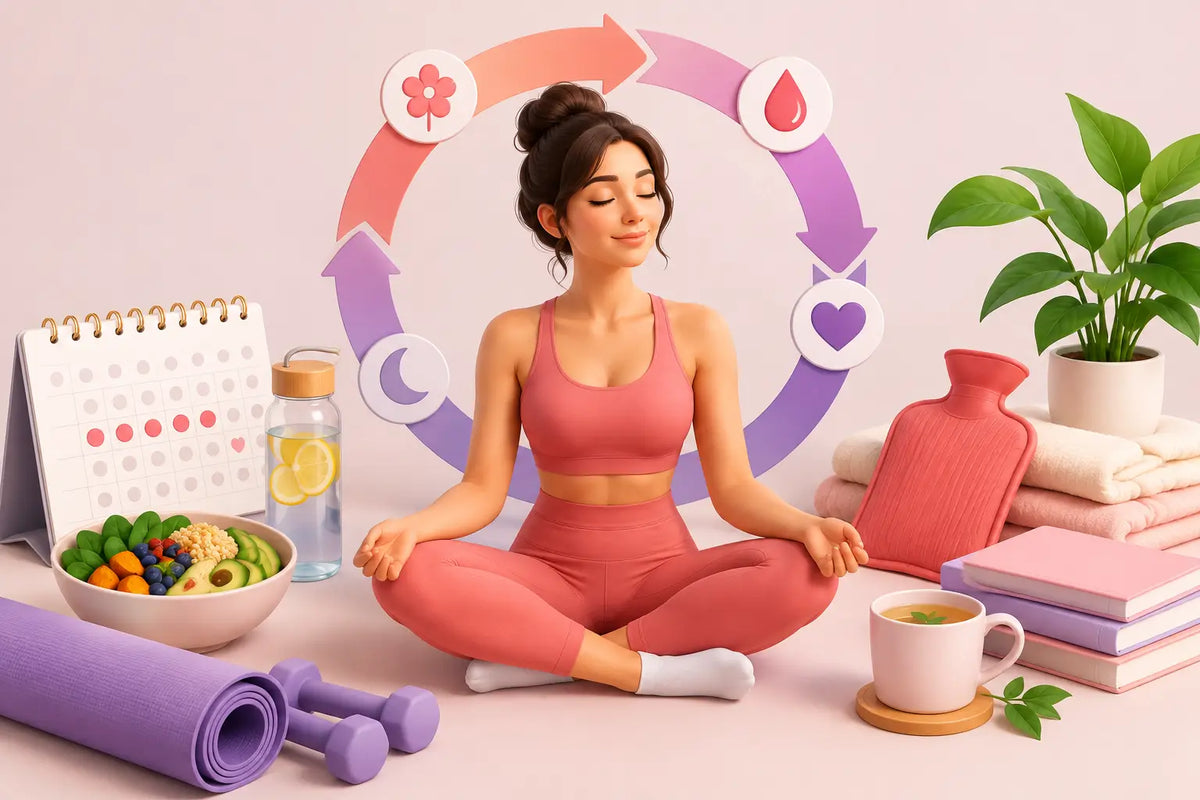
Your period is not a monthly interruption to power through with painkillers, a heating pad, and pure grit. It is a body-wide check-in. Menstrual wellness means learning what your cycle is telling you about stress, energy, nourishment, sleep, and the pace you are asking your body to keep.
Some months may feel easy. Other months, your cravings are loud, your patience is gone, and your uterus has chosen violence. Both experiences deserve attention. The goal is not to make your body perfectly predictable. It is to create enough daily support that your cycle feels less like a betrayal and more like useful information.
What menstrual wellness actually means
Menstrual wellness is the practice of supporting your health across the entire cycle, not only during the days you bleed. That includes the hormones that influence ovulation and menstruation, but it also includes your nervous system, digestion, blood sugar, immune health, movement, and recovery.
This matters because the body does not organize itself into neat little departments. A stressful workweek can show up as a later period. Skipping meals can turn premenstrual irritability into a full-blown emotional group chat. Poor sleep can make cramps, cravings, and fatigue feel heavier. Your cycle is influenced by your whole life, babe.
In Traditional Chinese Medicine, menstruation is often viewed through the lens of circulation, nourishment, warmth, and the smooth movement of energy. Modern research uses different language, but the practical takeaway is beautifully similar: consistent basics tend to matter more than occasional wellness grand gestures.
Start by knowing your normal
The most helpful thing you can do for your cycle is get curious without becoming obsessive. Track your period start date, flow, pain level, sleep, mood, energy, digestion, cravings, and any spotting. A few notes in your phone are enough. You are looking for patterns, not trying to earn a gold star for perfect tracking.
For example, do you get wired and anxious before your period after weeks of late nights? Do cramps feel sharper when you have been living on coffee and meetings? Does your energy crash every afternoon during the second half of your cycle? Those clues can help you choose support that actually fits your body.
There is a wide range of normal, and cycles can shift with travel, illness, stress, medication changes, postpartum recovery, and perimenopause. Still, intense or worsening symptoms are worth discussing with a qualified healthcare professional. Severe pelvic pain, bleeding that soaks through protection very quickly, bleeding between periods, fainting, suddenly irregular cycles, or symptoms that disrupt daily life deserve real care and investigation.
The daily foundations that make periods feel different
Eat for steadier blood sugar
Blood sugar may not sound romantic, but it has serious main-character energy when it comes to hormones and mood. Going long stretches without food can leave you shaky, ravenous, foggy, and far more vulnerable to the 4 p.m. snack spiral. Around your period, when energy and appetite may shift, that instability can feel extra dramatic.
Build meals around protein, fiber-rich carbohydrates, colorful plants, and satisfying fats. Think eggs with toast and fruit, a grain bowl with salmon or beans, or yogurt with berries, nuts, and seeds. The right meal is the one you can repeat on a busy Tuesday, not the one that requires a farmers market, three hours, and emotional support cookware.
If coffee is nonnegotiable, we hear you. Please Lawd, do not take the coffee away. Try having it with breakfast rather than on an empty stomach, especially if caffeine makes you jittery, nauseated, or anxious. A beverage ritual can also become an easy place to add supportive ingredients. LALAS WELLNESS SuperCube was designed to stir into the coffee, chai, matcha, or tea you already love, so your daily cup can do a little more for you without creating another complicated step.
Treat stress support like cycle support
Your nervous system does not know the difference between an actual emergency and 46 unread emails, school pickup, a tight deadline, and a group text that will not stop buzzing. When stress stays high for long stretches, the body may have fewer resources for smooth hormonal signaling, quality sleep, digestion, and recovery.
You do not need a two-hour morning routine. A five-minute walk outside, a few slow breaths before your first meeting, a proper lunch away from your laptop, or a phone-free wind-down can signal safety to the body. Small rituals work because they are repeatable. Fancy is optional. Consistency is the feminine health flex.
Move with your energy, not against it
Movement can support circulation, mood, sleep, and stress regulation, but more is not always better. Some people feel amazing with strength training throughout their cycle. Others need lower-impact movement during the days before and during their period. Both can be true.
Try asking a better question than, “What workout should I force myself to do?” Ask, “What kind of movement would leave me feeling more like myself today?” That may be lifting, Pilates, a dance class, a walk, mobility work, or glorious couch-based rest. The win is learning to respond rather than punish.
Protect sleep like it is part of your hormone plan
Sleep loss can amplify pain sensitivity, cravings, mood shifts, and stress reactivity. And yes, sleep can become harder right before a period, when body temperature and restless thoughts may creep up. This is not a personal failure. It is a cue to make your evenings gentler where you can.
Keep the room cool, dim the lights earlier, eat enough at dinner, and create a short transition between being productive and being asleep. If your brain loves a midnight planning session, keep a notepad nearby and give tomorrow's tasks somewhere else to live.
Support each phase without turning your life upside down
You do not need to eat, exercise, and exist by a rigid cycle-syncing rulebook. Your cycle can be a framework, not another pressure point.
During menstruation, many women benefit from prioritizing warmth, hydration, iron-rich foods, and a slower pace if possible. Soups, stews, cooked greens, beans, meat or seafood if you eat them, and warming teas can feel especially grounding. Gentle movement may ease discomfort for some, while rest is the better call for others.
After your period, energy may gradually rise. This can be a lovely time to lean into social plans, more challenging workouts, or projects that need momentum. Around ovulation, some people feel especially energized, while others notice little change. Your own data wins over a generic calendar.
In the luteal phase, the days between ovulation and your period, it can help to plan for more nourishment and fewer unnecessary demands. Appetite may increase. You may need more sleep. Your tolerance for chaos may be approximately zero. Building in protein-forward snacks, hydration, earlier nights, and clearer boundaries is not being high-maintenance. It is being well supported.
When symptoms are asking for more attention
Painful periods are common, but pain that sidelines you should not be dismissed as something you simply have to endure. The same goes for major mood changes, debilitating fatigue, very heavy bleeding, or cycles that suddenly change. Conditions such as endometriosis, fibroids, thyroid disorders, polycystic ovary syndrome, and PMDD can affect menstruation, and they deserve informed, compassionate medical care.
Bring your tracking notes to an appointment. Be specific about how symptoms affect work, parenting, relationships, sleep, and your ability to function. If you do not feel heard, seeking another clinician is allowed. You know your body best, and you deserve care that treats your experience as real.
Make your ritual easy enough to keep
The most supportive menstrual wellness routine is rarely the most elaborate one. It might be breakfast before coffee, a nourishing afternoon snack, a supplement stirred into your favorite warm drink, a ten-minute walk after dinner, and a heat pack ready before cramps start talking big.
Choose one habit that feels almost too easy, then let it become yours. Your cycle does not need you to be perfect. It needs you to listen, nourish yourself with more tenderness, and keep showing up in the small ways that tell your body: we are on the same team.