
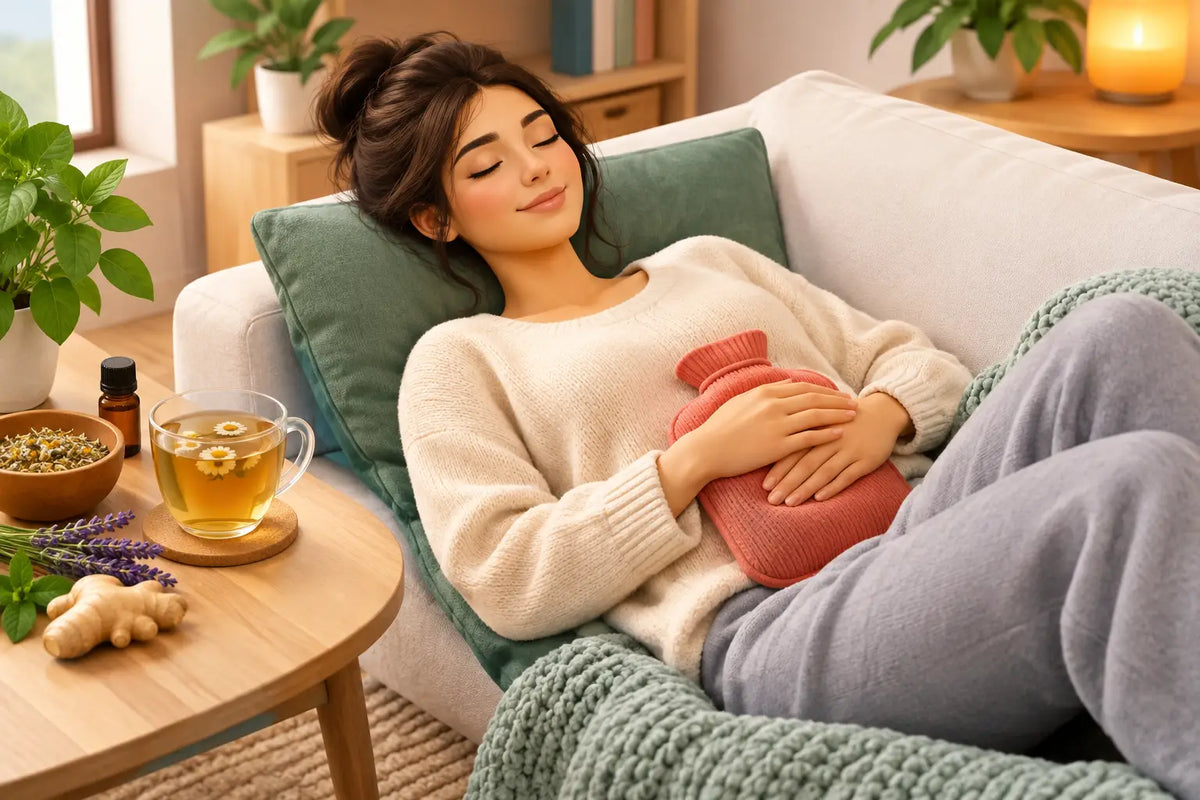
Some cramps are a quiet pull in the lower belly. Others have you canceling plans, clutching a heating pad, and wondering why your period seems determined to humble you every month. Natural support for monthly cramps is not about pretending that pain is “just part of being a woman.” It is about giving your body the warmth, nourishment, circulation, and nervous system support it may be asking for.
Your cycle is not an inconvenience to power through. It is useful information. When cramps become part of your monthly rhythm, a few thoughtful habits can make the days before and during your period feel less like a battle with your body.
Why monthly cramps can feel so intense
Period cramps happen when the uterus contracts to shed its lining. Prostaglandins, hormone-like compounds involved in inflammation and muscle contraction, help drive that process. Higher levels can mean stronger contractions, which can feel like cramping, pressure, low back pain, nausea, loose stools, headaches, or that deeply unfair whole-body ache.
Stress, inconsistent meals, poor sleep, dehydration, and a packed schedule do not necessarily cause cramps on their own. But they can lower your capacity to cope with pain and make the whole experience feel louder. If your nervous system is already running on iced coffee and adrenaline, your period may arrive with extra attitude.
From a Traditional Chinese Medicine perspective, menstrual discomfort is often viewed through patterns involving stagnation, cold, depletion, or constrained stress. Translation: when circulation is not flowing freely, when the body is underfed or chilled, or when stress has been living rent-free in your chest and shoulders, the cycle can feel more uncomfortable. This framework is individualized, not a one-size-fits-all diagnosis, but it gives us a loving place to begin.
Natural support for monthly cramps starts with warmth
Warmth is simple, low-effort, and deeply underrated. A heating pad, hot water bottle, warm bath, or shower can relax tense muscles and provide real comfort when your lower abdomen is tight. Place heat on your lower belly or low back for 15 to 20 minutes at a time, with a layer between your skin and the heat source.
Warm drinks can also become a comforting cycle ritual. Ginger tea is a classic choice for its warming flavor and its potential to support nausea and inflammation. Peppermint tea may feel soothing for bloating and digestive discomfort. If you tend to feel cold, depleted, or crampy around your period, a warm breakfast and a hot drink may serve you better than skipping food and grabbing something icy on the run.
This does not mean cold foods are forbidden or that one smoothie ruined your hormones, babe. It means noticing what helps your particular body feel settled. For some women, choosing warm, cooked meals during the first days of bleeding feels noticeably better. For others, heat is the main hero. Your body gets a vote.
Feed your body before it gets desperate
Cramps rarely exist in isolation. Blood sugar swings can amplify irritability, fatigue, shakiness, and cravings, leaving you less resourced when discomfort hits. Eating regular meals with protein, fiber-rich carbohydrates, colorful plants, and satisfying fats can help create a steadier baseline.
Think eggs and toast with avocado, a rice bowl with salmon and greens, lentil soup with a side of sourdough, or Greek yogurt with berries and nuts. The goal is not to eat perfectly. The goal is to avoid reaching 3 p.m. with no lunch, a stress headache, and a body that is begging for support.
Magnesium-rich foods are worth putting on the period-week menu, too. Leafy greens, pumpkin seeds, beans, dark chocolate, avocado, and almonds all contribute to your magnesium intake. Magnesium plays a role in muscle and nerve function, and some people find it helpful for menstrual discomfort. Supplements can be appropriate for certain people, but they can interact with medications or cause digestive upset, so check with your clinician or pharmacist before adding one.
Hydration matters, especially if your period comes with headaches, digestive changes, or fatigue. Plain water is wonderful. So are broths, herbal teas, and electrolyte drinks with modest amounts of added sugar. You do not need to force gallons. Consistent sips through the day are plenty more realistic.
Gentle movement can change the conversation
When your pelvis feels heavy, intense workouts may be the last thing you want. And honestly, sometimes rest is the move. But gentle movement can support circulation, ease stiffness, and offer a little mood relief.
A ten-minute walk, hip circles, child’s pose, a slow cat-cow sequence, or simply stretching on the floor while your heating pad warms up can be enough. There is no gold star for suffering through a high-intensity class when your body wants softness.
Try this tiny cramp-day reset: breathe slowly into your lower ribs for a minute, take a five- to ten-minute walk if it feels good, then lie down with heat over your abdomen. It is not flashy. It is very human. And repeating it month after month gives your system a familiar signal: we are safe, we are listening, we are allowed to slow down.
Support the stress piece, too
Stress does not make menstrual pain imaginary. Pain is real, and stress can turn up the volume on it. A nervous system that never gets a break may hold more tension in the jaw, shoulders, belly, and pelvic floor.
That is why your cramp-care plan can include the unglamorous basics: protecting sleep when possible, saying no to one unnecessary thing, putting your phone down before bed, and asking for help without presenting a court case for why you deserve it. A few minutes of slow breathing, a short journal brain dump, or a warm shower can be legitimate support, not fluff.
If your daily beverage is already a non-negotiable ritual, it can become a gentle anchor for consistency. A functional add-in such as LALAS WELLNESS SuperCube can fit into coffee, chai, matcha, or tea as part of a broader routine centered on steady energy, stress support, and cycle-aware nourishment. Please Lawd, no one is asking you to break up with your coffee.
Herbs and supplements deserve a little discernment
Ginger, cinnamon, and peppermint are common kitchen herbs that many people enjoy around their period. Some research also suggests ginger may help reduce the severity of menstrual pain for some people. But natural does not automatically mean right for every body.
Concentrated herbal formulas and supplements can affect medications, blood clotting, blood sugar, blood pressure, pregnancy, and existing health conditions. This is especially relevant if you take anticoagulants, have liver or kidney disease, are trying to conceive, are pregnant, or are managing a diagnosed hormonal condition. Work with a qualified healthcare professional, ideally one who understands both your medical history and the supplements you use.
The same goes for traditional herbal medicine. A personalized formula may be very different from what your best friend takes, because the goal is to match the support to the pattern, symptoms, and person in front of the practitioner.
When cramps need more than home care
You deserve to be taken seriously if your period pain disrupts work, parenting, sleep, intimacy, or your ability to participate in your own life. Severe cramps can sometimes be associated with conditions such as endometriosis, fibroids, adenomyosis, pelvic inflammatory disease, or ovarian cysts. You do not have to wait until the pain becomes unbearable to ask for an evaluation.
Make an appointment with a healthcare professional if you experience four or more of the following signs:
- Pain that is severe, worsening, or not helped by your usual measures
- Heavy bleeding, such as soaking through a pad or tampon every hour for multiple hours
- New pain after age 25, pain between periods, or pain during sex
- Fever, fainting, unusual discharge, a possible pregnancy, or sudden sharp pelvic pain
Your period may never become your favorite monthly guest, but it does not have to take over the whole house. Start with one ritual you can repeat: heat after dinner, a steadier breakfast, a gentle walk, or five protected minutes with your tea. Small care, practiced consistently, teaches your body that it does not have to carry every cycle alone.