
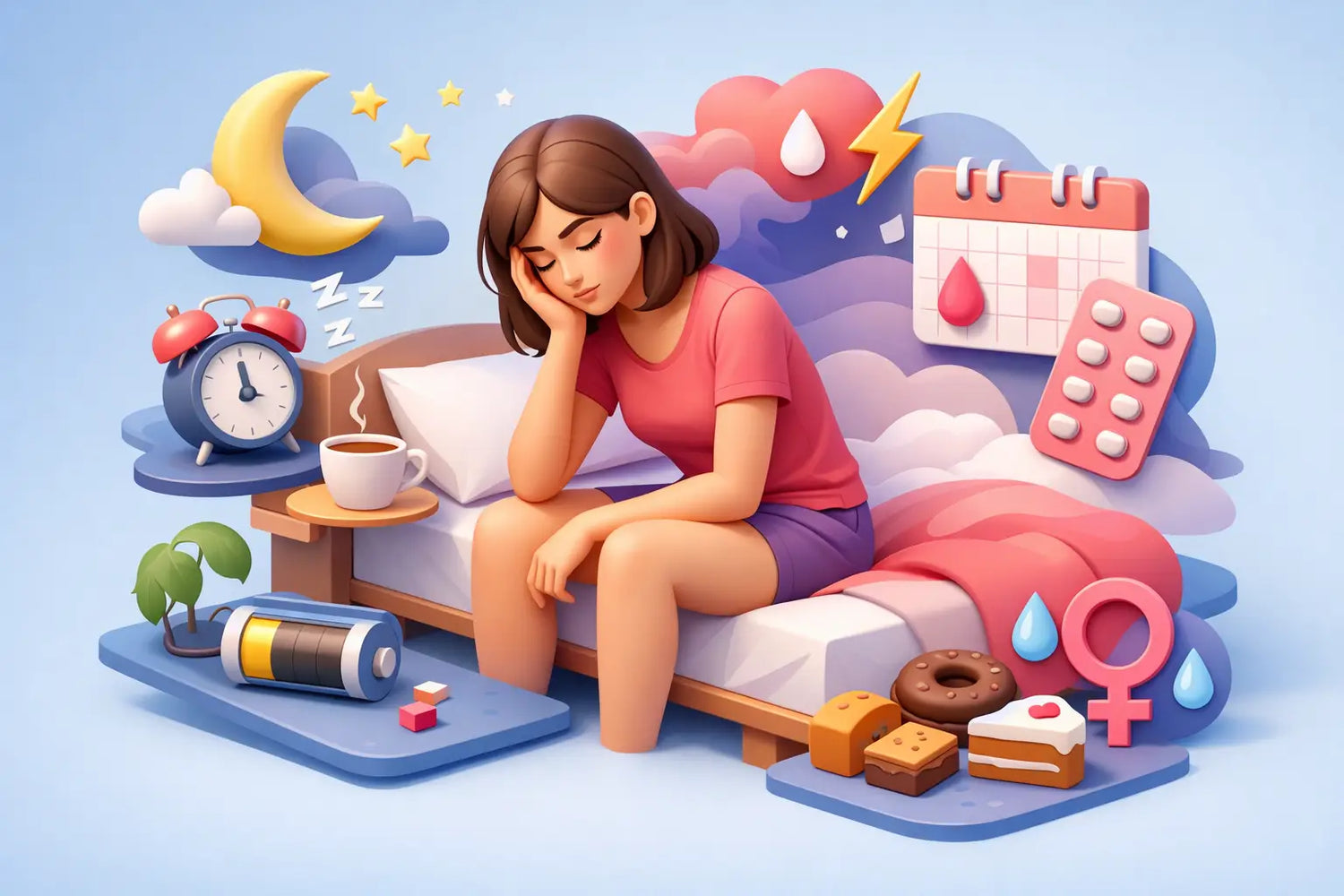
That pre-period exhaustion can feel wildly unfair. You are technically sleeping, you have a calendar full of things to do, and yet your body wants to cancel plans and become one with the couch. If you keep asking, why am I tired before my period?, you are not imagining it and you are definitely not alone.
The days before your period are a major hormonal transition. Your energy, sleep, appetite, mood, digestion, and stress tolerance can all shift at once. Add a packed schedule, caffeine that hits a little differently, or a period that tends to be heavy, and the fatigue can get loud.
Why Am I Tired Before My Period?
The week or two before your period is called the luteal phase. After ovulation, progesterone rises and then falls, while estrogen also declines as your period approaches. Those changing hormone levels can affect the brain chemicals involved in sleep, mood, and energy regulation.
For some women, this looks like a softer kind of tiredness: you need more sleep and feel less motivated to push through. For others, it is full-body fatigue with brain fog, irritability, cravings, sore breasts, or that familiar "I cannot deal with one more email" feeling.
Your cycle is not separate from the rest of your life. The intensity of premenstrual tiredness often depends on your sleep quality, stress load, food patterns, movement, and overall health. Think of the luteal phase as a time when your usual coping capacity may be lower. The habits that were barely holding things together can suddenly stop working.
1. Hormone shifts can change your sleep and stamina
Progesterone naturally has a calming effect for many people, but it can also make you feel sleepy or less energized. As hormones fluctuate before bleeding begins, some women sleep more lightly, wake up overnight, or have more vivid dreams. You may spend eight hours in bed but still wake up feeling like your battery never fully charged.
Body temperature also tends to run slightly higher after ovulation. That small shift can make sleep less restorative, especially if your bedroom is warm or you are already prone to tossing and turning.
2. PMS cravings can create an energy roller coaster
Wanting carbs before your period is not a character flaw, babe. Hormonal changes can influence appetite and serotonin, and your body may be asking for quick comfort and quick energy.
The problem is not that you ate the cookie. It is that skipping meals all day, then reaching for sugar and coffee at 4 p.m., can leave blood sugar swinging hard. A fast rise can be followed by a crash, which can feel almost identical to hormonal fatigue: shaky, foggy, moody, ravenous, and suddenly desperate for another latte.
A more supportive approach is to add rather than restrict. Pair carbohydrates with protein, fiber, and fat: toast with eggs, fruit with Greek yogurt, rice with salmon and vegetables, or a few squares of chocolate after a real meal. Your body deserves steady fuel, not a wellness lecture when it is already doing a lot.
3. Stress gets harder to carry before your period
Your nervous system does not read your task list and politely wait until your period is over. When work deadlines, caregiving, under-eating, intense workouts, and poor sleep pile up, premenstrual hormone shifts can make the strain more noticeable.
You might feel tired but wired, exhausted yet unable to settle at night. That is often a sign that rest needs to become more intentional, not something you earn only after every last thing is done. Even ten minutes without screens, a slower walk, a shower, or a few deep belly breaths can tell your system that it is safe to come down a notch.
From a Traditional Chinese Medicine perspective, many practitioners also pay attention to whether stress is disrupting the smooth flow of energy before a period. That lens can be especially validating if your fatigue comes with tension, moodiness, digestive changes, or a feeling of being emotionally backed up. It is not about forcing your body into perfect balance. It is about noticing patterns with more compassion and responding earlier.
4. Low iron may be part of the picture
If your periods are heavy, frequent, or prolonged, low iron is worth considering. Iron helps your blood carry oxygen, so low iron stores can contribute to fatigue, weakness, headaches, shortness of breath with normal activity, dizziness, or feeling unusually cold.
You do not need to self-diagnose or start high-dose supplements on a hunch. A clinician can help determine whether testing makes sense, often including a complete blood count and ferritin, which reflects stored iron. This matters because fatigue is common, but it should not automatically be dismissed as "just PMS" when a treatable issue may be involved.
In the meantime, regular meals with iron-rich foods can be a kind place to start. Think meat, seafood, beans, lentils, tofu, leafy greens, and iron-fortified grains. Pairing plant-based iron sources with vitamin C-rich foods, like citrus, berries, bell peppers, or tomatoes, can help your body absorb more.
5. Your movement routine may need a luteal-phase edit
Exercise can support mood, sleep, and energy across the cycle. But there is a difference between movement that leaves you refreshed and movement that leaves you depleted for two days.
If you feel fantastic doing high-intensity training before your period, beautiful. Keep listening to that. If your usual workout feels like dragging a suitcase uphill, consider a temporary pivot to strength training with more recovery, Pilates, yoga, walking, or lower-intensity cardio. This is not quitting. It is responding to the body you have this week, rather than punishing it for not performing like a machine.
6. Some fatigue needs medical attention
Premenstrual tiredness is common, but severe or life-disrupting fatigue deserves a conversation with a healthcare professional. The same goes for fatigue that persists throughout the month, gets progressively worse, or arrives with significant mood symptoms.
Make an appointment sooner if you have very heavy bleeding, fainting, chest pain, shortness of breath, unexplained weight changes, frequent heart palpitations, or new sleep problems such as loud snoring or gasping overnight. Conditions including anemia, thyroid disorders, depression, anxiety, sleep apnea, and perimenopausal changes can overlap with PMS symptoms.
If mood changes before your period include hopelessness, intense rage, anxiety that feels unmanageable, or thoughts of harming yourself, seek urgent support. Premenstrual dysphoric disorder, or PMDD, is real and treatable. You do not have to white-knuckle it every month.
What to Do When Pre-Period Fatigue Hits
Start with a little cycle detective work. For two or three months, jot down when fatigue appears, how you sleep, what your meals look like, how heavy your bleeding is, and whether stress is unusually high. The goal is not to obsess over every symptom. It is to spot the pattern that helps you care for yourself before the crash arrives.
In the week before your period, protect the basics with extra tenderness. Eat regularly, especially at breakfast and lunch. Build in protein and fiber. Hydrate consistently. Try moving caffeine earlier in the day if it is affecting sleep, and give yourself permission to choose a calmer evening ritual over one more scroll session.
A daily ritual can make consistency feel much less like another chore. Stirring a supportive blend into the coffee, chai, matcha, or tea you already look forward to can be a sweet reminder to pause, nourish yourself, and check in with what your body is asking for.
You are not lazy, weak, or "bad at adulting" because you need more rest before your period. Your body is moving through a real physiological shift. Meet it with steadier meals, softer expectations, and the kind of care you would give someone you love.