
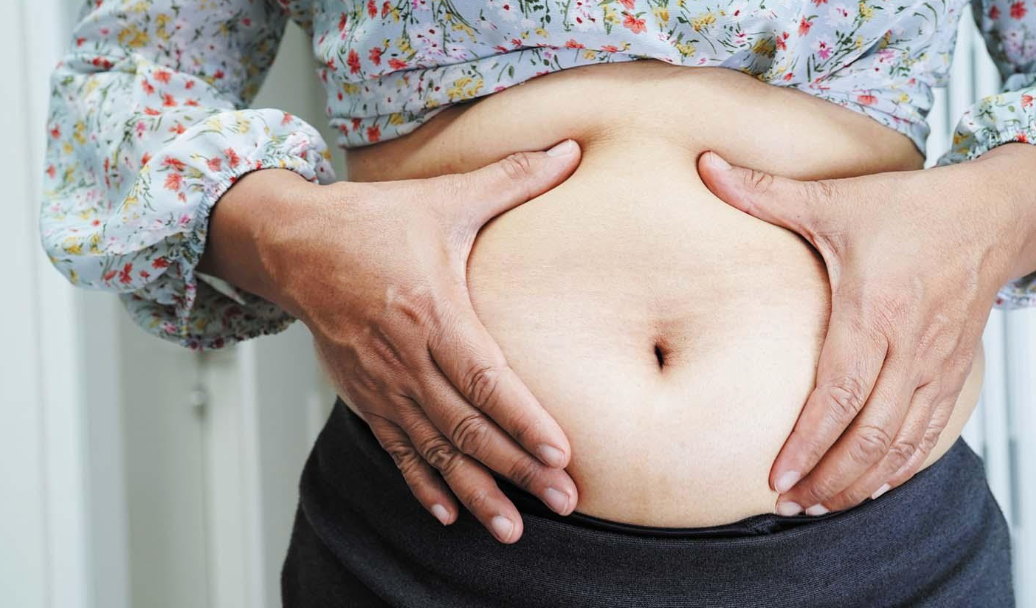
Why body stores fat in perimenopause feels different
Perimenopause is the transition leading up to menopause, and it can last for years. During this time, estrogen does not simply decline in a tidy, predictable line. It fluctuates. Sometimes it is high, sometimes it drops, and those swings can affect appetite, insulin sensitivity, inflammation, sleep quality, mood, and where your body prefers to store energy.
Before perimenopause, estrogen tends to support more fat storage in the hips and thighs. As estrogen becomes more erratic and gradually lower overall, the body often starts storing more fat around the abdomen. That is one reason women notice a thicker waistline, even without major weight gain elsewhere.
This is also why standard advice like eat less and move more can feel so tone-deaf. If your hormones are changing, your old formula may stop working the way it used to.
Estrogen changes your fat-storage pattern
Estrogen influences how fat cells behave. It affects lipoprotein lipase, an enzyme involved in storing fat, and it helps regulate insulin action and energy balance. When estrogen starts fluctuating, your body can become more likely to deposit fat centrally, especially around the belly.
This does not mean estrogen is the only hormone that matters. It means your internal hormonal orchestra has lost its easiest conductor. Once estrogen gets less steady, other players get louder - especially cortisol and insulin.
That is why perimenopause can feel like a body plot twist. You are not just dealing with reproductive hormones. You are dealing with the ripple effects on blood sugar, stress resilience, sleep, and hunger signals too.
Insulin gets more involved than you want it to
Insulin is the hormone that helps move glucose from your bloodstream into your cells. In perimenopause, many women become a bit more insulin resistant. That means the body needs more insulin to do the same job, and higher insulin levels tend to encourage fat storage, particularly in the abdominal area.
This is one reason cravings can feel more intense and energy can feel less stable. If you are riding a roller coaster of coffee, skipped meals, a snacky afternoon, and a late-night sweet tooth, your blood sugar may be pushing the whole cycle forward.
And yes, that can happen even if you are eating foods you think are healthy. Smoothies with no protein, oatmeal that leaves you hungry an hour later, or long gaps between meals can all keep your system a little more chaotic than it needs to be.
Cortisol loves a stressed-out, underslept body
If perimenopause had a sidekick, it would be stress. Cortisol, your main stress hormone, is not evil. You need it. But when it stays elevated from chronic stress, poor sleep, overtraining, under-eating, or emotional overload, it can increase appetite, worsen insulin resistance, and promote more belly fat storage.
And perimenopause is often a perfect storm. You may be managing work, kids, aging parents, relationship strain, disrupted sleep, and a body that suddenly seems dramatically less chill. Of course your nervous system is involved.
This is where a more feminine, realistic approach matters. If your wellness routine only works when life is quiet, it is not a real routine. Your body needs daily support that fits into actual life, not some fantasy version of it.
Muscle loss changes the math
Starting in our 30s and accelerating with age, we naturally lose muscle mass if we do not work to maintain it. During perimenopause, hormonal shifts can make that process more noticeable. Less muscle means a slightly lower resting metabolic rate, which means your body may burn fewer calories at rest than it used to.
This part matters, but it gets oversimplified online. Muscle loss is not a reason to panic or punish yourself. It is a reason to support strength, protein intake, and recovery consistently. Tiny daily choices really do stack up here.
If you are doing lots of cardio and not much strength training, that may be part of why your body composition feels different. Cardio is lovely for the heart and mood, but muscle is one of your best allies for blood sugar balance and metabolic health.
Sleep disruption makes everything louder
Many women in perimenopause notice lighter sleep, more wake-ups, night sweats, or that annoying 3 a.m. wide-awake moment. Poor sleep does more than make you tired. It changes hunger hormones, reduces insulin sensitivity, increases cravings, and makes stress feel sharper.
In other words, bad sleep can make your body act like it is under threat. When the body feels unsafe or depleted, it is not exactly eager to let go of stored energy.
This is one of those places where compassion matters. If you are trying to force fat loss while sleeping badly and feeling fried, your body may simply be asking for a different first step.
Why body stores fat perimenopause is not just about calories
Calories still matter, but they are not the full story. Two women can eat the same amount and have very different outcomes depending on sleep, stress load, insulin response, thyroid function, activity, and hormone patterns.
That does not mean physiology is broken or unfair beyond repair. It means your body is responding to context. In perimenopause, context gets louder.
This is also why aggressive restriction can backfire. Eating too little may increase stress hormones, worsen energy, trigger rebound cravings, and make it harder to preserve muscle. Some women do need nutritional adjustments, but usually not more punishment. Usually they need more rhythm.
What actually helps support a changing metabolism
Start with blood sugar stability. That means eating enough protein, including fiber-rich carbs instead of fearing them, and avoiding the all-day graze or all-day ignore pattern. A steadier morning can change the whole day. If coffee is non-negotiable, fair. Please Lawd do not take the coffee away. Just make sure it is not the only thing carrying you until noon.
Stress support matters just as much as food. That can look like walking after meals, shorter workouts that do not crush your nervous system, breathwork you will actually do, or building tiny rituals around your day so your body gets more signals of safety. This is where wellness should feel supportive, not like another job.
Strength training is one of the most useful tools in this season. Not because you need to chase a smaller body, but because muscle helps improve insulin sensitivity, supports metabolism, and gives your body a strong reason to partition nutrients well. Two to four sessions a week can make a real difference.
Sleep deserves strategy, not leftovers. If your sleep is breaking down, look at caffeine timing, alcohol, late-night screens, room temperature, evening meals, and whether your nervous system ever gets a cue to downshift. Sometimes the best fat-loss support is not another supplement or stricter meal plan. Sometimes it is actually sleeping through the night.
From a holistic perspective, this phase also asks for more nervous system nourishment and hormone support, not less. In Traditional Chinese Medicine, perimenopause is not viewed as one isolated symptom but as a shift involving deeper reserves, stress response, and the balance of systems that govern heat, fluid, mood, and energy. That is part of why ritual-based support can feel so grounding. When something helpful fits into a daily cup you already love, consistency gets a lot easier.
When to look deeper
If weight gain feels sudden, extreme, or paired with symptoms like major fatigue, hair thinning, constipation, heavy bleeding, or significant mood changes, it is worth looking deeper with a qualified practitioner. Thyroid issues, iron deficiency, sleep apnea, and metabolic changes can all overlap with perimenopause.
There is also a mental and emotional layer here that deserves respect. Body changes in perimenopause can feel tender. You may grieve what used to work. You may feel disconnected from your reflection. That does not make you vain. It makes you human.
Your body is not betraying you. It is adapting, asking for a new kind of support, and being pretty direct about it.
If this season has you feeling softer in the middle and harder on yourself, let this be your reminder to get curious before you get critical. The body stores fat differently in perimenopause for real biological reasons, and with the right support, it can also start feeling safer, steadier, and more like home again.