
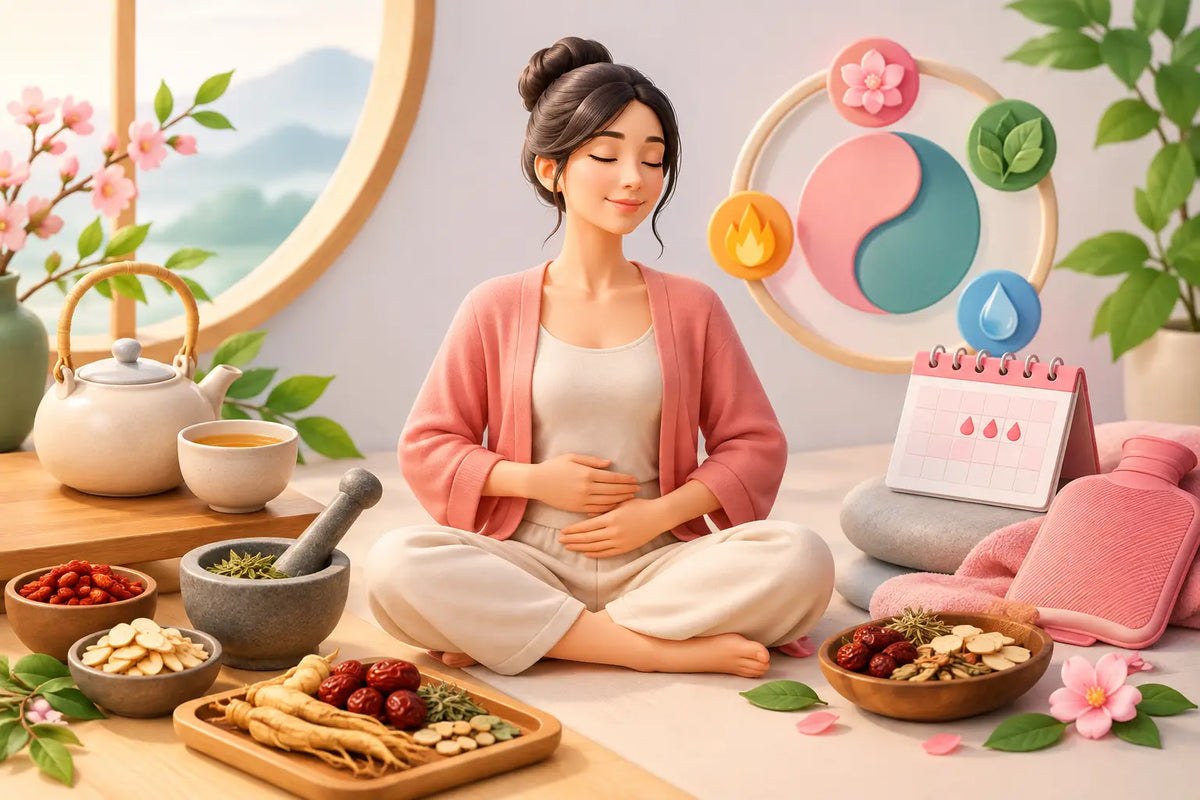
The week before your period should not feel like your body has staged a hostile takeover. If cramps, breast tenderness, cravings, ragey moods, bloating, or a 3 p.m. energy crash regularly show up together, this guide to TCM for PMS offers a different lens: your symptoms are information, not a personal failure.
Traditional Chinese Medicine, or TCM, looks at PMS as a pattern of communication between your cycle, digestion, stress load, sleep, and circulation. Instead of treating every symptom as separate, it asks what may be getting stuck, depleted, overheated, or undernourished in your system. That is a very feminine kind of care - connected, observant, and built around working with your body.
How TCM Understands PMS
In TCM, a comfortable period depends on the smooth movement of qi, often described as the body's vital energy, and healthy blood circulation. The Liver system is especially associated with smooth flow, emotional processing, and the menstrual cycle. When stress, irregular meals, poor sleep, overwork, or emotional pressure pile up, TCM practitioners may describe the result as Liver qi stagnation.
That “stuck” feeling can look surprisingly familiar: irritability, a tight chest or neck, bloating, constipation, tender breasts, headaches, or cramps that improve once bleeding begins. You might be thinking, yes, that is exactly my pre-period personality. You are not imagining the connection between stress and your cycle.
TCM also considers whether the body has enough blood and restorative energy to support a steady cycle. Scanty periods, dizziness, dry skin, sleep disruption, anxiety, and fatigue can point toward a more depleted picture. Heavy bleeding, intense heat sensations, acne flares, or feeling wired and exhausted can call for a different approach altogether.
This is why one friend's favorite “hormone hack” may do nothing for you. Two people can both have PMS and need different support.
A Guide to TCM for PMS Starts With Your Pattern
You do not need to diagnose yourself from a chart. But tracking your symptoms over two or three cycles gives you and a qualified practitioner much better clues than trying to remember everything while you are curled up with a heating pad.
Notice when symptoms start, what makes them better or worse, and what your period looks and feels like. Pay attention to flow, clotting, color, cramps, appetite, bowel changes, sleep, mood, and energy. Also note the less obvious details: Do you skip lunch and become feral by 4 p.m.? Does a packed calendar make your breasts feel tender? Do you feel cold, or do you run hot?
A few common TCM-inspired patterns can help organize what you notice:
- Stress and stagnation: PMS mood shifts, bloating, breast tenderness, sighing, tension headaches, and cramps that feel sharp or tight.
- Cold and sluggish circulation: Dull, contracting cramps that feel better with warmth and pressure, plus cold hands and feet or loose stools.
- Heat or excess inflammation: Acne, irritability, thirst, feeling hot, heavier flow, or symptoms that worsen with alcohol, very spicy food, and too little sleep.
- Depletion: Fatigue, lightheadedness, trouble concentrating, pale flow, poor sleep, or feeling flattened after your period.
Feed the Cycle You Want to Have
TCM food therapy is less about eating perfectly and more about giving your digestion dependable support. In Chinese Medicine, digestion is often discussed through the Spleen and Stomach systems. When meals are irregular, rushed, overly restrictive, or dominated by sugar-and-caffeine survival mode, energy and blood sugar can become less steady. And when blood sugar is chaotic, PMS tends to get louder.
Start with one lovingly practical move: eat a real breakfast or first meal with protein, fiber, and fat. Eggs with greens and toast, Greek yogurt with berries and seeds, or leftovers in a bowl all count. The goal is not to earn a gold star. It is to avoid asking coffee to carry your entire nervous system before noon. Please Lawd, do not take my coffee away - just give it some backup.
In the luteal phase, the days after ovulation and before your period, many women feel better with warmer, more grounding meals. Think soups, roasted vegetables, oats, rice bowls, beans, stews, salmon, chicken, tofu, and cooked greens. If cold smoothies leave you bloated or chilled, experiment with a room-temperature or warm breakfast instead.
Magnesium-rich foods such as pumpkin seeds, leafy greens, beans, cacao, and avocado can fit beautifully here, especially if muscle tension, sleep, or cravings are part of your PMS picture. Hydration matters too, but you do not need to punish yourself with a gallon jug. Regular fluids, mineral-rich foods, and less alcohol around your premenstrual week often make a noticeable difference.
Move Stagnation Without Draining Yourself
When you feel puffy, moody, and trapped in your own skin, an intense workout is not always the answer. TCM values movement because it promotes circulation, but the right dose depends on your energy.
For tension-heavy PMS, try a brisk walk, gentle cycling, dance in your kitchen, hip-opening stretches, or yoga that lets you breathe deeply. Even 10 minutes can interrupt the stress spiral and support digestion. If you are already depleted, dizzy, or sleeping badly, swap the punishing workout for a restorative walk and an earlier bedtime. More effort is not automatically more healing.
Warmth can be especially comforting for cramps that improve with heat. A heating pad, warm shower, cozy socks, or an abdominal self-massage with a little oil may help you settle. Massage the lower belly gently in clockwise circles, and stop if it increases pain.
Herbs and Acupuncture Need Personalization
Chinese herbal medicine can be incredibly nuanced, which is precisely why it should not be a random cart full of trend-driven herbs. Formulas are traditionally chosen for your specific symptom pattern, constitution, medications, and stage of life. An herb that supports someone with cold, crampy periods may not suit someone who runs hot with heavy bleeding.
Work with a licensed acupuncturist or qualified Chinese Medicine practitioner, particularly if you take prescription medication, are pregnant or breastfeeding, are trying to conceive, have liver or kidney disease, or have a history of hormone-sensitive conditions. Acupuncture may be used to support stress regulation, pain management, sleep, and menstrual symptoms, but it is not a substitute for medical evaluation.
For daily support, ritual can make consistency feel much less like homework. Stirring a TCM-inspired formula such as SuperCube into the coffee, chai, matcha, or tea you already look forward to can be an easy way to make your morning beverage feel more supportive. The best ritual is the one your real life can hold onto.
When PMS Deserves Medical Care, Not Just a Better Routine
Some period pain is common. Pain that regularly makes you miss work, cancel plans, vomit, faint, or rely heavily on medication deserves a conversation with a gynecologist. The same goes for very heavy bleeding, bleeding between periods, cycles that become dramatically irregular, new symptoms after age 40, or severe mood symptoms that feel frightening or unsafe.
Conditions such as endometriosis, fibroids, thyroid disorders, anemia, PCOS, and PMDD can overlap with what people casually call PMS. A TCM-informed approach can complement conventional care, but you deserve testing, answers, and treatment options when something feels off. You are allowed to want both ancient wisdom and modern medical clarity.
Your cycle does not need to be a monthly audition for how much discomfort you can tolerate. Begin by noticing one pattern, then choose one supportive ritual: a steadier breakfast, a warm dinner, a ten-minute walk, or a gentler evening. Small acts of attention teach your body something powerful: you are listening.