
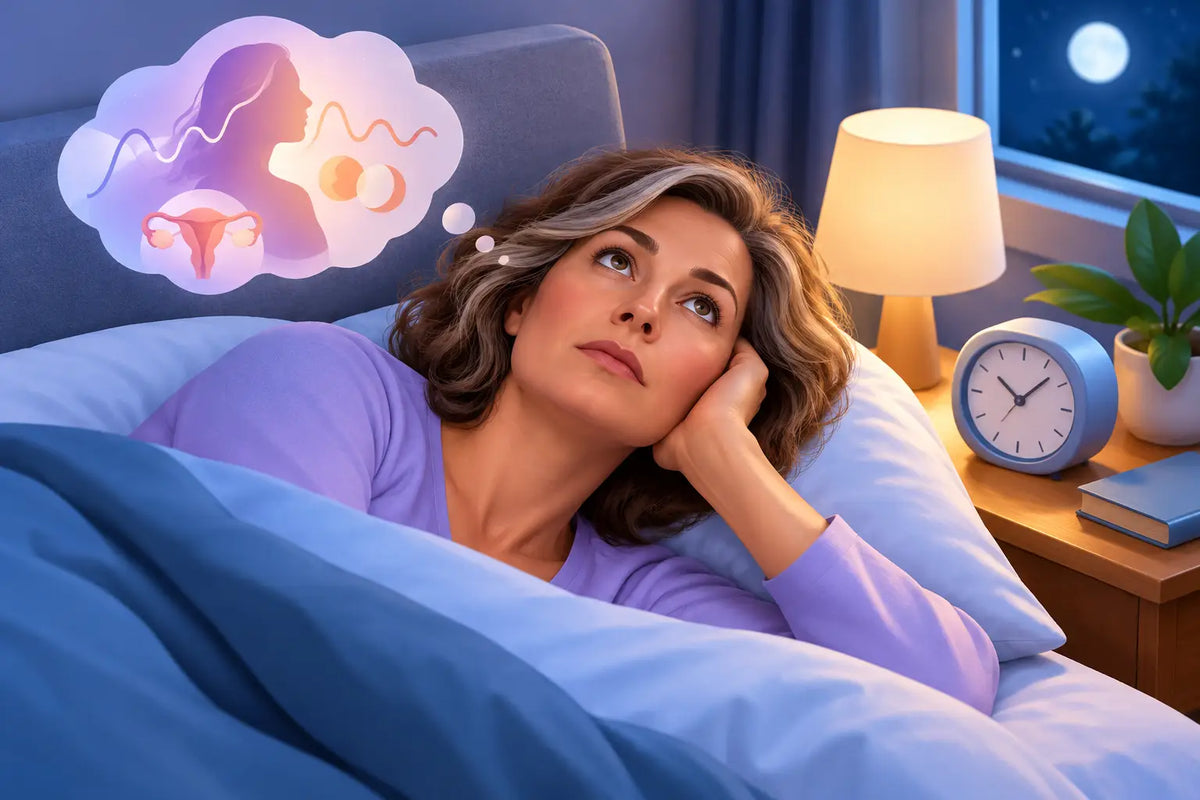
You fall asleep just fine, then wake at 2:47 a.m. warm, wired, and suddenly reviewing every awkward thing you said in 2009. If you are wondering, is perimenopause causing sleep problems, the answer may be yes. Sleep changes are one of the most common and most frustrating signs that your hormones are shifting.
This is not a personal failure, a lack of discipline, or proof that you need to become the kind of person who drinks sleepy tea at 7:30 p.m. Your body is moving through a real transition, and it can affect how deeply you sleep, how often you wake, and whether you feel restored when morning arrives.
Why perimenopause can change your sleep
Perimenopause is the stretch of time before menopause when ovarian hormone production becomes less predictable. It can begin in your 30s or 40s and may last for several years. Periods can change, but sleep disruptions, mood shifts, cycle changes, and energy swings can show up before your period becomes noticeably irregular.
Estrogen and progesterone do far more than influence your cycle. Estrogen helps with temperature regulation, brain chemicals involved in mood, and the way your body responds to stress. Progesterone has a naturally calming effect for many people. When these hormones rise and fall less predictably, your nervous system may feel like it has lost its steady rhythm.
That can look like trouble falling asleep, waking in the early hours, vivid dreams, lighter sleep, or waking up tired after what should have been enough hours. For some women, night sweats are the obvious culprit. For others, the change is quieter: more anxiety at bedtime, a racing mind, or an odd feeling of being exhausted but unable to settle.
The 3 a.m. wake-up is not random
Cortisol, your primary stress hormone, naturally begins rising in the early morning to help you wake up. When your stress load is already high, or your blood sugar dips overnight, that normal rise can become more noticeable. Add fluctuating estrogen and progesterone to the mix, and a small wake-up can turn into a full-body alert.
This is why sleep during perimenopause is rarely just about sleep hygiene. A dark room and a better pillow can help, but they cannot always outsmart a nervous system that has been carrying work pressure, caregiving, under-fueling, caffeine, and hormonal change all day.
The sleep disruptors that often travel with perimenopause
Hormones may be part of the story, but they are not always the entire story. Looking at the pattern around your sleep gives you more useful clues than blaming yourself for not being relaxed enough.
Hot flashes and night sweats. A sudden surge of heat can wake you directly, but even subtle temperature changes can pull you out of deeper sleep. You may not remember every awakening, only the next-day fatigue.
Stress sensitivity. The same packed calendar that once felt manageable can suddenly leave you feeling overstimulated. Perimenopause can lower your buffer for stress, especially when life is already full.
Blood sugar swings. Skipping meals, eating too little during the day, drinking alcohol in the evening, or having a dessert-heavy dinner can contribute to overnight dips and spikes. Your body may release stress hormones to bring blood sugar back up, which is not exactly a lullaby.
Caffeine that hits differently. You do not necessarily have to break up with coffee. Please Lawd, do not take our coffee away. But perimenopause can make you more sensitive to caffeine, especially when you are already running on fragmented sleep. The dose, timing, and whether you have eaten can matter more than they used to.
Mood changes. Anxiety and low mood can increase during perimenopause. Sometimes insomnia is a symptom of that shift. Other times, several poor nights of sleep make anxiety feel louder. It can become a very rude little loop.
How to support better sleep without overhauling your whole life
The goal is not to create a 14-step nighttime routine that requires a personal assistant. Think of this as giving your hormones and nervous system clearer signals of safety, steadiness, and rest.
Start with your daytime rhythm
Better sleep starts long before bedtime. Try to eat regular, satisfying meals that include protein, fiber-rich carbohydrates, and healthy fats. This helps support steadier energy and blood sugar, which can mean fewer middle-of-the-night stress signals.
Morning light is another underappreciated tool. Getting outside shortly after waking, even for 10 minutes, helps anchor your circadian rhythm. Movement matters too, but it does not need to be punishing. A walk, strength training, dancing in your kitchen, or gentle stretching can all help your body use stress hormones more effectively.
If you are tired enough to live on coffee and vibes, have your coffee with breakfast or after food rather than on an empty stomach. Consider moving your last caffeinated drink earlier in the day for two weeks and notice what changes. For some women, noon is a good cutoff. For others, 2 p.m. works perfectly well. Your body gets the final vote.
Make bedtime cooler and less demanding
If heat is waking you, set yourself up for an easier reset: breathable pajamas, layers you can remove quickly, a fan, and a cool glass of water nearby. You do not need a Pinterest-perfect sleep sanctuary. You need fewer barriers between a hot flash and getting comfortable again.
Keep your wind-down simple and repeatable. Dim the lights. Put your phone out of reach if late-night scrolling tends to make your brain buzzy. Do one calming thing you genuinely enjoy: shower, stretch, read a few pages of a novel, listen to a meditation, or make tomorrow's to-do list so it stops circling in your head.
The point is not perfection. It is repetition. A small evening ritual tells your nervous system, "We are done performing for the day."
Look at the alcohol-sleep trade-off honestly
A glass of wine may make you sleepy initially, but it can fragment sleep later in the night and worsen temperature changes for some women. That does not mean you can never enjoy a drink. It means it may be worth noticing whether your 3 a.m. wake-ups are more common on the nights you do.
Try a brief experiment rather than making it a forever rule. Take two alcohol-free weeks, track your sleep and night sweats, then decide what feels supportive. Body literacy beats blanket wellness rules every time.
Create a calming daily ritual you will actually keep
Traditional Chinese Medicine views sleep as connected to the whole system: stress, digestion, blood nourishment, daily rhythm, and emotional load. That broader lens can be especially comforting in perimenopause because it reminds us that your sleep is not an isolated problem to battle at night.
A consistent beverage ritual can be an easy place to start. If you already make coffee, chai, matcha, or tea, adding a supportive ritual like LALAS WELLNESS SuperCube can make your daily hormone and stress-support practice feel more doable. Keep it earlier in the day if caffeine affects your sleep, and focus on consistency over doing everything perfectly.
When it is time to bring in medical support
Perimenopause-related sleep changes are common, but you do not have to simply white-knuckle them. A clinician who understands menopause can help you discuss options, including hormone therapy when appropriate, non-hormonal treatments, and an evaluation for other contributors to insomnia.
Talk with a healthcare professional sooner if sleep loss is affecting your ability to function, your mood feels persistently low or anxious, you snore loudly or wake gasping, you have severe night sweats, or you notice heavy or unusual bleeding. Thyroid changes, sleep apnea, iron deficiency, depression, medication effects, and other health concerns can overlap with perimenopause.
You deserve care that looks at the whole picture, not a vague instruction to "get more rest." Keep a simple two-week note of bedtime, wake-ups, cycle changes, caffeine, alcohol, stress level, and night sweats. Patterns can make your next appointment much more productive.
Your body is not betraying you at 3 a.m. It is communicating in the only language it has. Meet it with a little curiosity, a little structure, and the kind of care that makes room for the woman you are becoming.