
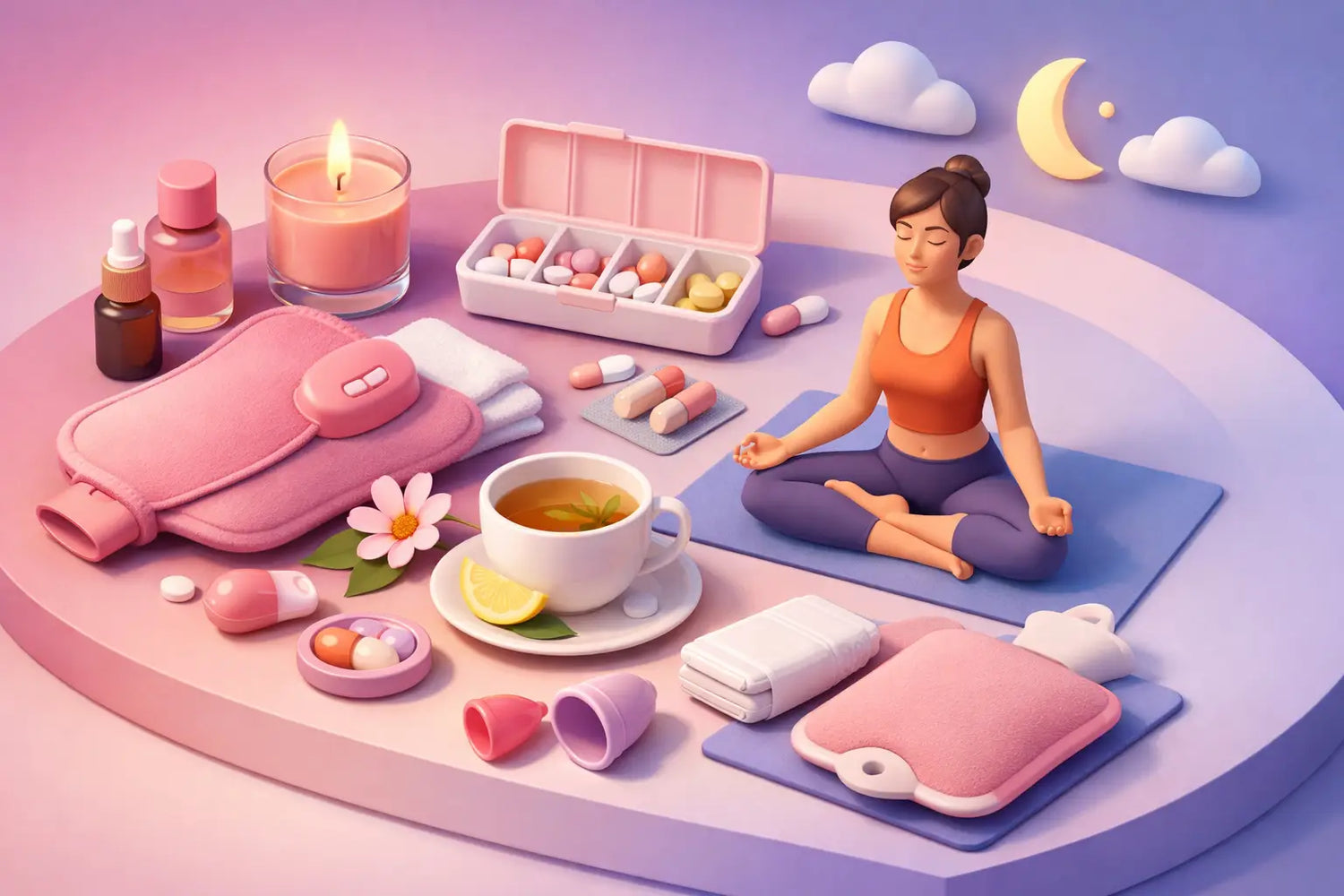
The calendar says your period is due, and suddenly your lower belly feels clenched, your back is aching, your patience is on vacation, and your usual to-do list looks wildly disrespectful. A period pain support routine is not about performing wellness perfectly while you hurt. It is about giving your body fewer things to fight and more of what helps it soften, circulate, rest, and feel held.
For some women, cramps are a day-one inconvenience. For others, they can flatten an entire week. Your routine should meet the reality of your symptoms, your schedule, and your capacity. The goal is not to add 17 new steps to an already full life. Honestly, no one needs a 6 a.m. womb ritual when they are trying to get kids out the door or survive a Monday meeting.
Start Your Period Pain Support Routine Before Day One
The most supportive habits often begin in the days before bleeding starts. This is when many women notice bloating, constipation, breast tenderness, mood shifts, sleep disruption, cravings, and that familiar sense that their jeans have personally betrayed them. These are useful signals, not a character flaw.
From a Traditional Chinese Medicine perspective, painful periods can be connected to patterns like stagnation, cold, depleted energy, and stress that has nowhere to go. Modern physiology also gives us part of the picture: uterine contractions are driven by prostaglandins, and higher levels can mean more intense cramping, nausea, loose stools, and fatigue. Your body is complex, so your support can be, too - without becoming complicated.
A few days before your period, shift your focus from pushing harder to creating a little more steadiness. Eat regularly rather than running on coffee and vibes until 2 p.m. Include satisfying meals with protein, fiber-rich carbohydrates, colorful plants, and fats that help you stay full. Blood sugar dips can make irritability, shakiness, fatigue, and cravings feel louder, especially when hormones are already shifting.
This is also a beautiful time to notice what makes your symptoms worse. Some women feel more crampy after several nights of poor sleep. Others notice that a high-stress week, skipped meals, alcohol, or intense workouts leave them more depleted. There is no moral scorecard here. Body literacy is simply collecting clues.
Build warmth into ordinary moments
Warmth is one of the easiest ways to make your body feel supported during a painful cycle. Use a heating pad or hot water bottle on your lower abdomen or low back. Take a warm bath or shower. Choose soups, stews, oatmeal, roasted vegetables, ginger tea, or whatever warm food feels comforting and nourishing to you.
That does not mean cold foods are forbidden, or that one iced latte caused your cramps. Please. It means paying attention to how your own system responds. If cold drinks and rushed meals leave your belly feeling tight and uncomfortable around your period, adding more warmth may be a very low-effort experiment worth trying.
Make Your Morning Ritual Work Harder for You
Your daily drink is already a ritual, which makes it a smart place for support. You do not have to abandon coffee if it is one of the few things bringing joy before 9 a.m. Please Lawd, don’t take my coffee away. Instead, make the ritual more intentional.
If caffeine tends to make you anxious, shaky, wired-and-tired, or more aware of breast tenderness before your period, try having it after breakfast, reducing the amount, or pairing it with a more substantial meal. If it feels fine for you, enjoy it without the guilt spiral. Context matters: your sleep, stress load, hydration, food intake, and individual sensitivity all change the experience.
LALAS WELLNESS SuperCube can fit into coffee, chai, matcha, or tea as a simple way to bring a TCM-inspired functional formula into the ritual you already keep. The real magic is consistency, not turning your kitchen counter into a supplement aisle. Pick one supportive action that is easy enough to repeat when you are tired.
Hydrate, but do not make it punishing
Hydration will not erase severe cramps, but being under-hydrated can add headaches, fatigue, constipation, and general blahness to the mix. Keep water nearby and make it more appealing if plain water bores you senseless. Try it warm, add citrus, or alternate with caffeine-free tea.
You do not need to chug a gallon before noon. Sip consistently, especially if you are bleeding heavily, exercising, dealing with loose stools, or drinking more caffeine than usual. Gentle is the theme.
Move for Relief, Not for a Gold Star
When cramps hit, there is a huge difference between movement that feels regulating and movement that feels like punishment. A short walk, gentle hip circles, a few minutes of stretching, restorative yoga, or slow dancing in your kitchen can help some bodies release tension and improve circulation. It can also offer a mental reset when pain has made your whole world feel small.
But it depends. If movement makes your pain spike, leaves you dizzy, or feels completely impossible, rest is not failure. Your body may need the heating pad, the couch, and a canceled workout. The most cycle-aware routine is one that responds to the day you are actually having.
Try placing one hand over your low belly and one over your chest for a few slow breaths. Let your exhale be longer than your inhale. It sounds almost too simple, but your nervous system hears the difference between bracing all day and giving yourself a few moments of safety. Tension does not cause every kind of period pain, yet stress can absolutely make pain harder to carry.
Support the Whole Pain Picture
Cramps rarely arrive alone. They can come with low back pain, nausea, diarrhea, constipation, headaches, tender breasts, exhaustion, sadness, rage, or a brain that cannot locate a single coherent thought. Plan for the whole picture, not just your uterus.
Set yourself up with the practical comforts that make a hard day less hard: easy food in the fridge, pain relief you know is appropriate for you, comfortable underwear, a heat source, a water bottle, and a little breathing room in your schedule where possible. If over-the-counter medication is part of your care, follow the label and check with a clinician or pharmacist if you have health conditions, take other medications, are pregnant, or are unsure what is safe for you.
Rest deserves a place here, too. Sleep may be disrupted during your period, but even a slightly earlier bedtime, a lower-stimulation evening, or 20 quiet minutes without scrolling can help. You are not “lazy” for needing less output when your body is doing real biological work.
Keep a tiny cycle notes practice
You do not need an elaborate spreadsheet. A note on your phone is enough. Track when pain starts, where it lands, how intense it feels, what your flow is like, and what helped. Over two or three cycles, patterns can become much easier to see.
This information is useful for you and useful if you decide to talk with a healthcare provider. You may learn that cramps are worse after poor sleep, that heating your low back works better than heating your belly, or that your hardest day is actually the day before bleeding begins. That is powerful information.
When Period Pain Needs More Than a Home Routine
Painful periods are common, but debilitating pain should not be brushed off as something you simply have to tolerate. It is worth speaking with a qualified healthcare professional if pain regularly keeps you home, wakes you from sleep, gets worse over time, does not improve with your usual care, or comes with very heavy bleeding, fainting, fever, pain between periods, pain during sex, or significant bowel or bladder symptoms.
Conditions such as endometriosis, fibroids, adenomyosis, ovarian cysts, pelvic infections, and other concerns can contribute to pelvic pain. Getting evaluated is not being dramatic. It is self-respect with a clipboard.
Let your routine be loving, practical, and flexible. Some months, support looks like warm tea, a heating pad, and an earlier night. Other months, it looks like asking better questions, making an appointment, and refusing to minimize what your body has been trying to tell you.