
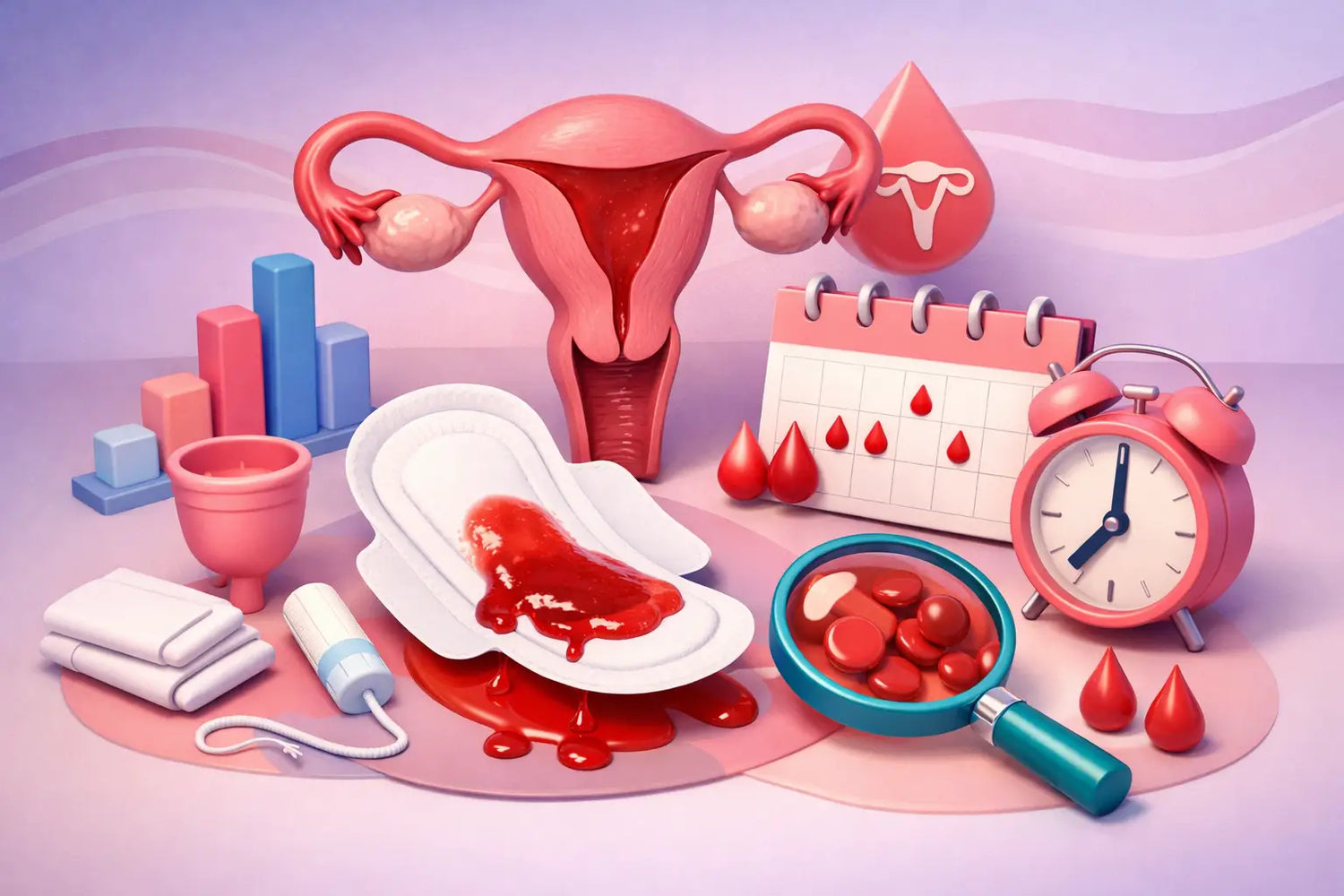
A period that suddenly feels much heavier than your normal can be deeply unsettling. If you’re asking, “why is my period suddenly heavier?” your body may be responding to anything from a temporary hormone shift to a condition worth checking with your clinician. You are not being dramatic for noticing the change. Your cycle is real body feedback, and it deserves your attention.
One unusually heavy period does not always signal something serious. Stress, illness, travel, a missed ovulation, or a change in medication can all affect the uterine lining and how it sheds. But if heavy bleeding is new for you, repeats over several cycles, or leaves you exhausted and dizzy, it is time to get support instead of simply powering through.
What counts as a heavier-than-usual period?
You know your baseline best. A heavier period may mean you are changing a pad or tampon every hour or two, needing to use more than one form of protection, waking overnight to manage bleeding, or passing clots larger than a quarter. It can also look like bleeding longer than seven days or feeling unusually wiped out during or after your period.
Clinicians often call very heavy menstrual bleeding menorrhagia. The label matters less than the impact: if your flow is disrupting work, sleep, movement, intimacy, or your ability to leave the house without a period emergency kit, it is worth bringing up.
Why is my period suddenly heavier? Common possibilities
Your menstrual flow reflects the conversation between your brain, ovaries, thyroid, uterus, immune system, and daily life. When one part of that conversation changes, your bleed can change too.
A one-off hormone wobble
Ovulation does not happen perfectly on schedule every month. When ovulation is delayed or skipped, estrogen may continue building the uterine lining without the usual balancing effect of progesterone. Eventually, that thicker lining sheds, and the period can arrive late, heavier, or both.
This can happen after a high-stress season, poor sleep, a significant illness, intense exercise changes, under-eating, weight changes, or long-distance travel. It can also happen for no obvious reason once in a while. Bodies are not machines, babe.
Perimenopause and changing cycles
In the years leading up to menopause, ovulation can become less predictable. That means periods may get closer together, farther apart, lighter, heavier, or frustratingly all over the place. Heavier bleeding is common in perimenopause, but common does not mean you should silently tolerate it.
If you are 40 or older and have a new pattern of heavy bleeding, book an appointment. Your clinician may want to rule out structural causes and check whether treatment could protect your quality of life and iron levels.
Fibroids, polyps, adenomyosis, or endometriosis
Some heavier periods are linked to changes in the uterus itself. Fibroids are noncancerous muscle growths in or around the uterus, while polyps are growths in the uterine lining. Both can contribute to heavier or longer bleeding. Adenomyosis, where lining-like tissue grows into the uterine muscle, often brings heavy flow and significant cramping.
Endometriosis more commonly causes pelvic pain, pain with sex, bowel or bladder symptoms around your period, and painful periods, though some people also experience heavy flow. These conditions need individualized care, and an ultrasound or other evaluation may be part of the process.
Birth control, an IUD, or medication changes
Hormonal birth control can cause irregular or heavier bleeding during the first few months of starting, stopping, or switching methods. A copper IUD can also make periods heavier and crampier for some people, especially early on.
Blood-thinning medications and some supplements can affect bleeding, too. Do not stop a prescribed medication on your own, but do tell the prescriber about the change in your flow. Your cycle history is useful clinical information.
Thyroid issues, PCOS, and other health conditions
Thyroid changes can affect ovulation and menstrual bleeding. Polycystic ovary syndrome, or PCOS, may lead to infrequent ovulation, which can set the stage for a heavier bleed after a longer cycle. Less commonly, bleeding disorders, liver or kidney conditions, and certain infections can contribute.
This is why a sudden heavier period is not something to diagnose from a social-media checklist. Symptoms overlap, and the right next step depends on your age, health history, medications, pregnancy possibility, pain level, and bleeding pattern.
Pregnancy-related bleeding
Heavy bleeding in early pregnancy can be a sign of miscarriage or, more rarely, an ectopic pregnancy. If pregnancy is possible, take a pregnancy test and contact a medical professional promptly about any bleeding. Seek urgent care right away for severe one-sided pain, shoulder pain, fainting, dizziness, or heavy bleeding.
When heavy period bleeding needs urgent care
Trust your gut here. Call emergency services or go to urgent care or the emergency room if you are soaking through a pad or tampon every hour for two or more hours, feel faint, have chest pain, shortness of breath, confusion, or severe weakness.
Urgent evaluation is also needed for severe pelvic pain, fever with pelvic pain or unusual discharge, or heavy bleeding when you know or suspect you are pregnant. These are not moments for grit or a heating pad alone.
Even without emergency symptoms, schedule a medical appointment if your periods have become substantially heavier for two or three cycles, you bleed between periods or after sex, your cycle changes after menopause, or fatigue is becoming your new normal. Heavy bleeding can lead to iron deficiency anemia, which may show up as exhaustion, headaches, brain fog, paleness, heart palpitations, or getting winded more easily than usual.
What to track before your appointment
A few notes can make a clinician visit far more productive. Track the first and last day of bleeding, how often you change period products, clot size, pain, spotting, and whether you bleed after sex. Note new medications, contraception changes, recent illness, major stress, and any chance of pregnancy.
Ask whether checking a complete blood count and iron stores makes sense, particularly if you are feeling depleted. Depending on your symptoms, a clinician may also discuss a pregnancy test, thyroid testing, pelvic exam, ultrasound, or other evaluation. The goal is not to send you down a scary rabbit hole. It is to understand what your body is asking for.
Gentle support while you figure it out
You do not have to wait until you have every answer to care for yourself well. Prioritize regular meals with protein, fiber-rich carbohydrates, and iron-containing foods such as lentils, beans, leafy greens, meat, seafood, tofu, or fortified grains. Pair plant-based iron foods with vitamin C-rich produce to support absorption.
Hydration matters, especially if you are losing more blood than usual. Keep your movement gentle if fatigue or cramps are high, and give yourself permission to scale back. Your nervous system does not need a performance review while your uterus is putting in overtime.
Stress support can be helpful, too, not because stress means the symptoms are “all in your head,” but because chronic stress can influence sleep, blood sugar, inflammation, and ovulation. A consistent morning beverage ritual, a few minutes of breathing before bed, more protein at breakfast, and steadier meal timing are small, livable ways to care for the whole system.
If you use herbs, supplements, or Traditional Chinese Medicine, share them with your clinician, especially if you are pregnant, trying to conceive, taking blood thinners, or managing a diagnosed condition. Natural support can be meaningful, but it should complement appropriate evaluation when bleeding has changed.
Your period is not supposed to be a monthly test of how much discomfort you can endure. Notice the shift, gather the details, and let yourself ask for care. That is body literacy in action, and it is a very feminine kind of power.